Why Choose a Mold Injection Machine for Your Business?
A mold injection machine can turn a carefully designed part into thousands of repeatable components. Yet buying one is not simply a matter of choosing the largest clamp force or fastest cycle. The right machine must fit your mold, material, production volume, and available floor space. Small details matter. A few millimeters of mold clearance, an inconsistent resin supply, or an undersized cooling system can affect output and part quality.
John Bozzelli, an experienced injection-molding consultant, has emphasized the importance of understanding process control. A concise paraphrase of that principle is: “Consistent parts depend on a stable process.” This is not a verbatim quotation. It reflects a practical lesson: machine capability matters, but so do setup, maintenance, operator training, and process monitoring. A reliable comparison should consider shot size, tie-bar spacing, energy use, service access, and the machine’s compatibility with the molds you already own.
There are trade-offs. A highly automated cell may reduce handling, but it can also raise upfront costs and require stronger technical support. A lower-priced machine may suit a startup, yet limited service access could become a costly problem during a production delay. No machine removes every risk. Before investing, compare actual part requirements with supplier specifications, and ask for a trial using your material and mold where possible. That evidence makes the decision more grounded—and may reveal a weakness you did not expect.
What Is a Mold Injection Machine?
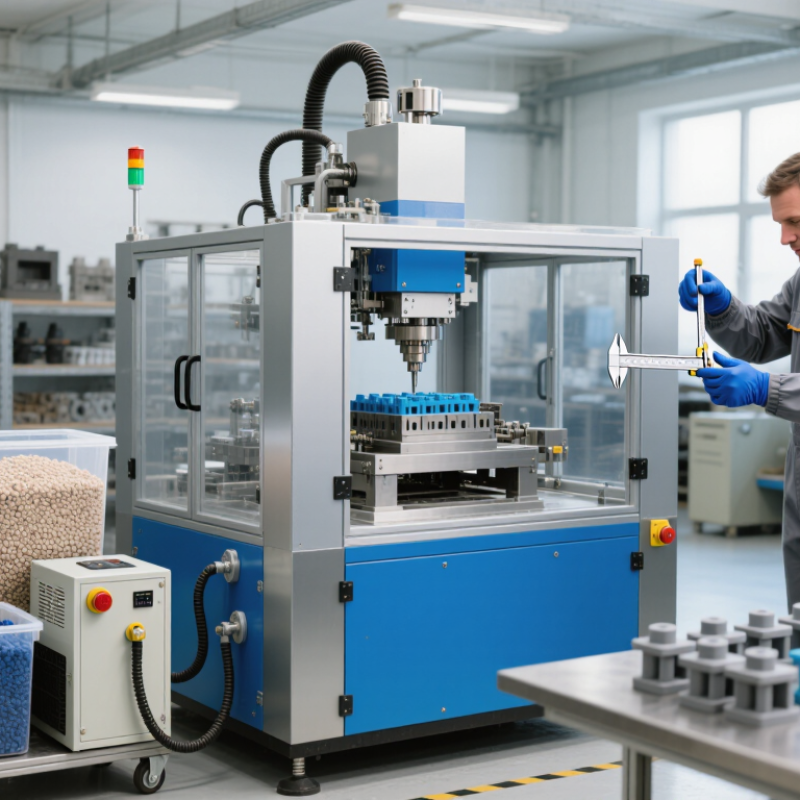
A mold injection machine forms parts by heating plastic pellets until they soften, then pushing the melt into a shaped mold. The mold closes under clamping force and holds the material while it cools. Once the part is firm, the mold opens and ejector pins release it. That is the basic cycle.
The machine has several key systems: an injection unit, a clamping unit, controls, and safety guards. The injection unit feeds and melts material, while the clamping unit keeps the mold shut against pressure. Operators adjust settings such as temperature, injection speed, pressure, and cooling time. A small change can affect part weight, surface finish, or dimensions. I’ve seen teams focus too much on cycle speed; a faster cycle is not always a better one. Mold design and material choice matter just as much.
Tips: Match machine capacity to the mold’s size and required clamping force. Check that the shot size suits the part, and allow enough cooling time to prevent warping. Keep records of settings and sample measurements. They help reveal patterns, though production conditions can still vary. Before buying, ask a qualified technician to review your part drawings and expected output. A machine that seems suitable on paper may need a closer fit in practice.
How Does the Injection Molding Process Work?
It begins with material. Plastic pellets are poured into the machine’s hopper, then fed into a heated barrel. A rotating screw moves them forward while heat and friction soften the plastic into a consistent melt. The operator sets temperatures, screw speed, and injection pressure to suit the material and part design. These settings matter: a melt that is too cool may not fill thin sections, while excessive heat can damage the material.
Then comes pressure. The machine pushes the melt through a nozzle and into a closed mold, filling its shaped cavity. The plastic cools and hardens against the mold walls. Cooling time affects both cycle speed and part quality; rushing it can leave a part warped or difficult to eject. Once the mold opens, ejector pins release the part, and the screw prepares the next shot. The sequence sounds simple, but it is not always tidy. Small changes in material moisture, mold temperature, or wall thickness can alter the result. A careful operator checks sample parts for flash, short fills, and dimensions before relying on a production setting.
What Business Benefits Does Injection Molding Offer?
Injection molding can turn a well-designed part into thousands of repeatable components. That consistency helps businesses keep assembly lines moving and meet customer orders with fewer surprises. Once the mold is ready, a machine can produce parts in seconds or minutes, depending on their size and complexity. Cycle times vary. For high-volume products, spreading tooling costs across many units can reduce the cost per part.
The process also supports detailed shapes and a range of thermoplastics, so parts can sometimes combine functions that would otherwise require several components. For example, a molded housing may include snap-fit tabs and screw posts. Fewer separate pieces can mean simpler assembly and less handling. With a stable process, operators can monitor details such as temperature, pressure, and cooling time to help maintain consistent dimensions.
Trade-offs remain. Mold design and machining require upfront investment, and a complex mold can be expensive to change after production begins. A small change to a wall thickness may affect cooling or cause warping, so prototypes and design reviews matter. Injection molding is not automatically the cheapest option for a new or low-volume product. Businesses should compare expected demand, material requirements, tooling costs, and inspection needs before committing.
Which Industries Use Mold Injection Machines?
Mold injection machines serve industries that need repeatable parts in high volumes. Automotive manufacturers use them for dashboards, clips, interior trim, and connector housings. OICA reported 93.5 million motor vehicles produced worldwide in 2023, illustrating the scale of this market. Small parts matter.
Packaging is another major application. Machines form caps, closures, containers, and thin-wall tubs, often at high cycle rates. In medical manufacturing, they produce items such as laboratory consumables and device housings. These parts may require controlled materials, clean production areas, and careful process validation. A molded shape alone does not guarantee quality.
Electronics makers use injection molding for connector bodies, switch components, and protective enclosures. Construction suppliers use it for pipe fittings, fasteners, and electrical boxes. PlasticsEurope’s Plastics – the Fast Facts 2024 report estimates global plastics production at 413.8 million tonnes in 2023; this figure covers many processes, not injection molding alone. That distinction matters. For a business, the right machine depends on part size, resin, tolerances, and expected output. A small shop producing short runs may value flexibility more than maximum speed. Buyers should also assess tooling costs, maintenance, and operator expertise before choosing capacity.
What Factors Should Businesses Consider When Choosing a Machine?
Choosing a mold injection machine starts with the part, not the sales brochure. Record the resin type, part weight, projected area, tolerances, and expected annual volume. Clamp force must prevent flash, while shot capacity should suit the planned shot size. Ask for cycle-time trials using your actual mold and material. Small details matter: a two-second cooling change can affect output across a long production run.
Energy use deserves careful comparison. The International Energy Agency’s Energy Efficiency 2023 report states that industry accounted for 37% of global final energy consumption in 2022. That figure is not specific to injection molding, but it highlights why machine efficiency belongs in the buying calculation. Compare measured kilowatt-hours per kilogram, including idle periods. Check hydraulic, hybrid, or electric options against your cycle and part requirements. Test the numbers.
Also examine mold dimensions, tie-bar spacing, control functions, maintenance access, and technician support. A machine may meet the required clamp force yet struggle with a tall mold or frequent changeovers. Request references for similar materials and production conditions, then verify quoted output on your own tooling. Pay attention to service response times and spare-part availability. A neat payback spreadsheet can still miss downtime, scrap, or operator training; those estimates deserve a second look.
How to use this chart: Clamping-force ranges are approximate and machine classifications vary. Choose a machine based on the part’s projected area and material, then verify shot capacity, mold dimensions, tie-bar spacing, energy use, and automation needs with the machine supplier.
Related Posts
-
Top 10 Injection Molding Machine Mold Manufacturers
-
Top 10 Types of Injection Machine Molds for Global Buyers
-
What Are the Top 10 Types of Plastic Injection Machines?
-
2026 Top Plastic Mold Making Machine Manufacturers for Global Buyers
-
7 Essential Tips for Optimizing Your Plastic Mold Making Machine for Maximum Efficiency
-
Revolutionizing Production Efficiency with Advanced Plastic Mold Making Machines in 2023
Submit a quote request or book a design consultation
Plastimold Products is an end-to-end product development and manufacturing team. We provide product design, engineering, prototyping, tooling, plastic injection molding, assembly, packaging and fulfillment. We work with any size company from start-ups to enterprises from all around the world.
I have a product I want to manufacture
I have a product that is already designed and now needs to be manufactured.
I need a manufacturer to optimize my product for injection molding, help choose the correct material, and manage the product production.
I have tooling that I want to transfer or modify, or I need to produce new tooling.
I need design and engineering support
I have a product concept that I want to be designed and brought to market.
I have a product that needs to be reviewed, improved or DFM’ed.
I am looking for a manufacturer to provide an end-to-end solution, from design and development to inventory, marketing, and sales.

©2022 Plastimold Products - Privacy policy - Terms and Conditions