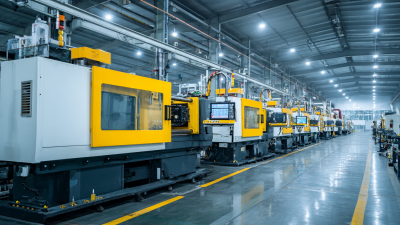
Top 10 Types of Injection Machine Molds for Global Buyers

Choosing the right injection machine mold can determine whether a product succeeds on the factory floor or fails during production. Global buyers must evaluate more than price, cavity count, and delivery time. Mold design affects cycle time, part quality, maintenance costs, energy use, and long-term production stability.

John Bozzelli, an experienced injection molding consultant, is widely known for saying, “The process is the product.” This practical principle remains important when comparing mold types for automotive panels, medical housings, packaging parts, and consumer electronics. A hot runner mold may reduce material waste, while a cold runner mold can offer simpler maintenance and lower initial investment. Stack molds can increase output, but they also require careful machine compatibility checks.

This guide examines ten common types of injection machine mold used by international manufacturers and sourcing teams. It considers mold structure, suitable materials, production volume, cooling performance, tooling cost, and maintenance requirements. Small details matter. A blocked cooling channel can create uneven shrinkage. A weak ejector system can leave visible marks. Poor steel selection may shorten mold life.

No single mold fits every project. That is easy to forget. A neat comparison table can still hide risks involving local technical support, spare parts, and operator skill. Buyers should confirm drawings, resin data, tolerance targets, machine specifications, and trial procedures before placing an order. These recommendations are practical, but they are not perfect; actual results depend on design quality, processing conditions, and disciplined factory control.
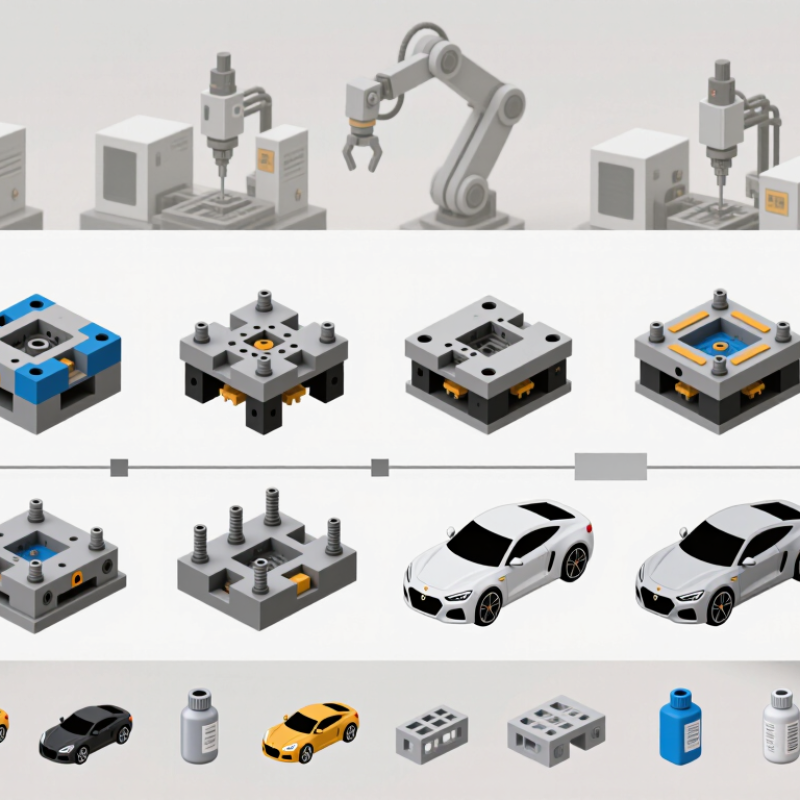
Top 10 Types of Injection Machine Molds for Global Buyers

Injection Mold Fundamentals and Selection Criteria for Global Buyers

Injection mold selection starts with the part, not the machine brochure. In shop-floor trials, I check resin shrinkage, wall thickness, draft, undercuts, and expected cycle time. A two-plate mold suits many simple parts, while a three-plate design can improve multi-point gating. Hot-runner molds reduce runner waste, but they demand tighter temperature control. Cold-runner molds cost less initially. They may increase scrap.

Global volume changes the decision. PlasticsEurope’s Plastics—The Fast Facts 2024 reports 413.8 million tonnes of worldwide plastics production in 2023. That scale supports demand for durable, repeatable tooling, yet material selection still matters more than headline capacity. For complex parts, consider insert molds, overmolding molds, unscrewing molds, or stack molds. Thin-wall molds need fast filling and balanced cooling. Family molds can lower tooling cost, but unequal cavities may create inconsistent packing. This is often overlooked.

Fortune Business Insights valued the global injection molding machine market at about US$15.91 billion in 2023 and forecasts continued growth through 2030. Buyers should match mold size, clamping force, shot volume, and automation interfaces with the selected machine. I also verify steel grade, cooling-channel layout, cavity balance, maintenance access, and local service skills. A polished specification can still miss production reality. Mold-flow simulation helps, but it is not a substitute for sampling. Ask for dimensional data after real resin trials, not only computer predictions. The most practical mold may be less advanced, easier to repair, and more forgiving.

Ten Major Types of Injection Machine Molds and Their Applications

Top 10 Types of Injection Machine Molds for Global Buyers

Ten Major Types of Injection Machine Molds and Their Applications

Two-plate molds suit simple housings, caps, and industrial parts with direct parting lines. Three-plate molds provide flexible gate placement for cosmetic panels and multi-cavity components. Hot runner molds reduce material waste and support fast, high-volume production. Cold runner molds cost less initially and remain practical for varied, lower-volume orders.

Insert molds combine plastic with metal parts, such as threaded bushings or electrical contacts. Overmolding adds a soft grip around rigid cores, improving comfort and product handling. Stack molds produce parts on multiple levels, saving machine space during large production runs. Family molds create different related components in one cycle, although uneven filling can become a serious concern.

Unscrewing molds release threaded parts without damage, making them useful for closures and fluid connectors. Slide molds form side holes, undercuts, and locking features that standard opening cannot reach. Mold selection depends on resin behavior, part tolerance, annual volume, and available machine force. Experienced teams also check cooling channels, vent depth, ejection balance, and maintenance access before approval.

Small details matter. A polished cavity may improve appearance, but it cannot correct poor material drying. Simulation helps, yet shop-floor trials still reveal unexpected warpage, flash, or cycle variation. Some designs look efficient on paper and perform poorly after repeated thermal cycling. Reliable buyers should request inspection records, dimensional reports, and realistic production samples before committing.

Key Materials, Components, and Manufacturing Features of Each Mold Type

Top 10 Types of Injection Machine Molds for Global Buyers

Key Materials, Components, and Manufacturing Features of Each Mold Type

Cold runner molds use hardened steel plates, standard gates, and replaceable runner channels. They cost less but create material waste. Hot runner molds add heated manifolds, nozzles, and temperature controllers. Copper alloys may improve heat transfer, while hardened inserts resist wear. Two-plate molds remain simple, reliable, and easy to maintain. Three-plate molds separate runners from parts, supporting flexible gate placement. Their extra plates increase mold height and maintenance demands.

Stack molds use two or more parting levels, often doubling output within one machine cycle. Strong guide pillars, balanced manifolds, and precise alignment are essential. Family molds produce different parts together, but cavity balance requires careful filling analysis.

Insert molds combine a steel base with removable cavity inserts. This design simplifies repairs and supports frequent product changes. Overmolding molds add a second material over a finished substrate. They need accurate locating features and strong bonding surfaces.

Unscrewing molds use rotating cores, racks, or hydraulic drives for threaded parts. Their moving components demand strict lubrication and timing checks. Thin-wall molds require high-flow steel, polished cavities, and fast injection control. Venting must be carefully machined near the part edges. Stainless steel may suit corrosive materials, while pre-hardened tool steel supports general production. No mold type is universally best. A well-designed mold can still fail when cooling channels are poorly placed. Global buyers should inspect steel certificates, trial reports, spare components, and maintenance access before approval.

How to Compare Mold Performance, Cost, Lifespan, and Maintenance Needs

Top 10 Types of Injection Machine Molds for Global Buyers

Choosing a mold is not only a price decision. Buyers should compare two-plate, three-plate, hot-runner, cold-runner, insert, stack, family, unscrewing, overmolding, and gas-assisted molds by production conditions. Each design changes cycle time, scrap rate, tooling cost, and service access. A hot-runner mold may reduce runner waste, but its temperature controllers and heaters need skilled maintenance. A cold-runner mold usually costs less upfront. It can create more material waste.

Performance should be measured with evidence. Check cycle time, cavity balance, dimensional reports, cooling-channel layout, and trial-shot records. The SPI mold classification guide lists Class 101 molds for more than one million cycles. Class 104 molds are intended for fewer than 100,000 cycles. This distinction helps buyers connect lifespan with expected volume. ISO 20457 also supports careful evaluation of molded-part tolerances. Do not trust cycle claims alone. Steel grade, resin abrasiveness, clamping accuracy, and preventive maintenance can change the result. A cheaper mold may become expensive after repeated polishing and unplanned downtime.

Tips: Request a maintenance schedule, spare-part list, and cavity-by-cavity inspection data. Compare total cost over the planned production volume, not only the quotation. Leave room for doubt. Forecasts are often too optimistic. Ask whether the quoted lifespan assumes one shift, three shifts, or ideal workshop conditions. Record actual cycle counts after launch, then review cooling performance and flash levels every month. Small changes can reveal a larger failure.

Global Purchasing Factors for Suppliers, Standards, Shipping, and Quality Control

Top 10 Types of Injection Machine Molds for Global Buyers

Global buyers should match mold design with production volume, resin, and part geometry. Common choices include two-plate, three-plate, hot runner, cold runner, insert, overmolding, family, stack, unscrewing, and thin-wall molds. Each type affects cycle time, maintenance, material waste, and shipping weight. A supplier should explain these trade-offs through drawings, flow analysis, and sample trials. Clear evidence matters more than confident promises.

Check supplier capability before comparing prices. Request machine lists, toolroom experience, steel certificates, tolerance records, and inspection procedures. ISO 9001 certification supports process control, but it does not guarantee perfect molds. Ask for material traceability, dimensional reports, cavity balance data, and approved trial samples. Confirm applicable safety and product standards for the destination market. Requirements may differ between regions. That detail is often missed.

Shipping needs equal attention. Specify Incoterms, export documents, delivery milestones, and responsibility for customs clearance. Molds should receive rust protection, sealed packaging, lifting points, and moisture-resistant crates. Wood packaging may require ISPM 15 treatment. During final acceptance, use a checklist covering part weight, cycle time, flash, sink marks, ejection, and cooling performance. A video trial helps, but it cannot replace physical inspection. Low quotations can hide weak steel, poor fitting, or expensive future repairs. I would also allow time for one correction round. Real projects rarely stay perfect.

Top 10 Types of Injection Machine Molds for Global Buyers - Global Purchasing Factors for Suppliers, Standards, Shipping, and Quality Control
No. Mold Type Typical Applications Main Materials Key Purchasing Factors Standards and Technical Checks Shipping and Packaging Quality-Control Checkpoints
1 Two-Plate Cold-Runner Mold General industrial parts, housings, containers, and simple consumer products. Pre-hardened tool steel, hardened mold steel, aluminum for prototypes, and copper alloys for selected inserts. Cavity count, gate location, runner balance, projected area, mold base size, and compatibility with the buyer’s injection machine. Confirm drawing revision, steel certificates, dimensional tolerances, cooling-channel layout, and mold-opening stroke requirements. Use rust-preventive treatment, sealed moisture-resistant wrapping, shock protection, lifting points, and a documented packing list. Check part dimensions, flash, gate vestige, ejection marks, cooling performance, mold clamping, and repeatability during trial production.
2 Three-Plate Cold-Runner Mold Parts requiring centrally located or automatic point gates, including cosmetic covers and multi-cavity components. Hardened or pre-hardened tool steel with wear-resistant gate and runner components. Parting-line design, runner separation, gate balance, cycle time, material waste, and safe mold-opening sequence. Review mold-flow analysis where needed, parting-line tolerance, ejection safety, and alignment of leader pins and bushes. Protect multiple mold plates from movement, lock the mold in the approved position, and label total weight and center of gravity. Verify automatic runner separation, balanced filling, plate movement, gate quality, flash control, and part release without damage.
3 Hot-Runner Mold High-volume packaging, medical components, automotive parts, and products where runner waste must be minimized. Hardened tool steel, corrosion-resistant steel, copper alloys, heaters, thermocouples, and insulated manifold components. Controller compatibility, heating-zone quantity, resin sensitivity, nozzle type, service access, energy use, and spare-part availability. Check electrical insulation, heater resistance, thermocouple identification, leak testing, temperature uniformity, and wiring documentation. Ship with connectors protected, heaters and nozzles secured, desiccant included, and electrical documentation packed separately. Test start-up behavior, temperature stability, pressure drop, gate sealing, color-change performance, and absence of melt leakage.
4 Family Mold Several related components molded in one cycle, such as matching covers, brackets, or product sets. Pre-hardened or hardened tool steel selected according to volume, resin abrasiveness, and expected maintenance cycles. Filling balance between different part sizes, independent process windows, cavity identification, and risk of overpacking smaller parts. Use mold-flow evaluation where practical; verify individual part tolerances, cavity numbering, and material traceability. Provide cavity maps, spare-part lists, and a rigid export crate with internal supports for uneven cavity layouts. Measure every component, confirm balanced filling, inspect weld lines and sink marks, and validate simultaneous ejection.
5 Insert Molding Mold Electrical terminals, threaded inserts, metal reinforcement parts, and hybrid plastic-metal assemblies. Tool steel, hardened cores, magnetic or mechanical locating components, and corrosion-resistant insert-contact surfaces. Insert loading method, tolerance stack-up, retention force, automation readiness, operator safety, and prevention of insert displacement. Confirm insert geometry, positional tolerances, electrical or mechanical test requirements, and compatibility with applicable product regulations. Protect locating pins and delicate nests; include changeover tools, orientation samples, and clear handling instructions. Check insert position, encapsulation, pull-out or torque strength, short shots, burrs, insulation clearance, and repeatable loading.
6 Overmolding Mold Soft-grip handles, seals, cable assemblies, two-material components, and protective coatings over rigid substrates. Wear-resistant tool steel with precise substrate nests, shutoffs, seals, and interchangeable inserts when required. Material compatibility, adhesion, shrinkage differences, substrate positioning, flash control, and single- or two-shot process design. Validate material safety data, processing temperatures, adhesion test method, dimensional tolerances, and cleaning requirements. Use protective fixtures for nests and shutoffs; mark substrate orientation and include approved reference samples. Inspect bond integrity, coverage, flash, peel or pull strength, substrate damage, surface appearance, and dimensional stability.
7 Unscrewing Mold Caps, threaded closures, fittings, connectors, and components with internal or external functional threads. Hardened tool steel, nitrided or coated thread components where appropriate, and replaceable wear parts. Thread profile, drive mechanism, torque, cycle time, lubrication, demolding reliability, and machine or hydraulic interface. Inspect thread gauges, pitch, flank angle, concentricity, drive synchronization, safety interlocks, and wear compensation provisions. Lock rotating components, drain or secure lubricants as required, and provide maintenance instructions for the drive assembly. Use go/no-go thread gauges, check torque and cycle repeatability, inspect thread damage, burrs, leakage, and demolding marks.
8 Stack Mold High-volume lids, packaging parts, closures, and flat components where output per machine cycle is a priority. Hardened tool steel, high-strength mold plates, balanced manifolds, and wear-resistant guide systems. Machine tie-bar spacing, mold height, opening stroke, clamp force, center loading, balance of filling, and maintenance access. Confirm machine envelope, mold weight, stack synchronization, cooling balance, safety guarding, and complete assembly drawings. Ship in a reinforced crate with transport locks, lifting instructions, center-of-gravity marking, and protection for central components. Verify both mold levels, stack alignment, synchronized opening, cooling uniformity, part transfer, and production output consistency.
9 Thin-Wall Mold Thin packaging, disposable food containers, medical trays, and lightweight consumer products. High-strength hardened steel, wear-resistant cavity surfaces, and carefully designed cooling inserts. High-speed injection capability, pressure limit, venting, cooling time, cavity balance, resin flow length, and mold stiffness. Check mold-flow results, vent dimensions, steel hardness, cavity flatness, pressure requirements, and applicable food or medical compliance needs. Use strong internal supports, corrosion protection, sealed packaging, and clear handling instructions for polished cavities. Inspect short shots, warpage, wall-thickness uniformity, flash, part weight, cycle stability, and cavity-to-cavity consistency.
10 Multi-Material or Two-Color Mold Two-color controls, seals, decorative components, soft-touch products, and integrated functional assemblies. Hardened tool steel, precision rotary or index components, sealing elements, and interchangeable mold inserts. Machine configuration, material compatibility, transfer accuracy, rotary or index mechanism, cooling balance, and process sequence. Confirm material compatibility, color separation, index accuracy, interlock design, safety requirements, and complete machine-interface data. Secure rotary mechanisms, protect sealing surfaces, document assembly orientation, and use a reinforced crate for off-center loads. Check registration, bonding, color boundary, flash, transfer accuracy, leakage, dimensional conformity, and repeatability across both materials.
Global Buyer Checklist: Confirm the approved part drawing, resin and additives, annual volume, injection-machine specifications, mold life target, acceptance criteria, spare parts, documentation, warranty terms, Incoterms, export packaging, and trial-shipment responsibilities before purchase.

Submit a quote request or book a design consultation

Plastimold Products is an end-to-end product development and manufacturing team.  We provide product design, engineering, prototyping, tooling, plastic injection molding, assembly, packaging and fulfillment.  We work with any size company from start-ups to enterprises from all around the world.

I have a product I want to manufacture

I have a product that is already designed and now needs to be manufactured. 

I need a manufacturer to optimize my product for injection molding, help choose the correct material, and manage the product production.

I have tooling that I want to transfer or modify, or I need to produce new tooling.

I need design and engineering support

I have a product concept that I want to be designed and brought to market.

I have a product that needs to be reviewed, improved or DFM’ed.

I am looking for a manufacturer to provide an end-to-end solution, from design and development to inventory, marketing, and sales.