What Are the Top Injection Molding Manufacturers in 2026?
Injection molding remains a core manufacturing process for automotive, medical, packaging, and consumer products. Grand View Research estimated the global injection molded plastics market at approximately $330.8 billion in 2023, with projected annual growth of 4.8% from 2024 to 2030. The figure signals scale, but it does not identify which supplier will fit a particular project.
As plastics engineering author Robert A. Malloy puts it, “The mold is the heart of the injection molding process.” His book, Plastic Part Design for Injection Molding, reflects a practical truth: a polished sales pitch cannot compensate for poor tooling, unstable process control, or missed delivery dates. Details matter. A part may look simple on screen, yet require tight tolerances, resin expertise, and repeatable production across multiple shifts.
This 2026 guide compares leading manufacturers by capabilities buyers can investigate: material and tooling experience, quality systems, production capacity, geographic reach, and support after launch. These factors help distinguish global contract molders from specialists serving a narrow sector. Still, no ranking can settle every sourcing decision. Public information varies, and supplier performance can depend on a specific mold, resin, and production team. That limitation deserves attention. Use the shortlist as a starting point, then verify certifications, request relevant case studies, and assess sample parts before committing.
What Injection Molding Manufacturers Do and Which Industries They Serve
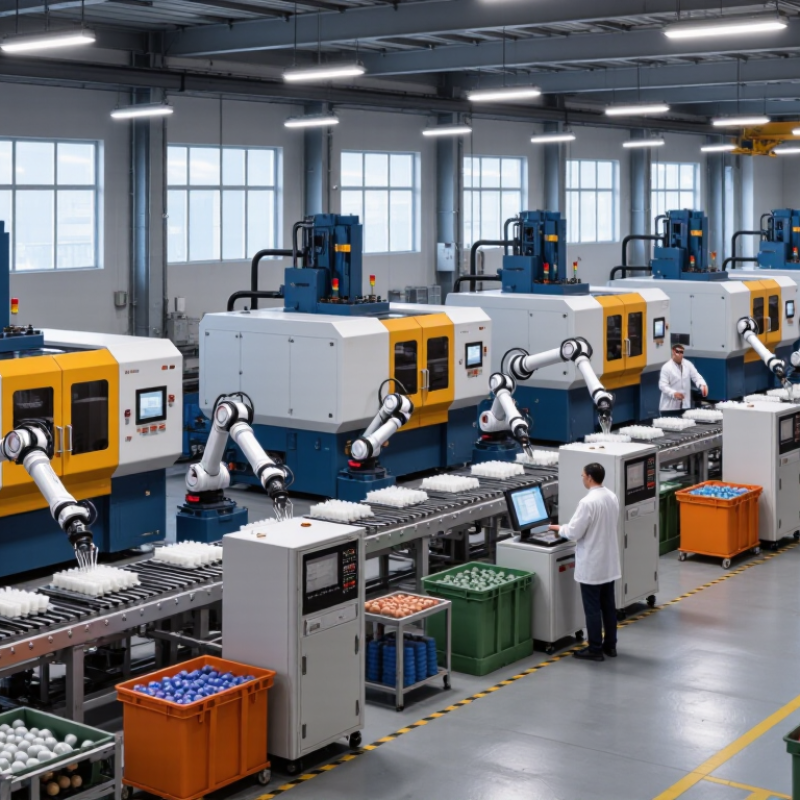
Injection molding manufacturers convert product designs into repeatable plastic parts. They select a suitable resin, prepare a metal mold, and inject heated material under controlled pressure. After cooling, the part is ejected and checked for dimensions, surface finish, and defects such as warping. The work often includes mold design, sampling, production planning, and adjustments when early parts do not match the drawing.
Small details matter. A capable manufacturer may review wall thickness, draft angles, and gate placement before tooling begins. These choices affect cycle time, strength, appearance, and cost.
For example, uneven wall thickness can leave a visible sink mark on a smooth appliance cover. Yet even careful planning cannot remove every surprise; a design that looks simple on screen may behave differently in a production mold.
The industries served are broad.
Automotive suppliers need durable clips, housings, and interior components, often in high volumes. Medical-device makers use molded parts for instrument housings and laboratory supplies, where clean production and consistent dimensions matter.
Electronics companies rely on precise enclosures and connectors, while packaging producers value fast cycles and lightweight containers.
Home appliances, consumer goods, and industrial equipment also depend on molded components.
Not every part fits. When a component needs unusual strength or a highly refined finish, teams may need several material and mold trials before production is reliable.
How to Evaluate Injection Molding Manufacturers in 2026
When comparing injection molding manufacturers in 2026, look beyond machine size and quoted unit price. Ask which resin grades they process regularly, what press tonnage suits your part, and how they control material drying. A practical supplier can explain why a thin rib may warp or why a gate mark appears near a visible edge. Specific answers matter.
Review the process, not just the sample. Request a first-article inspection report with measured dimensions, agreed tolerances, and the actual measurement method. Ask how the team records lot numbers, monitors cycle changes, and handles defects during production. Check mold maintenance records and clarify who pays for repairs. That matters. A polished sample is reassuring, but one successful run proves little. Ask whether the manufacturer can share results from a repeat production run.
Evaluate communication and capacity with the same care. Confirm realistic lead times for tooling, sampling, revisions, and volume orders. Ask who will flag a resin shortage or a design issue, and how quickly you will receive a clear update. Compare total cost, including tooling, setup, inspection, packaging, and shipping—not just the per-part figure. A low quote can hide missing services. Still, no checklist can replace judgment; a tidy factory tour may not show how problems are handled on a busy production day. Request a specific example and look for a response grounded in records, not promises.
Leading Injection Molding Manufacturers in 2026
Choosing a leading injection molding manufacturer means matching its capabilities to the part, not chasing a universal ranking. Grand View Research estimated the global injection-molded plastics market at about USD 287.7 billion in 2023, with projected growth through 2030. That scale reflects broad demand, but it does not guarantee consistent quality from any individual supplier. Strong candidates can explain their process controls, material traceability, tooling maintenance, and inspection methods. Ask how they manage a real production run, from drying resin pellets to checking dimensions on finished parts.
For 2026 sourcing, compare suppliers on repeatability, engineering support, capacity, and total landed cost. Request sample parts and measurement records, then review how the supplier handles defects and engineering changes. A polished presentation is useful, but shop-floor evidence matters more. Some manufacturers may offer impressive automation yet provide limited support for complex tooling; that trade-off deserves scrutiny. The best fit often depends on whether your project needs rapid prototyping, high-volume output, or tight dimensional control.
Tips: Share drawings, resin specifications, annual volumes, and tolerance requirements before requesting quotes. Ask for a written quality plan. Small details matter. A clear quote should identify tooling ownership, inspection frequency, and lead-time assumptions.
Key Capabilities and Specialties of Top Manufacturers
Top injection molding manufacturers in 2026 are distinguished by how well they match equipment, tooling, and process controls to a part’s needs. A supplier handling thin-wall housings may rely on fast presses, precise temperature control, and cavity-pressure monitoring. Medical or diagnostic components often call for clean production areas, documented inspections, and traceable material lots. Not every project needs the same level of automation.
Tooling support matters just as much. Strong manufacturers can review draft angles, wall thickness, gate placement, and expected production volume before a mold is cut. They may offer scientific molding, process validation, in-mold sensors, or automated part handling. Tips: Ask for sample inspection records, material certificates, and a clear plan for tool maintenance. Request parts made with the proposed resin.
Look for evidence, not just a long equipment list. Ask how the supplier manages color changes, dimensional drift, and production interruptions. A capable team should explain its controls in practical terms, such as checking a critical dimension with a calibrated gauge at defined intervals. Even experienced shops can miss an early design issue; a candid review before tooling starts is often more useful than a polished sales promise.
Injection Molding Manufacturers: Key Capability Bands
Typical machine clamp-force ranges help illustrate the production scale manufacturers may support. Ranges are broad industry categories, not company-specific ratings or a ranking.
Smaller presses are commonly suited to compact precision components, while higher clamp-force machines can accommodate larger parts and molds. Actual suitability also depends on machine design, mold dimensions, material, and part geometry.
How to Choose the Right Injection Molding Manufacturer
What Are the Top Injection Molding Manufacturers in 2026?
How to Choose the Right Injection Molding Manufacturer
Choosing a manufacturer is less about finding the biggest factory and more about matching its capabilities to your part. Grand View Research’s 2024 Injection Molded Plastics Market report estimated the global market at over US$300 billion in 2023. That scale means many suppliers compete, but capacity alone says little about consistency. Ask how the team handles resin changes, mold maintenance, and production ramp-ups. Request sample parts and inspect thin walls, edges, and surface finish under consistent lighting.
Compare suppliers using measurable evidence. Review their quality procedures, inspection records, and experience with your material and part geometry. Ask for a mold-flow analysis when the design has deep ribs, uneven wall thickness, or tight tolerances. Request a sample production run, not just a polished prototype. Check how quickly the manufacturer reports defects and explains corrective actions. No checklist catches everything. A missed detail may still appear after thousands of cycles.
Tips: Share a clear 2D drawing, 3D model, annual volume estimate, and expected tolerances. Ask for a written quote that separates tooling, unit price, and inspection costs. Confirm who owns the mold and how repairs are handled. Ask for evidence. If a claim sounds vague, request a real example. Small details matter.
Related Posts
-
Why Choose Injection Molding for Your Products?
-
Top 10 Injection Molding Companies in China
-
Best Injection Molding Machine Molds for Global Buyers?
-
2026 Best Mold Material for Injection Molding Solutions?
-
What Are the Top 10 Types of Plastic Injection Machines?
-
How to Enhance Your Plastic Injection Molding Process for Maximum Efficiency
Submit a quote request or book a design consultation
Plastimold Products is an end-to-end product development and manufacturing team. We provide product design, engineering, prototyping, tooling, plastic injection molding, assembly, packaging and fulfillment. We work with any size company from start-ups to enterprises from all around the world.
I have a product I want to manufacture
I have a product that is already designed and now needs to be manufactured.
I need a manufacturer to optimize my product for injection molding, help choose the correct material, and manage the product production.
I have tooling that I want to transfer or modify, or I need to produce new tooling.
I need design and engineering support
I have a product concept that I want to be designed and brought to market.
I have a product that needs to be reviewed, improved or DFM’ed.
I am looking for a manufacturer to provide an end-to-end solution, from design and development to inventory, marketing, and sales.

©2022 Plastimold Products - Privacy policy - Terms and Conditions