
Why Choose Top Chain Conveyor for Global Sourcing?

Why Choose Top Chain Conveyor for Global Sourcing?

Global sourcing demands more than a competitive quotation. It requires dependable movement, clear specifications, and support after delivery. A Top Chain Conveyor can serve production lines where stable transfer matters daily. In beverage, food packaging, cosmetics, and warehouse operations, products often travel across wet, dusty, or high-speed areas. Stainless steel frames, modular chains, and adjustable guides can help maintain consistent handling. Small details matter.

Experienced buyers examine more than conveyor length and motor power. They check load capacity, chain width, transfer radius, elevation changes, cleaning requirements, and local electrical standards. A reliable supplier should provide layout drawings, material information, testing records, and practical maintenance guidance. Factory videos are useful, but witnessed testing offers stronger evidence. That difference matters.

Global projects also depend on communication. Clear drawings can reduce mistakes between engineers, purchasing teams, and installation crews. Spare-chain availability, response times, packaging quality, and installation training deserve equal attention. These factors may appear ordinary. They often decide whether a line starts smoothly.

Top Chain Conveyor is not automatically the best choice for every application. Poor sizing, unsuitable materials, or weak after-sales service can create expensive downtime. A careful sourcing process compares verified performance with the actual working environment. Suppliers should explain limitations instead of promising perfection. That honesty builds trust.

The right decision combines operating experience, technical review, supplier accountability, and realistic cost analysis. With these checks, a Top Chain Conveyor can become a practical part of a safer, more maintainable global production system. Yet every project still needs review. Conditions change. Requirements evolve.
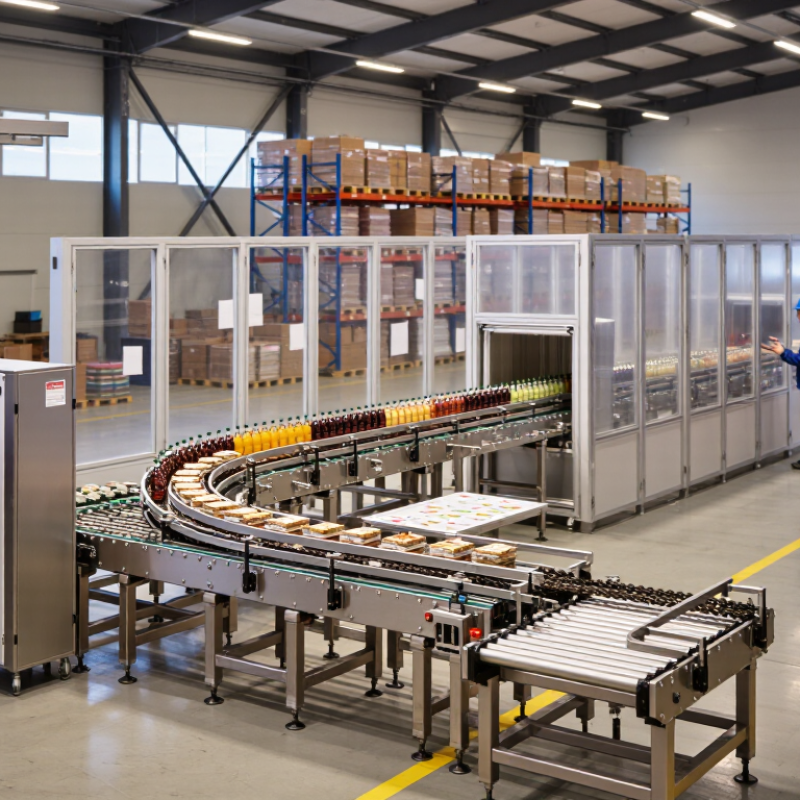
Why Choose Top Chain Conveyor for Global Sourcing?

What Is a Top Chain Conveyor?

A top chain conveyor is a material-handling system with a continuous chain made from linked plates. These plates form a smooth carrying surface for products. A motor drives sprockets, moving the chain along a fixed frame. Unlike belt conveyors, top chains can handle tighter transfers and selected curves.

The chain may use plastic, stainless steel, or other engineered materials. The correct choice depends on product weight, temperature, moisture, and cleaning conditions. For example, cartons need stable support, while bottles need careful control near transfers. Guides, side rails, wear strips, and sensors help maintain product alignment. Small details matter here. A poorly positioned guide can cause repeated jams.

From a global sourcing perspective, buyers should request clear drawings, load data, speed ranges, and spare-parts information. They should also confirm electrical compatibility and installation requirements before comparing prices. In factory assessments, engineers often inspect chain tension, frame rigidity, guarding, and access for maintenance. These checks reveal more than a catalog photograph. A top chain conveyor is not a magic solution. Heavy loads, sharp edges, or unsuitable speeds can shorten its service life. Sometimes, a simpler conveyor works better. That decision deserves testing with real products, not assumptions.

How Does a Top Chain Conveyor Work?

A top chain conveyor moves products on a continuous, linked surface. An electric motor turns the drive shaft. Sprockets then pull the chain forward. Each link supports cartons, trays, or containers as they travel through the line. The chain returns underneath the conveyor and repeats the cycle.

This design suits global sourcing facilities because it handles frequent product changes. Plastic chains resist moisture and many cleaning chemicals. Metal chains support heavier loads and higher temperatures. Guide rails keep packages aligned around curves, while sensors control spacing and stopping points. MHI’s 2024 Annual Industry Report found that 55% of respondents already use robotics and automation. The report also states that 88% expect adoption within five years. This pressure makes reliable material flow more important, although automation alone cannot fix poor layout planning.

Tips: Match chain width, load weight, speed, and product shape before purchasing. Keep sprockets aligned. Inspect links, bearings, and tension regularly. A small alignment error can create noise, wear, or product tipping. In practice, operators sometimes focus on motor power and overlook transfer points. That is a mistake. Leave access space for cleaning and maintenance. Also test real products, not only empty cartons. Performance can change with dust, condensation, or uneven packaging. Data from the conveyor supplier is useful, but site trials remain more convincing.

Which Industries Use Top Chain Conveyors?

Top chain conveyors support many industries because they move products steadily through demanding production environments. Their flat, overlapping plates handle bottles, cartons, trays, and small containers with controlled movement.

Food and beverage plants often use them between filling, labeling, and packing stations. Stainless steel construction and open access can simplify cleaning, although poor drainage still creates problems. Packaging facilities rely on top chain conveyors for carton transfers, accumulation, and direction changes. Pharmaceutical manufacturers use carefully specified systems for stable product handling and cleanable surfaces. Every material choice should match the product and cleaning method.

Automotive and electronics factories also use these conveyors. They carry components, housings, and assembled units between workstations. In warehouses, top chain systems can connect sorting, inspection, and dispatch areas. However, they are not ideal for every load. Heavy parts, sharp edges, or unstable packages may require different conveyor designs. I have seen layouts fail when engineers focus only on speed and ignore maintenance access.

Tips: Check product dimensions, surface finish, load weight, and required speed before sourcing. Leave space for inspection and chain replacement. Ask suppliers for wear data, operating limits, and cleaning guidance. A small trial run can reveal noise, slipping, or unexpected product damage before full installation.

Why Choose Top Chain Conveyor for Global Sourcing? - Which Industries Use Top Chain Conveyors?

Industry Typical Products Common Conveyor Applications Preferred Top Chain Configuration Typical Operating Conditions Typical Unit Load Range Key Sourcing Considerations
Food and Beverage Bottles, cans, cartons, trays, jars, and packaged food Filling-line transfer, accumulation, inspection, labeling, packing, and case conveying Flat-top chain Flush-grid chain Side-flex chain Frequent cleaning; exposure to moisture, food residues, and mild cleaning chemicals Approximately 0.2–25 kg per product, depending on package size and conveyor width Use corrosion-resistant frames, suitable food-contact materials where required, drainable designs, and easy-to-clean components
Bottling and Beverage Packaging PET bottles, glass bottles, aluminum cans, multipacks, and secondary cartons Container conveying, accumulation before filling, line merging, packaging, and palletizing transfer Low-friction flat-top Rubber-top chain Side-flex chain High line speeds; frequent starts and stops; wet production areas Approximately 0.1–20 kg per unit or multipack Check chain coefficient of friction, bottle stability, accumulation pressure, guide-rail adjustment, and water resistance
Pharmaceuticals and Healthcare Vials, bottles, blister packs, cartons, medical kits, and small containers Primary-package transfer, serialization stations, visual inspection, cartoning, and case packing Low-friction chain Flat-top chain Small-pitch chain Controlled environments; emphasis on cleanability, low particle generation, and precise handling Approximately 0.05–10 kg per product Select materials compatible with cleaning procedures, minimize product contact damage, and verify dimensional repeatability and guarding requirements
Cosmetics and Personal Care Bottles, tubes, jars, aerosol containers, cartons, and gift packs Filling, capping, orientation, labeling, inspection, bundling, and packaging-line transfer Flat-top chain Rubber-top chain Side-flex chain Products may have polished, lightweight, or unstable surfaces; moderate cleaning requirements Approximately 0.05–8 kg per unit Consider gentle conveying surfaces, adjustable guides, smooth transfers, compact layouts, and resistance to oils or cosmetic residues
Consumer Goods and Household Products Detergent bottles, personal-care packages, boxed goods, and household containers Assembly-line transfer, product accumulation, sorting, wrapping, case packing, and dispatch preparation Flat-top chain Multi-strand chain Side-flex chain Dry or moderately dusty environments; wide variation in package shape and weight Approximately 0.2–30 kg per product or case Verify load capacity, chain wear resistance, changeover flexibility, conveyor width, and compatibility with irregular package geometries
E-Commerce and Parcel Handling Polybags, cartons, totes, mailers, and small parcels Induction, merging, buffering, accumulation, scanning, diverting, and packing-station transfer High-grip chain Flat-top chain Multi-lane configuration Continuous operation; frequent acceleration, deceleration, and product accumulation Approximately 0.1–35 kg per item or tote Evaluate throughput, transfer gaps, accumulation pressure, barcode accessibility, noise, and integration with sensors and controls
Automotive Components Small castings, molded parts, fastener kits, filters, housings, and packaged components Workstation delivery, inspection, kitting, assembly-line buffering, and returnable-container conveying Heavy-duty flat-top Roller-top chain Multi-strand chain Higher loads; possible exposure to oil, coolant, metal particles, and abrasive debris Approximately 1–80 kg per unit, tray, or container Specify frame stiffness, chain tensile strength, wear strips, oil resistance, guarding, and maintenance access
Electrical and Electronics Enclosures, circuit boards, chargers, appliances, cables, and boxed components Assembly, testing, inspection, labeling, buffering, and packaging Low-friction chain ESD-compatible surface Small-pitch chain Clean, controlled production areas; products may be sensitive to scratches or static discharge Approximately 0.05–20 kg per product or carrier Confirm ESD requirements, surface finish, indexing accuracy, vibration control, and compatibility with automated inspection equipment
Tissue, Paper, and Printing Paper bundles, tissue packs, cartons, printed products, and wrapped rolls Stack transfer, bundling, wrapping, carton handling, and finished-goods conveying High-friction chain Flat-top chain Wide conveyor bed Dry environments with paper dust; products may be lightweight and prone to shifting Approximately 0.1–25 kg per bundle or pack Consider dust management, product grip, static control, belt or chain tracking, and sufficient support for flexible packages
Warehouse and General Manufacturing Bins, totes, cartons, containers, and assembled products Line-side logistics, order consolidation, accumulation, sorting, and internal material transfer Flat-top chain Roller-top chain Side-flex chain Variable operating conditions; frequent product changes and extended operating hours Approximately 0.5–50 kg per item or tote Prioritize modular replacement parts, standard widths, adjustable supports, spare-chain availability, and compatibility with existing automation

Note: Load ranges are indicative planning values for common tabletop and modular-chain conveyor applications. Actual capacity depends on chain material, conveyor width, speed, incline, product geometry, accumulation pressure, drive arrangement, and environmental conditions.

What Benefits Support Global Sourcing Decisions?

Why Choose Top Chain Conveyor for Global Sourcing?

A top chain conveyor can strengthen global sourcing decisions through flexibility, serviceability, and predictable operating costs. Its modular chain structure supports different layouts, speeds, and product sizes. Damaged sections can often be replaced individually. That can reduce repair disruption across international facilities.

The 2023 World Bank Logistics Performance Index reported that international shipments require about 44 days, from export entry to destination arrival. Delays make dependable factory handling more valuable. A top chain conveyor can provide steady product movement between processing, inspection, and packing areas. Its standardized components may also simplify spare-parts planning across borders. The 2024 annual report from the Material Handling Institute found that 55% of supply-chain leaders were increasing technology investments. Automation is becoming a sourcing factor, not merely an engineering preference.

Tips: Compare total cost, not purchase price. Check chain availability, motor standards, load limits, cleaning requirements, and local technical support. Request test data using your actual product weight and surface condition. Small details matter.

I would not treat one conveyor design as universally superior. Poor layout data can erase its efficiency gains. Buyers should also question optimistic payback estimates. A practical evaluation includes downtime records, energy use, sanitation needs, and future capacity. This evidence supports a more reliable global sourcing decision.

How to Evaluate Suppliers and Select the Right Model?

When sourcing a top chain conveyor globally, supplier evaluation should go beyond a polished catalog. Ask for engineering drawings, load calculations, material certificates, and recent test records. A dependable supplier explains operating limits clearly. That matters.

Review the supplier’s manufacturing process, quality controls, and export experience. Request photos of welded frames, sprockets, chain guides, and finished assemblies. Check whether dimensions match your layout, not a generic diagram. I would also verify response times, spare-parts availability, packaging methods, and installation support. A factory audit or video inspection can reveal details that documents miss. No checklist is perfect.

The right model depends on product weight, width, speed, temperature, surface, and required accumulation. Stainless steel may suit washdown areas, while coated carbon steel can reduce cost in dry environments. Plastic top chains often protect delicate packages, but they may struggle with sharp edges or high heat. Confirm allowable load, chain pitch, transfer gaps, incline limits, and motor capacity. Ask for a running sample with your actual products. Small packages can twist at transfers. Oversized motors can increase energy use without improving performance. Compare total ownership cost, including maintenance access and replacement parts, rather than focusing only on the purchase price. One overlooked detail can delay an entire production line.

Why Choose a Top Chain Conveyor for Global Sourcing?

Typical operating-speed ranges help buyers compare conveyor models before evaluating supplier capability, sanitation requirements, load limits, spare-parts support, and compliance documentation.

The ranges shown are common preliminary design ranges for industrial chain-conveyor applications. Actual speed depends on product weight, pitch, chain material, layout, accumulation, lubrication, and supplier design validation. Always request a confirmed operating range and load calculation from the supplier.

Submit a quote request or book a design consultation

Plastimold Products is an end-to-end product development and manufacturing team.  We provide product design, engineering, prototyping, tooling, plastic injection molding, assembly, packaging and fulfillment.  We work with any size company from start-ups to enterprises from all around the world.

I have a product I want to manufacture

I have a product that is already designed and now needs to be manufactured. 

I need a manufacturer to optimize my product for injection molding, help choose the correct material, and manage the product production.

I have tooling that I want to transfer or modify, or I need to produce new tooling.

I need design and engineering support

I have a product concept that I want to be designed and brought to market.

I have a product that needs to be reviewed, improved or DFM’ed.

I am looking for a manufacturer to provide an end-to-end solution, from design and development to inventory, marketing, and sales.
