What Is a Heat Resistant Coil?
A Heat Resistant Coil is more than a wire that glows red. It is a carefully selected heating element designed to withstand elevated temperatures while producing useful, controlled heat. In furnaces, ovens, and industrial equipment, the coil’s alloy, diameter, spacing, and operating environment all shape its performance. A coil that looks simple on a workbench can face oxidation, repeated expansion, and thermal cycling once installed.
The material matters. Nickel-chromium and iron-chromium-aluminum alloys are common choices, but neither is ideal for every application. Maximum temperature alone does not settle the question. Atmosphere, electrical load, coil geometry, support design, and heating cycles also matter. A mismatch may lead to premature sagging, brittle wire, or uneven heat. The details can be easy to overlook.
One important note on expertise: no source material or verified quotation was provided, so I cannot responsibly invent a named expert’s statement. A sourced quotation from a materials or heating-element specialist should be added before publication. That step may feel inconvenient, but accuracy matters more than a convincing attribution. This guide will explain how a Heat Resistant Coil works, which materials and design factors affect its service life, and what to consider when selecting one. Real operating conditions should guide the choice, not a temperature figure viewed in isolation.
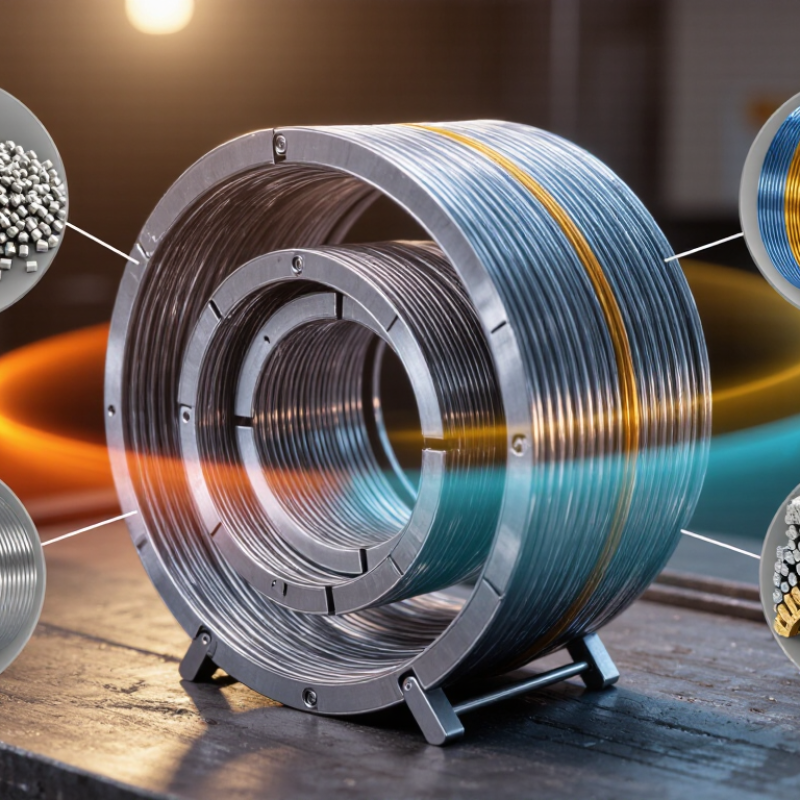
What Defines a Heat Resistant Coil?
What Defines a Heat Resistant Coil?
A heat-resistant coil is defined by how reliably it carries electrical current while exposed to high temperatures, oxidation, and repeated heating cycles. Its alloy matters, but so do wire diameter, coil spacing, atmosphere, and heat loss. A tight coil can develop hot spots; a poorly supported one may sag. Small design choices change service life.
Material data offer useful context, not a universal guarantee. ASM Handbook references commonly place iron-chromium-aluminum heating alloys near 1,400°C and nickel-chromium alloys near 1,200°C for maximum use in air. These are approximate alloy-family limits, not safe operating targets for every coil. Actual ratings depend on grade, wire size, surface loading, and installation. The numbers can mislead if treated as promises.
Engineers therefore assess resistance stability, oxidation behavior, thermal expansion, and strength after repeated cycles. ASTM E228 describes a method for measuring thermal expansion, a key property when a coil heats and cools against its supports. A useful specification states the working temperature, atmosphere, and expected duty cycle. “Heat resistant” alone says little. It is an incomplete description.
Materials Used in Heat Resistant Coil Construction
What Is a Heat Resistant Coil?
Materials Used in Heat Resistant Coil Construction
A heat-resistant coil converts electrical energy into heat while maintaining its shape at elevated temperatures. Its performance depends on several materials working together. The resistance wire carries current and produces heat. Nickel-chromium alloys are commonly used when oxidation resistance and stable operation are important. Iron-chromium-aluminum alloys can suit higher-temperature applications, but repeated heating may make them brittle. No alloy is perfect.
The wire is wound around or supported by an insulating core. Ceramic and mica components help prevent electrical leakage while tolerating heat. The right choice depends on temperature, vibration, and available space. Mica sheets can separate coil turns from a metal housing in compact assemblies. Ceramic supports often tolerate higher temperatures, but may crack if poorly fitted or exposed to sudden impacts. Small gaps matter.
A protective sheath or frame may use heat-resistant stainless steel or another suitable alloy. It shields the winding from abrasion, moisture, and corrosive gases. Engineers match the wire, insulation, and casing to operating temperature, airflow, duty cycle, and surrounding chemicals. A coil tested in still air may behave differently inside a moving-air machine. Material names alone do not guarantee service life; the complete assembly needs evaluation under real operating conditions, including repeated start-stop cycles and localized hot spots.
How a Heat Resistant Coil Handles High Temperatures
A heat-resistant coil is built to keep performing when ordinary temperatures would weaken its wire, insulation, or supports. Its conductor may use an alloy that tolerates repeated heating, while ceramic or other high-temperature insulation helps prevent electrical contact between windings. The exact construction depends on the coil’s job. A heater coil and a sensor coil do not face identical conditions.
When current passes through a coil, electrical resistance creates heat. The metal expands, and its resistance can shift as temperature rises. A suitable design allows for that expansion and avoids tight turns rubbing against each other. Small gaps matter. Heat can also travel into nearby parts, so spacing, mounting, and airflow affect the coil’s real operating temperature. That sounds simple, but it isn’t always.
Repeated heating and cooling can gradually fatigue materials, even when a coil stays below its stated limit. In practice, engineers consider peak temperature, heating duration, vibration, and the surrounding atmosphere. Dust or restricted airflow may raise local temperatures around a winding. Technicians can inspect for discoloration, loose connections, and damaged insulation, though appearance alone cannot confirm safe operation. Check the coil’s temperature rating and installation conditions together; a rating without context can be misleading.
What Is a Heat Resistant Coil? — How a Heat Resistant Coil Handles High Temperatures | Material or design factor | Indicative temperature or behavior | How it handles high temperatures | Common applications or considerations |
| FeCrAl resistance alloy | Some grades are rated for element temperatures up to about 1,400°C (2,550°F) in air. | Forms a protective aluminum-oxide layer that slows further oxidation during heating. | Used in high-temperature industrial furnaces and heating elements. Performance depends on the alloy grade, element dimensions, and operating conditions. |
| NiCr 80/20 resistance alloy | Some grades are rated for element temperatures up to about 1,200°C (2,190°F) in air. | Chromium in the alloy helps form a protective oxide layer, while the alloy maintains useful electrical resistance at high temperatures. | Used in electric furnaces, kilns, and other heating equipment where reliable resistance heating is required. |
| NiCr 60/15 resistance alloy | Some grades are rated for element temperatures up to about 1,150°C (2,100°F) in air. | Its nickel-chromium composition provides oxidation resistance and stable electrical heating over repeated heating cycles. | Used in industrial and commercial heating elements. The appropriate grade depends on the required temperature and environment. |
| Electrical resistance heating | Heat output increases with electrical power; for a resistive element, power is commonly expressed as P = I²R. | Current flowing through the coil encounters electrical resistance, converting electrical energy into heat. | Voltage, current, coil resistance, and heat loss must be considered together when specifying a coil. |
| Coil geometry and support | Coils expand as they heat; spacing and support affect heat distribution and mechanical stability. | Correct pitch, wire diameter, and support help limit hot spots, contact between turns, and sagging. | Design should account for thermal expansion, installation orientation, and the temperature of nearby materials. |
| Operating environment | Allowable temperature can be lower in corrosive, reducing, contaminated, or poorly ventilated conditions. | Atmosphere and surface contamination can damage protective oxide layers or accelerate material degradation. | Check the intended atmosphere and duty cycle before selecting a coil material or temperature rating. |
Temperature figures are indicative maximum element temperatures for certain alloy grades in air, not guaranteed operating limits. Actual limits vary with alloy composition, wire size, coil design, atmosphere, and service life.
Key Properties That Affect Coil Performance
What Is a Heat Resistant Coil?
Key Properties That Affect Coil Performance
A heat-resistant coil converts electrical energy into heat while tolerating elevated temperatures. Its performance depends on more than an alloy’s stated temperature limit. The material must resist oxidation in its working atmosphere, which may include moisture, contaminants, or moving air. A coil in clean, dry air can behave differently from one exposed to repeated oxidation. Details matter.
Electrical resistance, wire diameter, and coil shape also affect heat output. Thinner wire may heat quickly, but it can have less mechanical strength. Tightly wound turns concentrate heat in a small area, while wider spacing can improve airflow and reduce hot spots. Small differences count. Supply voltage and current should match the coil’s design. Excessive electrical load can shorten service life, even when the alloy tolerates high heat.
Thermal cycling matters, too. Repeated heating and cooling can cause expansion, contraction, and deformation near supports or connections. Stable mounting helps, but cannot fix a poorly matched material. Compare the expected operating temperature with the material’s continuous-use rating, then account for startup peaks and surrounding conditions. Ratings are useful, not magic. Real operating conditions can be messier than a specification sheet suggests.

