
What Is a PES Membrane Used For?
A Pes Membrane is not simply a fine screen. It is a porous separation layer used to clarify liquids, capture particles, and support filtration in biopharmaceutical processing, laboratories, and water treatment. Picture a sample passing through a compact filter: the liquid moves on, while particles larger than the selected pores are retained. The exact result depends on pore size, membrane treatment, and operating conditions. Small details matter.
Industry context helps explain the interest. Grand View Research estimated the global membrane filtration market at USD 17.07 billion in 2023 and projected continued growth through 2030. That figure covers multiple membrane materials and applications, not PES alone. Still, it signals the expanding role of filtration in sectors where consistent processing matters. PES is often selected for its useful flow characteristics and suitability for filtration assemblies; however, no polymer makes every process better. Compatibility and performance must be checked for the specific liquid and task.
Professor Andrew Zydney is a recognized researcher in membrane science. A concise takeaway from his research is: “Choose the membrane for the separation target, not by polymer name alone.” This is a paraphrase, not a verbatim quotation. It captures a practical point: pore rating, chemical compatibility, and fouling behavior can matter as much as the material itself. In this guide, we’ll look at what a PES membrane is used for, where it performs well, and what users should verify before choosing one. Some applications are less straightforward than product descriptions suggest. That deserves a closer look.
PES Membrane Composition and Structure
What Is a PES Membrane Used For?
PES Membrane Composition and Structure
A PES membrane is made from polyethersulfone, a synthetic polymer with aromatic rings linked by ether and sulfone groups. These chemical features help the material retain its shape during routine filtration and cleaning conditions. PES membranes are commonly used to filter water-based liquids in laboratory, pharmaceutical, and food-processing settings. The exact suitability depends on the membrane grade and operating conditions.
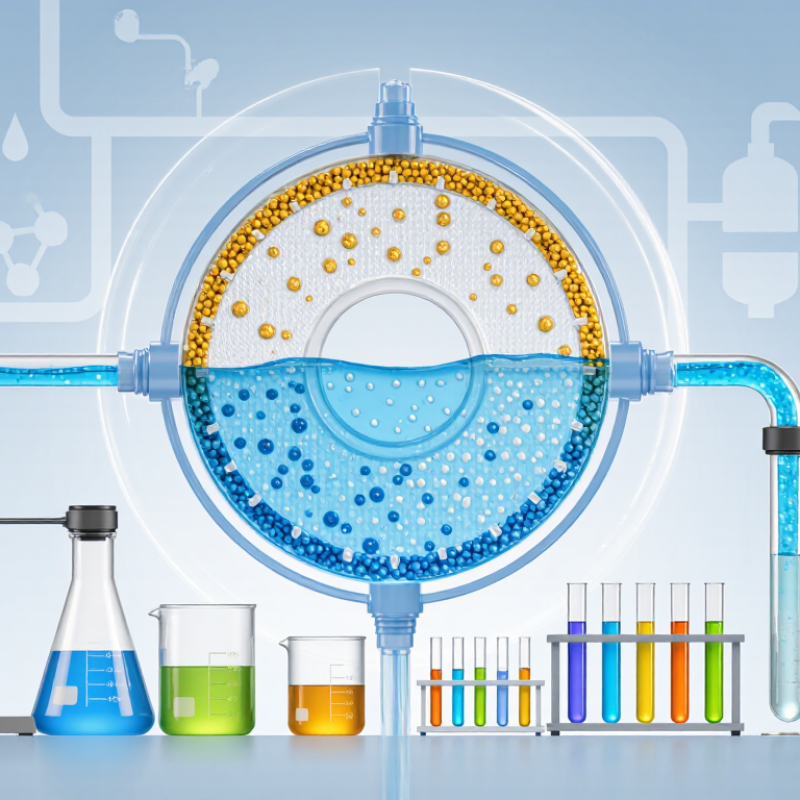
Many PES membranes have an asymmetric structure. A thin, selective outer layer controls what passes through, while a thicker, porous support underneath provides mechanical strength. Imagine a fine surface supported by a sponge-like body. This design can allow useful flow while capturing particles or microorganisms, depending on the specified pore size. PES is often described as hydrophilic, though surface treatments and formulation can affect wetting. One detail is easy to overlook: pore size alone does not predict performance. Pressure, liquid chemistry, and fouling matter too. No membrane is perfect.
Tips: Check the stated pore size, compatibility, and recommended operating limits before use. If filtration slows, inspect for clogging rather than assuming the membrane is defective.
What Is a PES Membrane Used For? - PES Membrane Composition and Structure
| Dimension | PES Membrane Information | Practical Significance |
|---|---|---|
| Polymer name | Polyethersulfone (PES), an aromatic thermoplastic polymer containing ether and sulfone linkages. | The rigid aromatic backbone contributes to the material’s strength and resistance to heat. |
| Polymer structure | The repeating structure contains aromatic rings joined by ether bonds (–O–) and sulfone groups (–SO₂–). | These chemical groups form the polymer framework; membrane performance also depends on how the membrane is manufactured and finished. |
| Typical membrane form | Many PES filtration membranes have an asymmetric, porous structure, with a selective surface layer supported by a more open porous region. | The surface layer helps determine separation performance, while the supporting region provides mechanical support and fluid pathways. |
| How pores are formed | PES membranes are commonly made by phase inversion, in which a polymer solution separates into polymer-rich and polymer-lean regions as it solidifies. | Manufacturing conditions can change pore structure, flow rate, and separation characteristics. |
| Common filtration formats | PES is used in microfiltration and ultrafiltration membranes. Available pore ratings and molecular-weight cutoffs vary by membrane design. | Microfiltration is generally used to retain particles and many microorganisms; ultrafiltration can retain larger dissolved macromolecules. |
| Liquid clarification | PES membranes are used to remove suspended particles from water, laboratory solutions, and process liquids. | The appropriate pore rating depends on the particles to be retained and the required flow rate. |
| Biological and protein solutions | Selected PES membranes are used to filter protein-containing and other biological solutions. | Low protein binding is often a desired property for these applications, but actual performance depends on membrane grade, solution composition, and operating conditions. |
| Pharmaceutical and laboratory filtration | Depending on its specification and validation, PES may be used for solution clarification or sterilizing-grade filtration. | A membrane should only be treated as sterilizing-grade when its specific performance and intended use have been validated. |
| Food and beverage processing | Appropriately specified PES membranes can be used for clarification and other filtration steps in food or beverage processing. | Material suitability, cleaning procedures, and regulatory requirements must be assessed for the intended process. |
| Properties to evaluate | Key selection factors include pore size or molecular-weight cutoff, flow rate, chemical compatibility, temperature limits, and extractables requirements. | There is no single PES membrane suitable for every fluid or filtration task; selection should be based on the application and product specification. |
Submit a quote request or book a design consultation
Plastimold Products is an end-to-end product development and manufacturing team. We provide product design, engineering, prototyping, tooling, plastic injection molding, assembly, packaging and fulfillment. We work with any size company from start-ups to enterprises from all around the world.
I have a product I want to manufacture
I have a product that is already designed and now needs to be manufactured.
I need a manufacturer to optimize my product for injection molding, help choose the correct material, and manage the product production.
I have tooling that I want to transfer or modify, or I need to produce new tooling.
I need design and engineering support
I have a product concept that I want to be designed and brought to market.
I have a product that needs to be reviewed, improved or DFM’ed.
I am looking for a manufacturer to provide an end-to-end solution, from design and development to inventory, marketing, and sales.

©2022 Plastimold Products - Privacy policy - Terms and Conditions