
Top 10 Explosion Proof Box Suppliers for Global Buyers
Choosing the right Explosion Proof Box supplier requires more than comparing prices and product photos. Buyers must examine enclosure materials, ingress protection, temperature ratings, wiring options, and documented testing. A reliable supplier should clearly explain how each box performs in hazardous industrial environments.
This guide introduces ten suppliers serving international buyers across energy, chemical processing, mining, manufacturing, and marine operations. Their product ranges may include junction boxes, terminal enclosures, control boxes, and customized stainless steel cabinets. Key evaluation points include manufacturing experience, quality-control procedures, technical support, delivery capability, and after-sales service.
Documentation matters greatly.
Buyers should request current certificates, test reports, drawings, and installation instructions before placing an order. Depending on the destination, relevant approvals may include IECEx, ATEX, UL, or other recognized national requirements. Certification names alone are not enough. The certificate scope must match the box design, intended zone, gas or dust group, and operating temperature.
Real purchasing decisions also involve less visible details. Can the supplier provide replacement gaskets? Are cable entries configurable? Does the enclosure remain practical for maintenance teams wearing protective gloves? These questions often reveal operational understanding.
This list is a starting point, not a final verdict. Supplier capabilities can change, and product claims should be independently verified. Some buyers may prioritize customization, while others need rapid delivery or local technical support. By comparing evidence instead of relying on marketing language, global buyers can make safer, more informed procurement decisions.
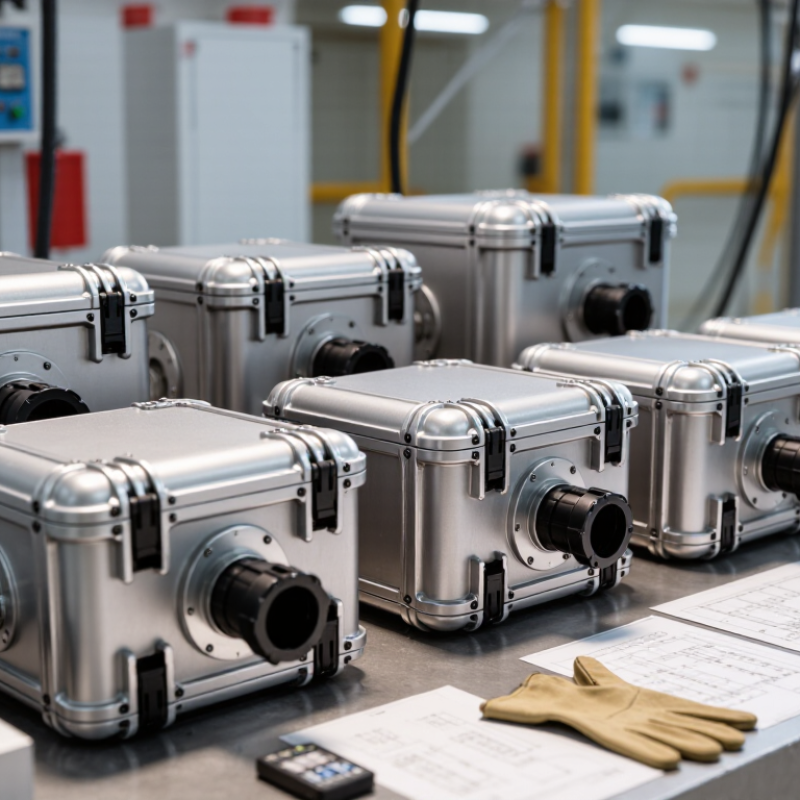
Explosion-Proof Boxes: Definition, Uses, and Protection Principles
Explosion-proof boxes protect electrical connections in areas containing flammable gas, vapor, or combustible dust. They are not merely strong metal containers. Their design controls ignition, heat, sparks, and flame transmission. IEC 60079-0 and IEC 60079-1 define key requirements for equipment used in explosive atmospheres.
A certified enclosure may contain an internal explosion without allowing flames to ignite the surrounding air. Its joints, cable entries, covers, and fasteners must work together. Surface temperature also matters. A hot enclosure can ignite nearby dust, even without visible sparks. OSHA classifies hazardous locations according to the type and concentration of dangerous materials. Buyers should match the box with the area classification, gas group, temperature class, and ingress-protection rating.
The market is expanding steadily. Grand View Research estimated the global explosion-proof equipment market at more than USD 8 billion in 2023, with continued growth expected through 2030. This supports stronger demand from oil, chemical, mining, pharmaceutical, and grain-processing facilities. Yet selection errors remain common. A box with a high IP rating is not automatically explosion-proof. Nor does thicker steel guarantee safety. Field inspections often find damaged threads, incorrect glands, or unused cable openings. Small details can decide performance. Top suppliers should provide traceable certificates, tested dimensions, material data, and clear installation instructions. The uncomfortable point is simple: even a certified box can become unsafe after poor installation or careless modification.
Top 10 Explosion Proof Box Suppliers for Global Buyers - Explosion-Proof Boxes: Definition, Uses, and Protection Principles
Anonymized supplier comparison based on common international product configurations and hazardous-area requirements
| Rank | Supplier Profile | Primary Enclosure Type | Common Materials | Typical Protection Method | Typical Ingress Rating | Certification Route | Hazardous-Area Applications | Customization Capability | Typical Buyer Priority |
|---|---|---|---|---|---|---|---|---|---|
| 01 | Supplier Profile A | Flameproof junction box | Aluminum alloy; stainless steel | Ex d; containment of internal explosion | IP66–IP68 | IECEx; ATEX; local approval where required | Oil and gas; petrochemical; chemical processing | Cable entries, terminals, drain plugs, windows | High mechanical strength and global compliance |
| 02 | Supplier Profile B | Stainless-steel control enclosure | 316L stainless steel | Ex d; Ex e; segregated control compartments | IP66; IP67 | IEC 60079 series; IECEx or ATEX assessment | Offshore platforms; marine terminals; corrosive plants | Pushbuttons, indicators, PLC interfaces, hinges | Corrosion resistance and long service life |
| 03 | Supplier Profile C | Polyester-reinforced enclosure | Glass-fiber-reinforced polyester | Ex e; Ex t for dust environments | IP65–IP66 | ATEX; IECEx; IEC 60079-31 for dust protection | Grain handling; food processing; wastewater facilities | DIN rails, mounting plates, cable glands, labels | Low weight and resistance to chemical exposure |
| 04 | Supplier Profile D | Explosion-proof terminal box | Die-cast aluminum; painted steel | Ex e; increased creepage and clearance distances | IP65–IP66 | IEC 60079-7; IECEx or ATEX certification | Motor connections; lighting circuits; instrumentation | Pre-wired terminals, cable layouts, grounding points | Fast installation and simplified field wiring |
| 05 | Supplier Profile E | Dust-ignition-proof box | Stainless steel; coated aluminum | Ex t; dust-tight enclosure and controlled surface temperature | IP66–IP68 | IEC 60079-31; ATEX or IECEx dust classification | 粉尘处理; pharmaceutical production; biomass plants | Thermal management, inspection windows, breather drains | Reliable protection against combustible dust |
| 06 | Supplier Profile F | Instrumentation enclosure | 316 stainless steel; aluminum alloy | Ex d or Ex e with low-voltage instrumentation | IP66 | IEC 60079-0 and applicable protection-mode standard | Process measurement; pressure control; flow monitoring | Transmitters, barriers, terminals, display cutouts | Signal integrity and compact installation |
| 07 | Supplier Profile G | Motor starter and control box | Aluminum alloy; stainless steel | Ex d; Ex e; thermal overload protection | IP55–IP66 | IECEx; ATEX; electrical equipment conformity testing | Pumps; compressors; conveyors; ventilation systems | Contactors, isolators, overload relays, emergency stops | Integrated motor control and maintenance access |
| 08 | Supplier Profile H | Outdoor hazardous-area box | Powder-coated steel; 316L stainless steel | Ex e or Ex t with UV and weather resistance | IP66; IP66K where specified | IEC 60079; NEMA enclosure ratings may supplement, not replace, Ex certification | Tank farms; utility stations; remote monitoring points | Sunshades, heaters, thermostats, mounting frames | Outdoor durability and temperature control |
| 09 | Supplier Profile I | Modular hazardous-area box | Aluminum alloy; GRP; stainless steel | Ex e; Ex t; modular segregation of circuits | IP65–IP66 | ATEX or IECEx depending on market and configuration | Skid packages; renewable-fuel systems; process modules | Expandable compartments, custom plates, mixed cable entry | Flexible engineering and project integration |
| 10 | Supplier Profile J | Compact connection box | Polyamide; GRP; die-cast aluminum | Ex e; Ex i interfaces for intrinsically safe circuits | IP65–IP66 | IEC 60079-7; IEC 60079-11 where intrinsic safety applies | Sensors; analyzers; local control stations; field devices | Terminal layouts, cable glands, mounting accessories | Compact dimensions and cost-efficient installation |
Submit a quote request or book a design consultation
Plastimold Products is an end-to-end product development and manufacturing team. We provide product design, engineering, prototyping, tooling, plastic injection molding, assembly, packaging and fulfillment. We work with any size company from start-ups to enterprises from all around the world.
I have a product I want to manufacture
I have a product that is already designed and now needs to be manufactured.
I need a manufacturer to optimize my product for injection molding, help choose the correct material, and manage the product production.
I have tooling that I want to transfer or modify, or I need to produce new tooling.
I need design and engineering support
I have a product concept that I want to be designed and brought to market.
I have a product that needs to be reviewed, improved or DFM’ed.
I am looking for a manufacturer to provide an end-to-end solution, from design and development to inventory, marketing, and sales.

©2022 Plastimold Products - Privacy policy - Terms and Conditions