
What Are the Top Electrical Cabinet Types in 2026?
An Electrical Cabinet is not just a metal box. It protects wiring, controls, drives, and other equipment from dust, moisture, impact, and accidental contact. The right design can also make inspection and maintenance easier. A cabinet beside a food-processing line may need a washable, corrosion-resistant enclosure. A unit in a factory control room may instead prioritize heat management and clear access to components. The details matter.
Market data helps explain why cabinet selection deserves careful attention. Grand View Research’s Electrical Enclosures Market report estimated the global market at about US$7.15 billion in 2023, with projected growth through 2030. That figure covers a broad enclosure market, not just one cabinet type, so it should be treated as context rather than a direct forecast for every application. Still, it points to rising demand across industrial, commercial, and infrastructure settings. Standards matter, too. IEC 60529 defines IP ratings for protection against ingress of solids and water, giving buyers a common way to compare enclosure protection.
This guide reviews the leading Electrical Cabinet types expected to matter in 2026, including wall-mounted, floor-standing, modular, outdoor, and hazardous-area designs. It considers material, protection rating, cooling, footprint, and service access. No cabinet suits every site. That sounds obvious, but it is often overlooked when teams focus only on price or dimensions. Use the comparisons as a starting point, then verify requirements against the equipment, environment, and applicable standards for your project.
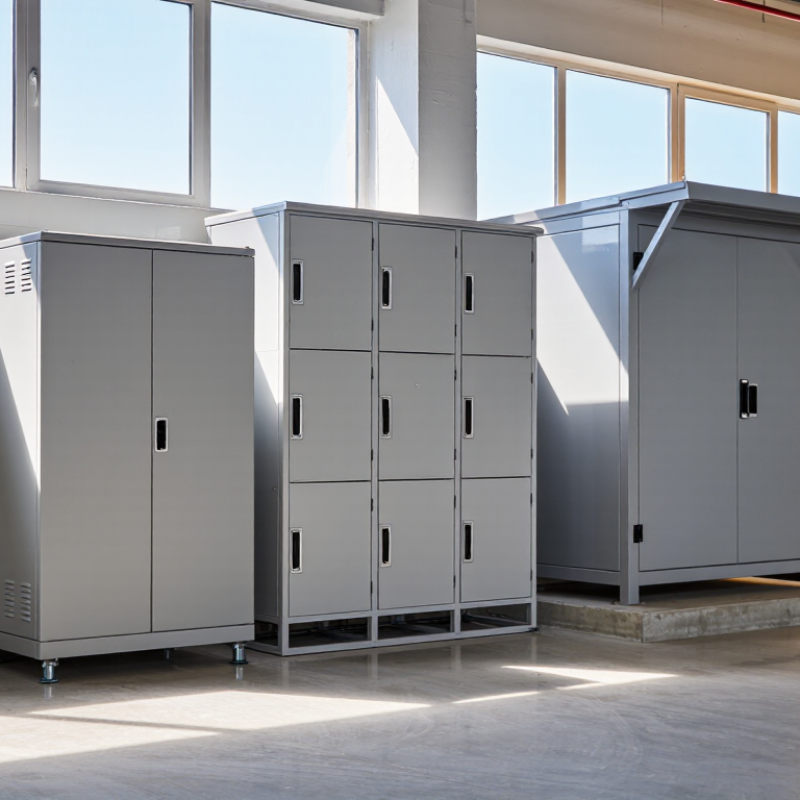
Wall-Mounted Electrical Cabinets for Compact Installations
What Are the Top Electrical Cabinet Types in 2026?
Wall-Mounted Electrical Cabinets for Compact Installations
Wall-mounted electrical cabinets make sense when floor space is limited but equipment still needs a protected, organized home. In a small workshop, a cabinet above a workbench can keep control components clear of tools and foot traffic. It also makes cable routes easier to inspect. Every centimeter counts.
Choose the enclosure around its actual environment, not just its dimensions. Check the required internal space, component heat output, cable entry points, and exposure to dust or moisture. A tightly packed cabinet may look efficient, but it can restrict airflow and complicate maintenance. Leave room for wiring bends and future changes. That part is easy to overlook.
Mounting strength matters, too. A loaded cabinet needs a suitable wall and secure fixings, with weight distributed according to the installation design. Hinged doors need enough clearance to open fully, especially in narrow corridors. Before installation, verify access for inspection and servicing. Small cabinets are useful, but they are not automatically simpler. I have seen compact layouts become awkward when terminals are buried behind added components. A quick layout review can prevent that.
Floor-Standing Cabinets for Large Equipment and Systems
Floor-standing cabinets suit installations where control gear, power distribution, and wiring must share a protected enclosure. Their height and footprint accommodate larger components, cable-bending space, and separation between power and control circuits. On a factory floor, that can mean a cabinet beside a production line, with room for drives, breakers, terminal blocks, and labeled cable ducts. Access matters too: front doors need clear swing space, while removable gland plates can simplify cable entry. Small detail, big impact.
Demand for electrical infrastructure is rising. The International Energy Agency’s Electricity 2024 report projected global electricity demand growth averaging 3.4% annually from 2024 through 2026. That forecast is not a cabinet sales measure, but it signals continued pressure on systems that distribute and control power.
For larger installations, enclosure selection should account for heat, dust, moisture, fault levels, and future expansion. Check the equipment heat load and ventilation needs; a crowded cabinet can trap heat even when its exterior looks substantial. Still, more space is not always better. Oversized enclosures may complicate layout and consume valuable floor area. Review the site conditions, access routes, and maintenance tasks before specifying dimensions. A measured layout beats guessing.
Modular Cabinets for Flexible, Expandable Configurations
Modular cabinets suit facilities that change faster than fixed enclosures can. Their standardized frames, removable panels, and configurable mounting rails let technicians add sections or rearrange equipment without replacing the entire assembly. That can simplify phased upgrades in factories, commercial buildings, and data rooms. Leave room for cable bends and airflow, though; a cabinet that fits on paper may be awkward to service.
The International Energy Agency’s Electricity 2024 report projects global electricity demand growth averaging about 3.4% annually from 2024 to 2026. This rising load makes adaptable electrical distribution increasingly useful, but it does not make every modular design suitable. Check rated current, short-circuit withstand capability, ingress protection, and heat dissipation against the site conditions. Small details matter.
During a retrofit, teams can install an initial cabinet bay, then add compatible bays as circuits expand. Clear labels and consistent grounding connections help keep later changes understandable. I have seen expansion plans underestimate spare space. That mistake is easy to make. Verify dimensions, cable entry points, and maintenance access before ordering; modularity offers options, not a substitute for engineering review.
Outdoor Cabinets for Harsh Environmental Conditions
Outdoor electrical cabinets face more than rain. They may endure salt spray, blowing dust, strong sunlight, freezing nights, and rapid temperature changes. The enclosure should match the site, not just the equipment list. Check the required ingress protection rating, corrosion exposure, and operating temperature range before choosing materials or seals.
Details matter. A cabinet near a coast may need corrosion-resistant construction and carefully protected fasteners. In direct sun, a light-colored exterior can reduce heat gain, though it cannot replace thermal calculations. Ventilation may help control internal temperatures, but openings can admit moisture or dust if poorly selected. Cable glands, door seals, and unused entry points also affect protection. Small gaps count. Condensation is easy to underestimate; heaters, vents, or drain features may help, depending on the enclosure design and local conditions.
Installation can weaken a good cabinet. Keep it clear of standing water, follow mounting guidance, and inspect seals after maintenance. An ingress rating describes tested conditions, not every real-world exposure. That distinction deserves attention. A cabinet that performs well in one climate may need different thermal management elsewhere, and no material is ideal for every site. Review the actual environment and service needs before specifying the enclosure.
What Are the Top Electrical Cabinet Types in 2026? — Outdoor Cabinets for Harsh Environmental Conditions
| Cabinet Type | Typical Construction | Common Enclosure Protection | Environmental Strengths | Typical Applications | Key Selection Consideration |
|---|---|---|---|---|---|
| Coated carbon-steel outdoor cabinet | Carbon-steel enclosure with a durable outdoor powder-coated or painted finish; often supplied with a gasketed door and rain canopy. | IP55 or IP66 designs are available. NEMA 3R or NEMA 4 configurations may be specified depending on construction and testing. | Suitable for outdoor exposure, rain, dust and general industrial environments when the coating and seals are properly maintained. | Utility controls, outdoor motor controls, equipment compounds and general-purpose industrial installations. | Inspect the coating for scratches and damage; exposed steel can corrode. Confirm the required protection rating for the actual installation. |
| Stainless-steel cabinet | Fabricated from stainless steel, commonly grade 304 or 316, with sealed doors and corrosion-resistant hardware. | IP66 and NEMA 4X options are common, but the rating depends on the complete enclosure design and certification. | Offers strong corrosion resistance. Grade 316 is often selected for chloride-rich coastal or marine environments; it is not immune to corrosion under every condition. | Coastal facilities, wastewater treatment, food-processing areas and chemical or marine installations. | Choose the alloy for the contaminants and cleaning chemicals present. Consider galvanic corrosion where dissimilar metals meet. |
| Polycarbonate or other non-metallic cabinet | Moulded, UV-stabilized insulating enclosure, often with a gasketed cover and corrosion-resistant fittings. | Many models are rated IP65 or IP66; some are certified to applicable NEMA enclosure requirements. | Does not rust and can resist many corrosive atmospheres. UV resistance, impact performance and temperature limits vary by product. | Outdoor instrumentation, small control systems, sensors and electrical equipment in corrosive locations. | Verify UV exposure limits, impact rating, internal heat dissipation and compatibility with the site’s chemicals. |
| Rainproof utility cabinet | Outdoor enclosure with a sloped roof or drip edge, protected openings and a door arrangement designed to shed rain. | NEMA 3R is commonly used for rain, sleet and external ice formation protection; some designs carry an IP rating as well. | Provides practical protection from outdoor precipitation in installations that do not require hose-down protection. | Outdoor electrical distribution, metering, lighting controls and sheltered utility equipment. | NEMA 3R does not mean the cabinet is dust-tight or suitable for washdown. Check condensation management and ventilation details. |
| Washdown and corrosion-resistant cabinet | Typically stainless steel or a suitable non-metallic material, with carefully designed gaskets, latches and cable entries. | NEMA 4X or IP66 designs are commonly considered for water and dust exposure; verify the specific certification and test conditions. | Designed for demanding wet or corrosive areas. IP66 indicates dust-tight construction and protection against powerful water jets; NEMA 4X includes corrosion-resistance requirements. | Food and beverage processing, washdown areas, coastal sites and some wastewater facilities. | Neither rating alone guarantees protection from every chemical, steam-cleaning method or high-temperature washdown process. |
| Thermally managed outdoor cabinet | Sealed enclosure paired with a rated heat exchanger, air conditioner or other cooling system; may include insulation or a sun shield. | Protection depends on the complete cabinet and thermal-management assembly; sealed systems can maintain a specified enclosure rating when correctly installed. | Helps control internal temperature where solar loading, high ambient heat or equipment losses could exceed component limits. | Outdoor drives, batteries, communication equipment and control systems with significant heat loads. | Size cooling for ambient temperature, solar exposure and internal heat generation. Filters, vents and service openings can affect ingress protection. |
| Insulated or anti-condensation cabinet | Enclosure with insulation, a thermostatically controlled heater, a drain or another condensation-control feature as appropriate. | Available with a range of IP and NEMA ratings; the rating must be confirmed for the complete assembled enclosure. | Helps limit condensation caused by temperature swings and reduces temperature extremes for sensitive equipment. | Remote outdoor controls, instrumentation and installations subject to cold nights, humid air or frequent temperature changes. | Heating and sealing should be designed together. A heater does not replace proper drainage, cable-entry sealing or humidity assessment. |
Selection note: IP and NEMA ratings use different test criteria and are not directly interchangeable. Confirm the applicable standard, certified rating, ambient-temperature range, corrosion exposure, cable-entry method and installation requirements before specifying a cabinet.
Control and Distribution Cabinets for Power Management
Electrical cabinets do more than hide wires. They shape how power is controlled, protected, and routed across a facility. Control cabinets house devices such as PLCs, relays, and variable-frequency drives. Distribution cabinets use breakers and busbars to divide incoming power among circuits. The distinction matters: a motor-control cabinet needs clear access for maintenance, while a distribution cabinet needs orderly feeder separation and fault protection. Small details count. A cramped bend radius can complicate installation, even when the drawing looks perfect.
Demand is rising. The International Energy Agency’s Electricity 2024 report projects global electricity demand growth averaging 3.4% per year from 2024 through 2026. That puts pressure on equipment layouts, especially where new loads meet older switchrooms. Specify cabinets around actual load profiles, heat loss, ingress protection, and future spare capacity—not just available floor space. IEC 61439 provides a framework for low-voltage switchgear and controlgear assemblies, including design verification. Still, a compliant assembly can be awkward to service. I have seen plans reserve space for breakers but forget the technician’s hands, test leads, and door swing. Leave room for those realities.
Top Electrical Cabinet Types in 2026
Representative nominal system voltages for common power management cabinet types. Actual ratings depend on the installation and design.
Low-voltage examples are shown at 230 V or 400 V; the medium-voltage switchgear example is 11 kV. These are representative system voltages, not universal cabinet ratings.
Article Source:
Submit a quote request or book a design consultation
Plastimold Products is an end-to-end product development and manufacturing team. We provide product design, engineering, prototyping, tooling, plastic injection molding, assembly, packaging and fulfillment. We work with any size company from start-ups to enterprises from all around the world.
I have a product I want to manufacture
I have a product that is already designed and now needs to be manufactured.
I need a manufacturer to optimize my product for injection molding, help choose the correct material, and manage the product production.
I have tooling that I want to transfer or modify, or I need to produce new tooling.
I need design and engineering support
I have a product concept that I want to be designed and brought to market.
I have a product that needs to be reviewed, improved or DFM’ed.
I am looking for a manufacturer to provide an end-to-end solution, from design and development to inventory, marketing, and sales.

©2022 Plastimold Products - Privacy policy - Terms and Conditions

