
China Top 10 Metal Parts Manufacturers for Global Buyers
China remains a major sourcing destination for precision Metal Parts, serving automotive, machinery, electronics, medical, and industrial equipment manufacturers worldwide. Its supplier network includes CNC machining workshops, stamping factories, casting specialists, and surface treatment providers. However, factory size alone does not prove manufacturing reliability. Buyers need evidence.
This guide introduces ten Chinese manufacturers with capabilities relevant to global procurement. Their evaluation considers machining accuracy, material control, production capacity, inspection systems, certifications, export experience, and communication quality. Practical details matter. A capable supplier should explain tolerances clearly, provide material certificates, and share inspection reports when requested. Samples should also match the approved drawings, not merely appear attractive in photographs.
Look closely.
A well-equipped facility may still struggle with changing specifications or small-volume orders. Conversely, a smaller manufacturer may offer closer engineering support and faster decisions. This is why the list should be treated as a starting point, not an unquestionable ranking. Supplier strengths can change with equipment upgrades, management decisions, or new quality controls.
From an experienced buyer’s perspective, factory visits, video audits, and trial orders remain valuable. Ask how rejected parts are recorded, how tools are maintained, and who approves final shipments. These answers often reveal more than a polished website. Payment terms, packaging standards, lead times, and after-sales responsibility also deserve careful review. No supplier fits every project. Verify current capabilities before signing a purchase agreement.
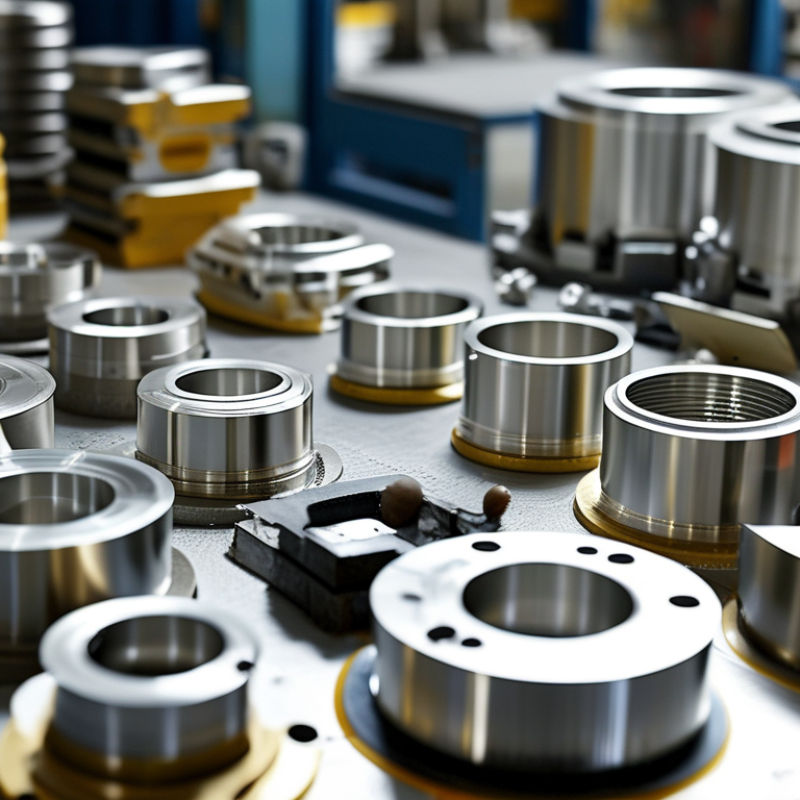
What Makes a Chinese Metal Parts Manufacturer Globally Competitive
China Top 10 Metal Parts Manufacturers for Global Buyers
What makes a Chinese metal parts manufacturer globally competitive? Scale is only part of the answer. UNIDO’s International Yearbook of Industrial Statistics 2024 reports that China produced about 31% of global manufacturing value added in 2022. This industrial depth supports dense supplier networks, skilled machining teams, and faster material sourcing. WTO data also shows China held about 14% of global merchandise exports in 2023. Buyers can therefore compare many qualified factories within one manufacturing region.
Strong manufacturers combine CNC machining, stamping, casting, and surface treatment under controlled processes. They use calibrated measuring tools, inspection records, and traceable material certificates. ISO 9001 certification helps, but it does not replace practical audits. Ask for sample reports, tolerance data, and process-capability results. A polished website proves little. Factory-floor evidence matters more. Still, no factory is perfect. Some suppliers communicate well but struggle with engineering changes. That weakness deserves attention.
Tips: Request a pilot order before annual contracts. Check dimensions with an independent inspection company. Confirm packaging, Incoterms, lead times, and corrective-action procedures in writing. Review how the factory handles a rejected batch. The response reveals its real quality culture. Also compare total landed cost, not only the quoted unit price. Cheap parts can become expensive after rework, delays, and customs adjustments.
Key Criteria for Selecting the Top Ten Manufacturers
China Top 10 Metal Parts Manufacturers for Global Buyers
Key Criteria for Selecting the Top Ten Manufacturers
Selecting leading metal parts manufacturers requires more than comparing prices. Experienced buyers examine machining accuracy, material control, production capacity, and delivery records. A reliable factory should provide clear drawings, inspection reports, and traceable material certificates. Its equipment must match the required process, whether turning, milling, stamping, casting, or surface treatment.
Quality systems matter. Look for documented procedures, calibrated measuring tools, and inspections during production. Certifications can support credibility, but they should not replace factory visits or sample testing. Ask how the manufacturer handles rejected parts, design changes, and urgent orders. Communication also reveals professionalism. Clear replies often prevent expensive misunderstandings.
Tips: Request samples before placing large orders. Check critical dimensions with an independent inspection service. Confirm packaging details, export documents, and replacement procedures in writing. Review recent production photos, but treat them as supporting evidence only. A polished website proves little.
The strongest candidates usually show technical experience, stable staffing, and honest production limits. However, no manufacturer is perfect. Even capable factories may miss a tolerance or delay a shipment. Notice how openly they explain problems and correct them. A practical supplier should welcome reasonable audits, protect drawings, and offer realistic lead times instead of making attractive promises.
China Top 10 Metal Parts Manufacturers for Global Buyers
Key criteria for selecting leading metal parts manufacturers are shown as practical buyer benchmarks. The values represent target performance levels commonly used in international supplier qualification and should be verified during due diligence.
Evaluation benchmarks: higher scores indicate stronger readiness for global metal parts supply programs.
Profiles of China’s Top Ten Metal Parts Manufacturers
China Top 10 Metal Parts Manufacturers for Global Buyers
China’s leading metal parts manufacturers serve different production needs, from prototypes to high-volume orders. Profile One specializes in CNC milling for aluminum housings and tight-tolerance brackets. Its engineers review drawings before machining, although some design feedback can arrive later than expected. Profile Two focuses on precision turning, producing shafts, bushings, and threaded components with automated inspection. Profile Three combines sheet metal cutting, bending, and welding for electrical enclosures. Profile Four manufactures stamped parts using progressive dies, helping reduce cycle times for larger orders.
Profile Five is experienced in die casting for lightweight structural parts. It checks surface defects and porosity, but buyers should request sample sections before approving mass production. Profile Six produces forged steel components for demanding mechanical assemblies. Its process emphasizes grain direction and heat treatment records. Profile Seven offers investment casting for complex shapes with reduced machining waste. Dimensional consistency remains strong, though tooling adjustments may require several review rounds.
Profile Eight supplies powder metallurgy parts, including small gears and wear-resistant components. Profile Nine focuses on metal injection molding for intricate, repeated designs. It can achieve fine details, yet material shrinkage must be considered during development. Profile Ten provides integrated fabrication, combining machining, finishing, and assembly under one quality system. This arrangement may simplify communication, but it can also hide weaknesses if subcontracting is not clearly disclosed. Global buyers should verify inspection equipment, material certificates, process controls, and export experience. A factory visit helps. So does an independent pre-shipment inspection. These profiles are useful starting points, not final proof.
Comparing Capabilities, Materials, Certifications, and Industries
China Top 10 Metal Parts Manufacturers for Global Buyers
Comparing capabilities, materials, certifications, and industries reveals meaningful differences among leading Chinese manufacturers. Strong suppliers usually combine CNC milling, turning, sheet metal fabrication, stamping, die casting, and secondary finishing. Their equipment matters, but process control matters more. Ask for tolerance records, sample inspection reports, and actual production photos. A clean factory floor helps, yet it cannot replace measurable evidence.
Material coverage often includes aluminum, stainless steel, carbon steel, brass, copper, and titanium. Some suppliers also process engineering plastics for mixed assemblies. Surface options may include anodizing, plating, powder coating, passivation, and heat treatment. Certifications should match the buyer’s industry. ISO 9001 supports quality management, while IATF 16949 suits automotive production. Medical projects may require ISO 13485, and aerospace work often demands AS9100. RoHS and REACH documentation can support electronics supply chains. Verify certificate scope and expiration dates.
Industries served commonly include automotive, medical equipment, aerospace, robotics, electronics, construction, and renewable energy. The best fit depends on production volume, tolerances, material traceability, and inspection needs. CMM inspection, optical measurement, and batch reports improve confidence. Still, comparisons are not always perfect. Some manufacturers communicate well but lack complex machining experience. Others have impressive equipment but slow engineering responses. A trial order can expose these gaps. Small details matter. Packaging, labeling, and revision control often decide whether global deliveries remain reliable.
| Rank | Manufacturer Profile | Primary Manufacturing Capabilities | Common Materials | Typical Dimensional Capability | Surface Treatments | Relevant Certifications or Quality Systems | Main Export Industries | Typical Order Fit | Buyer Evaluation Focus |
|---|---|---|---|---|---|---|---|---|---|
| 1 | High-Precision CNC Machining Specialist | 3-, 4-, and 5-axis CNC milling; CNC turning; Swiss-type machining; probing; CMM inspection; prototype-to-volume production | Aluminum 6061/7075, stainless steel 304/316, carbon steel, brass, copper, titanium, engineering plastics | Typical tolerance: ±0.01 mm; tighter tolerances may be available for selected features and materials | Anodizing, hard anodizing, electroless nickel, passivation, zinc plating, powder coating, bead blasting | ISO 9001 commonly available FAI reports RoHS/REACH documentation | Robotics, automation, industrial equipment, electronics, medical devices, aerospace subassemblies | Prototypes, low-to-medium volume, complex metal components | Inspect machine accuracy, material traceability, CMM capacity, and tolerance control on production batches |
| 2 | Automotive Stamping and Sheet-Metal Producer | Progressive die stamping, deep drawing, laser cutting, press braking, spot welding, riveting, automated assembly | Cold-rolled steel, galvanized steel, stainless steel, aluminum sheet, spring steel, copper alloys | Typical sheet thickness: 0.3–6.0 mm; production tolerances depend on material, tooling, and part geometry | Zinc plating, electrophoretic coating, powder coating, passivation, anti-corrosion oils | ISO 9001 IATF 16949 often required for automotive programs PPAP capability | Automotive, commercial vehicles, electrical enclosures, appliances, energy equipment | Medium-to-high volume parts with dedicated tooling | Review die ownership, tool maintenance, PPAP process, material certificates, and capacity loading |
| 3 | Aluminum Die-Casting and Machining Manufacturer | Cold-chamber die casting, trimming, deburring, CNC secondary machining, leak testing, pressure testing, assembly | Aluminum alloys such as ADC12, A380, AlSi9Cu3, and comparable customer-specified grades | Suitable for thin-wall housings and complex castings; machining is used for precision interfaces and sealing surfaces | Powder coating, liquid painting, anodizing on suitable alloys, chromate conversion, shot blasting | ISO 9001 IATF 16949 for qualified automotive suppliers Leak-test records | Automotive electronics, lighting, motors, pumps, power supplies, industrial controls | Medium-to-high volume cast housings and structural components | Verify porosity controls, X-ray inspection, die-life planning, pressure testing, and alloy compliance |
| 4 | Investment Casting and Precision Alloy Specialist | Wax-pattern investment casting, ceramic shell molding, heat treatment, CNC finishing, welding repair control, NDT | Stainless steel, carbon steel, tool steel, nickel-based alloys, cobalt alloys, heat-resistant alloys | Suitable for intricate near-net-shape parts; final critical dimensions are normally achieved by machining | Passivation, electropolishing, pickling, shot blasting, vibratory finishing, specialized heat treatment | ISO 9001 ISO 14001 may be available Dye penetrant testing Dimensional inspection | Valves, pumps, food-processing equipment, aerospace hardware, marine equipment, industrial machinery | Small-to-medium batch production with complex geometries | Examine casting simulation, shell quality, heat-treatment records, NDT procedures, and repair limits |
| 5 | Metal Forging and Closed-Die Component Producer | Hot forging, warm forging, cold heading, upset forging, trimming, heat treatment, CNC finishing | Carbon steel, alloy steel, stainless steel, aluminum alloys, copper alloys, titanium for specialized applications | High strength and directional grain flow; machining is commonly used for bearing, thread, and sealing features | Zinc plating, phosphate coating, black oxide, shot blasting, heat treatment, anti-corrosion treatment | ISO 9001 IATF 16949 for automotive applications Material heat-lot traceability | Automotive driveline, construction machinery, hydraulic systems, power tools, railway equipment | Medium-to-high volume load-bearing parts | Check forging force, grain-flow evidence, die management, heat-treatment uniformity, and fatigue testing |
| 6 | Stainless Steel Fabrication and Enclosure Manufacturer | Fiber laser cutting, CNC bending, TIG/MIG welding, robotic welding, sheet-metal assembly, pressure and fit-up checks | Stainless steel 304/316L, galvanized steel, mild steel, aluminum, copper sheet | Typical sheet thickness: 0.5–12 mm; accuracy depends on bend length, material condition, and weld distortion control | Brushing, polishing, passivation, electropolishing, powder coating, hairline finishing | ISO 9001 Welding procedure qualification RoHS/REACH support | Food processing, pharmaceuticals, electrical cabinets, laboratory equipment, water treatment, clean technology | Prototypes, custom enclosures, low-to-medium volume assemblies | Review weld qualification, surface-finish standards, corner quality, flatness, and packaging protection |
| 7 | Brass, Copper, and Small-Turned Parts Manufacturer | CNC turning, automatic screw machining, Swiss machining, thread rolling, knurling, cold forming, high-speed inspection | Brass, copper, bronze, stainless steel, free-cutting steel, aluminum | Typically suited to small diameters and high repeatability; thread and sealing features can be controlled through secondary operations | Nickel plating, chrome plating, tin plating, silver plating, passivation, anti-tarnish treatment | ISO 9001 RoHS/REACH declarations Plating thickness reports | Plumbing, HVAC, electrical connectors, sensors, instrumentation, consumer hardware | High-volume small parts and repeat orders | Confirm lead-free material compliance, plating thickness, burr control, thread gauges, and automatic inspection |
| 8 | Aerospace-Oriented Precision Components Supplier | 5-axis CNC machining, complex milling, turning, EDM, low-volume assembly, first-article inspection, NDT coordination | Aerospace aluminum, titanium, stainless steel, nickel alloys, precipitation-hardening stainless steel | Tight positional and profile tolerances are achievable on qualified parts; requirements are normally defined by customer drawings | Anodizing, passivation, chemical conversion, precision cleaning, heat treatment through approved processors | ISO 9001 AS9100 may be required FAI documentation NADCAP processor control may apply | Aerospace, defense, satellite systems, avionics, high-performance equipment | Low-volume, high-mix, documentation-intensive production | Validate approved-process control, configuration management, FAI quality, export compliance, and traceability |
| 9 | Medical and Clean-Equipment Metal Parts Supplier | Precision CNC machining, micro-machining, laser marking, electropolishing coordination, clean assembly, inspection planning | Stainless steel 316L, titanium, cobalt-chrome alloys, aluminum, PEEK-compatible metal assemblies | Fine surface finishes and close dimensional control for surgical, laboratory, and diagnostic components | Electropolishing, passivation, anodizing, laser marking, ultrasonic cleaning, controlled packaging | ISO 9001 ISO 13485 for medical-device production Material traceability | Medical devices, laboratory instruments, dental equipment, diagnostics, pharmaceutical machinery | Prototypes, validation builds, and controlled low-to-medium volume production | Check cleanliness validation, biocompatibility documentation where applicable, process validation, and change control |
| 10 | Large Welded Structures and Heavy Fabrication Manufacturer | Plate cutting, large-format CNC machining, structural welding, robotic welding, frame assembly, stress relief, load testing | Carbon steel, low-alloy steel, stainless steel, abrasion-resistant plate, aluminum structural grades | Suitable for large frames and welded assemblies; final accuracy depends on fixturing, weld sequence, and machining references | Shot blasting, industrial painting, powder coating, hot-dip galvanizing, corrosion-protection systems | ISO 9001 Welding procedure qualification EN 1090 or AWS-related capability may apply | Construction equipment, mining, renewable energy, industrial automation, logistics systems, marine structures | Low-to-medium volume large assemblies and engineered-to-order projects | Assess welding personnel qualification, distortion control, lifting plans, coating specification, and dimensional reports |
How Global Buyers Can Evaluate and Source Metal Parts Safely
China Top 10 Metal Parts Manufacturers for Global Buyers
How Global Buyers Can Evaluate and Source Metal Parts Safely
China remains a major sourcing base for machined, stamped, forged, and cast metal parts. The World Steel Association reported global crude steel production of about 1.89 billion tonnes in 2023. This scale creates strong capacity, but capacity does not guarantee consistency. Global buyers should verify material grades, production equipment, inspection skills, and traceability before placing large orders.
Ask for recent inspection records, material certificates, process-control plans, and clear tolerance data. Request production samples from the same equipment used for mass production. Check dimensions with calibrated gauges, not visual judgment alone. Independent testing can confirm hardness, chemical composition, coating thickness, and fatigue performance. The ISO Survey also shows millions of organizations use certified management systems worldwide, but certification alone cannot replace product testing. A clean certificate may still hide weak process control. No checklist is perfect.
Tips: Compare three suppliers using identical drawings and quality requirements. Confirm Incoterms, packaging, labeling, and replacement terms in writing. Use a pre-shipment inspection for the first orders. UNCTAD reports that more than 80% of global merchandise trade moves by sea, so moisture protection matters. Add desiccant bags, sealed wrapping, and corner protection for long transit. Keep a retained sample from every batch. It may feel excessive, yet one undocumented change can create costly assembly failures. Ask difficult questions early, and record every answer.
Article Source:
Submit a quote request or book a design consultation
Plastimold Products is an end-to-end product development and manufacturing team. We provide product design, engineering, prototyping, tooling, plastic injection molding, assembly, packaging and fulfillment. We work with any size company from start-ups to enterprises from all around the world.
I have a product I want to manufacture
I have a product that is already designed and now needs to be manufactured.
I need a manufacturer to optimize my product for injection molding, help choose the correct material, and manage the product production.
I have tooling that I want to transfer or modify, or I need to produce new tooling.
I need design and engineering support
I have a product concept that I want to be designed and brought to market.
I have a product that needs to be reviewed, improved or DFM’ed.
I am looking for a manufacturer to provide an end-to-end solution, from design and development to inventory, marketing, and sales.

©2022 Plastimold Products - Privacy policy - Terms and Conditions

