2026 Best Automotive Injection Molding Manufacturers
Automotive injection molding sits behind many parts drivers rarely notice: dashboard bezels, connector housings, seat components, and under-hood clips. Yet each part must fit precisely, resist daily wear, and emerge consistently across large production runs. In this market, choosing a manufacturer is not just a price comparison. Tool design, resin knowledge, process control, and communication all matter.
Mold-design authority John Beaumont, author of Runner and Gating Design Handbook, emphasizes a practical principle in his published work: successful molding depends on designing the mold and process as a connected system. That idea is central to automotive injection molding. A supplier should explain how it controls filling, cooling, shrinkage, and ejection—not simply promise a fast cycle time. Ask for evidence, such as dimensional inspection results, material traceability, and a clear plan for tool maintenance. Details matter. A warped panel or loose clip can reveal more than a polished capability brochure.
This 2026 guide examines manufacturers through capabilities that buyers can verify: automotive experience, engineering support, quality systems, production capacity, and responsiveness during design changes. It also considers practical constraints, including tooling lead times and the cost of validating a new part. Rankings are useful, but they are never perfect. A supplier suited to a high-volume interior program may not fit a small, technically demanding component. Readers should confirm current certifications and facility capabilities directly before making a decision.
Automotive Injection Molding: Role and Key Applications
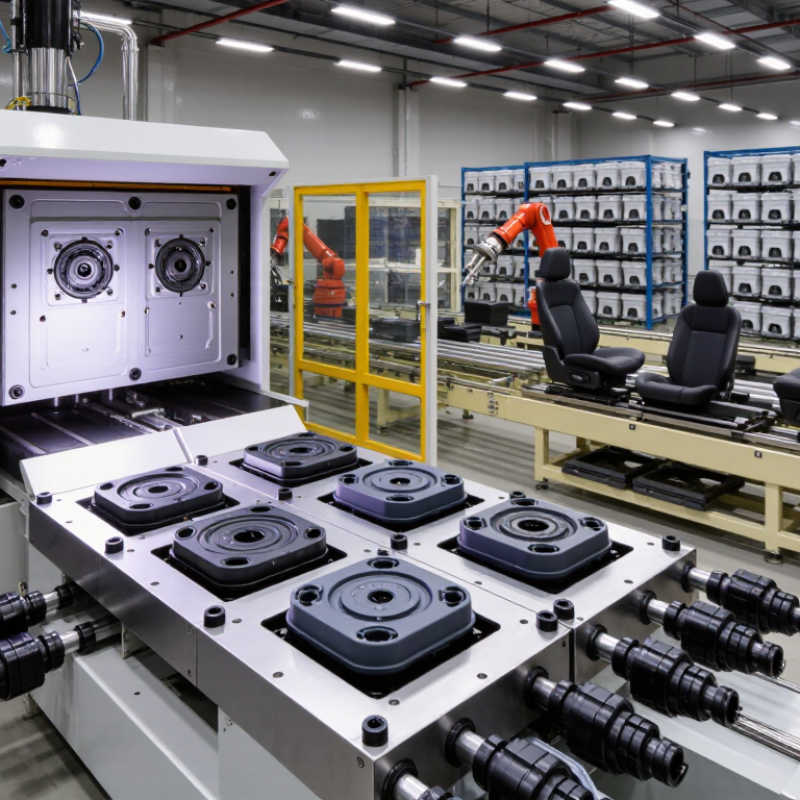
Injection molding turns engineered polymers into repeatable automotive components, from dashboard panels and door trims to connector housings and fluid reservoirs. The process supports complex shapes, integrated clips, and consistent production at scale. A molded part can also combine several features, reducing assembly steps. But material choice matters: heat, vibration, chemicals, and impact can expose design weaknesses over time.
Demand is substantial. OICA reported 93.5 million motor vehicles produced worldwide in 2023, illustrating the scale of component manufacturing. The U.S. Department of Energy estimates that a 10% reduction in vehicle weight can improve fuel economy by 6–8% in conventional vehicles. This is not a guaranteed benefit of molded plastics; performance depends on the material, part design, and what it replaces. In electric vehicles, molded components commonly serve battery-system covers, cable guides, interior trim, and lightweight housings. Each application needs suitable thermal and mechanical performance.
Tips: Check resin data against real operating temperatures, not just catalog values. Test clips and thin ribs under vibration. Small details matter. A design may look sound on screen, yet still warp or rattle after installation.
How to Evaluate Automotive Injection Molding Manufacturers
Choosing an automotive injection molding manufacturer starts with evidence from the production floor, not a polished capability deck. Ask how the team controls resin drying, melt temperature, injection pressure, and cooling time for each approved material. Small shifts matter. They can affect part fit, surface finish, or strength. Request records from a representative production run, including cavity-level measurements and responses to out-of-spec results. Check whether material lots, tool revisions, and inspection results can be traced to finished parts. Traceability helps teams investigate problems without relying on memory.
Evaluate tooling and validation together. Review mold maintenance logs, expected tool life, spare inserts, and ownership terms before production begins. Ask to see dimensional reports for critical features, such as clip openings or sealing surfaces. Confirm that measurement methods are repeatable across shifts. A capable team should explain its trial plan, sampling approach, and process for managing engineering changes. Visit the floor if possible. Observe setup approval, first-piece checks, and how rejected parts are contained. Even a strong audit can miss a weak handoff between shifts, so verify the routine more than once. Note gaps, then agree on measurable corrective actions, owners, and dates before awarding volume work.
Leading Automotive Injection Molding Manufacturers in 2026
Leading automotive injection molding manufacturers in 2026 are judged by more than quoted part prices. Buyers need suppliers that hold tight tolerances across long production runs and document material changes. A molded connector housing may look simple, yet its clips must fit consistently after repeated thermal cycling. Tool care matters.
Capable manufacturers connect mold design, material selection, and production control early. They can explain how gate placement affects surface finish, or how cooling channels influence cycle time and warpage. Ask for process validation records, dimensional inspection results, and clear traceability for resin lots. Check how defects are handled, not just how they are reported. Data matters, but shop-floor experience matters too.
The best fit depends on the component, production volume, and required durability. A supplier may excel at interior trim but have less experience with heat-exposed under-hood parts. No supplier is flawless. Review the actual process, including maintenance plans and change controls, rather than relying on polished presentations. Small process deviations can create costly fit issues, so regular communication between engineering and production teams remains important.
Comparing Manufacturer Capabilities, Quality, and Support
Automotive injection molding manufacturers should be compared by what they can prove, not by equipment lists alone. Ask whether their presses cover the required part sizes and resin types, and whether they manage tooling design, mold trials, and production under one roof. A supplier that can explain gate placement, cooling, and expected cycle times is easier to assess than one offering broad promises. Details matter.
Quality systems deserve equal scrutiny. Request sample inspection reports, material traceability records, and examples of how dimensional variation is handled. For a dashboard housing, a small shift near a clip may affect assembly even when the surface looks clean. Review how the manufacturer monitors process changes between trial runs and full production. No inspection plan catches everything; that limitation should be discussed openly.
Support can shape the project as much as machine capacity. Compare response times, engineering access, change-control practices, and the clarity of production updates. Ask who handles a late design revision and what information they need to evaluate its impact. A helpful team will explain trade-offs, including added tooling time or cost, rather than simply agreeing. That takes time. Still, practical communication can prevent avoidable surprises once parts reach the assembly line.
2026 Best Automotive Injection Molding Manufacturers - Comparing Manufacturer Capabilities, Quality, and Support
This is a practical comparison of common automotive supplier capability profiles, not a ranking of named manufacturers. Actual capabilities vary by facility, equipment, material, and program; confirm them during supplier qualification.
| Evaluation Dimension | High-Volume Production Profile Suited to established, repeat production | Precision & Technical Profile Suited to tight-tolerance or engineered components | Tooling-Integrated Profile Suited to programs needing coordinated tooling and molding |
|---|---|---|---|
| Typical program fit | Stable, repeatable parts with forecastable demand and a defined production process. | Components where dimensional control, material behavior, or feature complexity needs close process attention. | New programs where mold design, build, sampling, and production transfer benefit from a coordinated supplier. |
| Production capability to assess | Available press capacity, cycle-time performance, automation, shift coverage, and capacity planning for peak demand. | Process controls, machine condition, mold temperature management, measurement capability, and experience with the required resin. | In-house molding capacity, tooling engineering resources, mold maintenance arrangements, and responsibility for process handover. |
| Quality system & automotive readiness | Ask for current quality certifications and evidence that production controls are maintained at the specific site. | Review the site’s measurement systems, inspection plans, process monitoring, and handling of nonconforming product. | Confirm how quality planning spans tooling, sample approval, production launch, and ongoing manufacture. |
| APQP, PPAP & validation | Confirm ability to support the customer’s APQP and PPAP requirements, including production-trial evidence and agreed submission records. | Discuss dimensional layouts, material or performance testing, measurement-system analysis, and capability studies where required. | Agree who owns mold trials, sample iterations, design changes, validation records, and approval timing. |
| Materials & process expertise | Check experience with the specified resin grades, approved material sources, drying or conditioning needs, and material traceability. | Assess knowledge of resin-specific shrinkage, reinforcement or additives, process windows, and appearance or functional requirements. | Verify that material selection and mold design are reviewed together for the specified part and application. |
| Traceability & change control | Request a demonstration of lot or batch traceability, production records, and controls for material or process changes. | Review how process parameters, inspection results, revisions, and corrective actions are documented and retained. | Confirm revision control for part data, mold drawings, tooling changes, and production documentation. |
| Tooling ownership & maintenance | Clarify tool ownership, storage location, preventive maintenance, repair approval, and end-of-program transfer terms. | Review maintenance practices for features affecting precision, including wear monitoring and repair validation. | Establish tooling ownership, design approval, maintenance scope, spare-component strategy, and transfer conditions in writing. |
| Launch & engineering support | Evaluate launch planning, capacity ramp-up, escalation contacts, and support for production disruptions. | Assess access to process engineers, root-cause analysis, corrective-action follow-up, and technical communication. | Confirm the availability of tooling, molding, and quality teams during design reviews, trials, and launch. |
| Best-fit consideration | Often worth considering when consistent supply, repeatability, and scalable production are central priorities. | Often worth considering when product performance or dimensional requirements call for deeper process expertise. | Often worth considering when a single coordinated workflow for tooling development and molded-part production is important. |
Qualification tip: Request facility-specific certification evidence, relevant customer references, sample PPAP documentation, capacity and contingency plans, and written agreement on tooling ownership and engineering support. Do not assume that a capability or certification at one site applies to every site operated by a supplier.
Emerging Trends in Automotive Injection Molding
Automotive injection molding is shifting from simple part production toward integrated material and process design. Electric vehicles need lighter housings, brackets, and interior components, but weight reduction cannot weaken impact performance or dimensional stability. Thin-wall molding and optimized rib patterns can reduce resin use. They also demand tighter control of melt temperature, pressure, and cooling.
Material choices are changing, too. Recycled polymers and bio-based blends are attracting interest, especially for non-structural parts. Yet a recycled resin is not automatically a reliable one. Moisture, color variation, and inconsistent flow can affect surface finish and cycle time. Practical teams test material batches and track process data before scaling production. Small details matter.
Multi-material molding is another growing tool. A rigid substrate paired with a soft-touch seal can reduce assembly steps and potential leak paths. In-mold sensors can capture pressure or temperature changes during each cycle, helping operators spot drift before defects spread. Digital process models may support faster adjustments, though they are only as useful as the measurements behind them. More data is not always better.
Manufacturers are also exploring microcellular foaming to create lighter components with less material. The trade-off is that appearance and strength need careful validation, especially around visible surfaces and mounting points. Not every trend fits every part. A plain, well-controlled molding process may still outperform a more advanced setup when volumes, geometry, or material requirements are modest. The difficult part is knowing when not to add complexity.
Related Posts
-
Top 10 Benefits of Automotive Injection Molding You Need to Know
-
Exploring Alternative Methods to Automotive Injection Molding for Efficient Production
-
How to Choose Automotive Injection Molding for Your Needs?
-
2026 How to Choose the Right Plastic Injection Machine for Your Needs?
-
Top Tips for Successful Polyethylene Injection Molding Techniques
-
7 Best Overmolding Injection Molding Techniques for Enhanced Product Durability
Submit a quote request or book a design consultation
Plastimold Products is an end-to-end product development and manufacturing team. We provide product design, engineering, prototyping, tooling, plastic injection molding, assembly, packaging and fulfillment. We work with any size company from start-ups to enterprises from all around the world.
I have a product I want to manufacture
I have a product that is already designed and now needs to be manufactured.
I need a manufacturer to optimize my product for injection molding, help choose the correct material, and manage the product production.
I have tooling that I want to transfer or modify, or I need to produce new tooling.
I need design and engineering support
I have a product concept that I want to be designed and brought to market.
I have a product that needs to be reviewed, improved or DFM’ed.
I am looking for a manufacturer to provide an end-to-end solution, from design and development to inventory, marketing, and sales.

©2022 Plastimold Products - Privacy policy - Terms and Conditions