
Top 10 Types of Nitrile O Rings for Global Buyers
Choosing the right Nitrile O Rings can decide whether a hydraulic system runs smoothly or leaks beside a hot machine.
Global buyers often compare hardness, temperature range, pressure resistance, fuel compatibility, and cost. These factors interact. A 70 Shore A ring may suit a pneumatic valve, yet fail in a vibrating diesel assembly. Small details matter. Groove depth matters. Surface finish matters. Even storage temperature can affect performance.
Dr. Robert Flitney, a recognized sealing-technology author, states, “Material choice must follow the operating environment, not habit.” This principle guides our review of the Top 10 Types of Nitrile O Rings for Global Buyers. We examine standard NBR compounds, low-temperature grades, high-temperature formulations, oil-resistant blends, fabric-reinforced options, and specialized grades for demanding industrial equipment. Each type offers a different balance between flexibility, abrasion resistance, compression set, and chemical tolerance.
The practical question is not simply, “Which ring costs less?” It is, “Which ring remains reliable after months of pressure, heat, movement, and exposure?” That answer can change between a factory in Germany, a mining site in Australia, and a marine workshop in Brazil. Standards also vary, and supplier descriptions are not always complete. Buyers should verify compound codes, batch records, test data, and dimensional tolerances before ordering.
There is no perfect Nitrile O Rings solution. Selection requires judgment, evidence, and occasional reconsideration. This guide provides a clear starting point, while acknowledging one uncomfortable truth: laboratory performance may not fully match field conditions.
What Are Nitrile O Rings and Why Are They Used Worldwide?
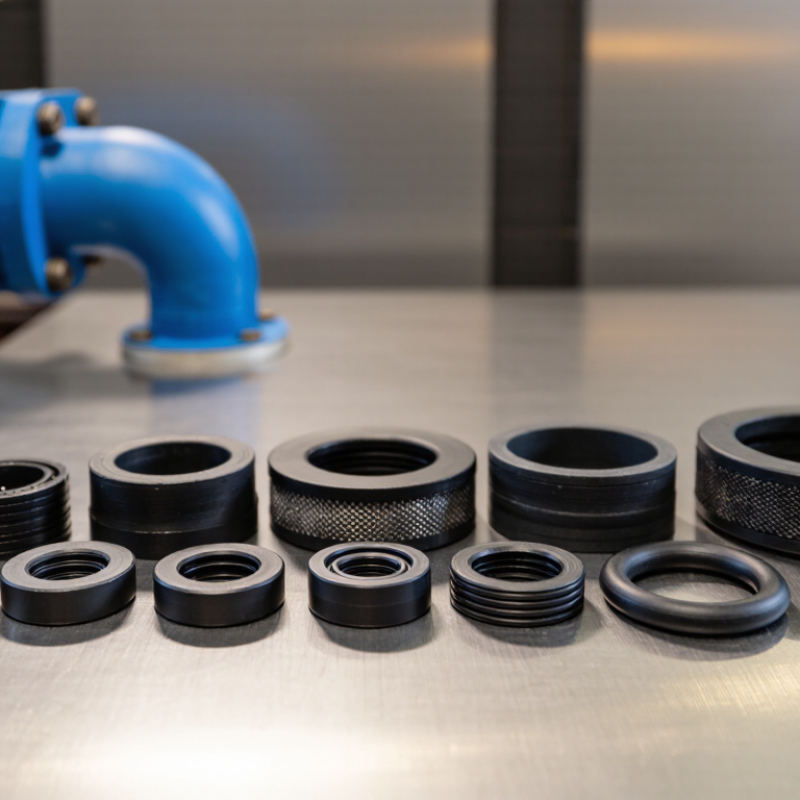
Nitrile O rings, often called NBR O rings, are elastic sealing components made from acrylonitrile-butadiene rubber. They sit inside grooves and block fluids from passing between joined surfaces. Their popularity comes from practical balance: good resistance to petroleum oils, hydraulic fluids, grease, and moderate pressure. They also offer dependable sealing at a reasonable cost.
Global buyers use several nitrile types, including standard, high-acrylonitrile, low-temperature, hydrogenated, conductive, fabric-reinforced, food-contact, high-hardness, soft, and custom-compounded versions. Each type behaves differently. Higher acrylonitrile content usually improves oil resistance but reduces flexibility in cold conditions. Harder compounds can resist extrusion, yet they may seal poorly on rough or moving surfaces. That trade-off is easy to underestimate.
Tips: Confirm temperature, pressure, fluid, groove size, hardness, and certification requirements before ordering. Check the actual operating temperature, not only the machine’s rated temperature. Nitrile performs poorly with strong ozone exposure, sunlight, and some aggressive chemicals. A compatibility chart helps, but it is not perfect. Testing the seal with the real fluid is safer. Small differences in compound formulation can change service life, so request inspection data and lot traceability from the supplier.
How the Top 10 Nitrile O Ring Types Are Classified
Nitrile O rings are best classified by compound, hardness, cross-section, and working environment—not by a single universal top-ten list. ASTM D2000 classifies rubber materials through coded requirements, including polymer type, hardness, tensile strength, and resistance to heat and fluids. This helps buyers compare specifications instead of relying on product names. Still, the code does not replace testing in the actual application.
Compound type is the first practical split. Standard nitrile suits many petroleum oils and fuels, while low-temperature grades are chosen for colder service. Hydrogenated nitrile is considered where greater heat, wear, or ozone resistance is needed. Hardness matters, too. A 70 Shore A ring is common, but softer rings may seal at lower squeeze, while harder rings can resist extrusion under pressure. The trade-off is real.
The remaining types are commonly distinguished by size and duty: metric or inch dimensions, static or dynamic use, and specialized fluid or temperature requirements. ISO 3601 specifies O-ring dimensions and tolerances, giving buyers a consistent basis for checking fit. A few millimetres matter. Buyers should confirm groove dimensions, pressure, temperature, and fluid compatibility against technical data, then validate the selection in service. Classification narrows the options; it does not guarantee a reliable seal.
Key Material Grades, Hardness Levels, and Performance Features
Top 10 Types of Nitrile O Rings for Global Buyers
Nitrile O rings differ mainly by compound, hardness, and operating conditions. Standard NBR suits mineral oils, hydraulic fluids, and general industrial sealing. Low-temperature grades remain flexible near freezing conditions. Carboxylated NBR offers improved abrasion resistance and compression strength. Hydrogenated nitrile provides better heat, ozone, and chemical resistance, but usually costs more.
Hardness changes sealing behavior. A 60 Shore A ring seals uneven surfaces with lower installation force. The common 70 Shore A grade balances flexibility and extrusion resistance. A 90 Shore A ring withstands higher pressure, but it needs smoother grooves and stronger assembly tools.
Too hard can leak.
Performance depends on more than the rubber grade. Check temperature, pressure, fluid compatibility, groove design, and expected movement. In field inspections, poorly sized rings often fail before the material does.
A 70 Shore A ring is not automatically the best choice. Surface scratches, twisting, and excessive stretch can create early leakage.
I have also seen catalog data hide important limits, especially compression set values. Ask for compound identification, hardness tolerance, test conditions, and batch traceability.
No grade performs perfectly everywhere. Good selection leaves room for real installation mistakes.
How to Match Nitrile O Rings with Sealing Applications
Matching nitrile O rings to sealing applications requires more than choosing a familiar size. Nitrile compounds suit mineral oils, hydraulic fluids, fuels, and many pneumatic systems. They perform well in static seals and moderate-speed dynamic seals. However, sunlight, ozone, and outdoor exposure can shorten their service life.
The top ten nitrile O ring types often differ by hardness, temperature range, pressure resistance, and compound formulation. Soft rings conform well to small surface marks. Harder rings resist extrusion in high-pressure grooves. Low-temperature grades support cold equipment, while heat-resistant grades suit warmer machinery. For food or specialized processing, select a compound with documented application compliance. Do not assume every black ring has the same performance.
Check the groove before ordering. Measure the bore, shaft, groove width, and groove depth. Then confirm the expected squeeze and stretch. A 70 Shore A ring is a practical starting point for many industrial static seals. Dynamic applications need careful attention to friction, lubrication, and surface finish. Backup rings may help when pressure causes extrusion. They cannot repair a damaged groove.
Installation details matter. Clean the groove, remove sharp edges, and apply compatible lubricant. Avoid twisting the ring during assembly. It happens easily. We once found repeated leakage caused by a slightly oversized ring, not poor material. That result was a useful reminder: temperature, fluid chemistry, pressure cycles, and movement must be reviewed together. Small assumptions can become expensive failures.
Global Buyer Guide to Sizes, Standards, Quality, and Suppliers
For global buyers, “nitrile O-ring” is not one specification. The ten useful categories often reflect compound formulation, hardness, cross-section, temperature range, and service environment. Nitrile rubber is commonly chosen for oil resistance, but fuel blends, additives, and heat can change compatibility. Check the fluid, pressure, temperature, and movement before choosing a type. A familiar size can still fail in a different groove.
Use ISO 3601-1 for O-ring dimensions and ISO 3601-3 for quality acceptance criteria. ASTM D2000 provides a classification system for rubber materials, helping buyers compare properties rather than relying on generic labels. Ask suppliers for the material designation, dimensional tolerances, hardness range, batch traceability, and inspection records.
For example, a 2 mm cross-section ring may look interchangeable, yet a small tolerance or surface defect can affect sealing. Request samples and test them under actual operating conditions. Standards help; they do not replace application testing.
Tip: Send suppliers a drawing, fluid name, pressure, temperature range, and annual volume. Compare quotations against the same specification. If a supplier cannot explain its test method, pause and clarify. That extra check is worth the time.
Article Source:
Submit a quote request or book a design consultation
Plastimold Products is an end-to-end product development and manufacturing team. We provide product design, engineering, prototyping, tooling, plastic injection molding, assembly, packaging and fulfillment. We work with any size company from start-ups to enterprises from all around the world.
I have a product I want to manufacture
I have a product that is already designed and now needs to be manufactured.
I need a manufacturer to optimize my product for injection molding, help choose the correct material, and manage the product production.
I have tooling that I want to transfer or modify, or I need to produce new tooling.
I need design and engineering support
I have a product concept that I want to be designed and brought to market.
I have a product that needs to be reviewed, improved or DFM’ed.
I am looking for a manufacturer to provide an end-to-end solution, from design and development to inventory, marketing, and sales.

©2022 Plastimold Products - Privacy policy - Terms and Conditions

