
How to Choose the Right Cable Protection Sleeve?
Choosing the right Cable Protection Sleeve is not a simple matter of matching colors or diameters. The sleeve must suit the cable’s environment, movement, heat exposure, and maintenance needs. A braided PET sleeve may protect wiring from abrasion while allowing flexible routing. A heat-shrink sleeve can provide a tighter seal, but replacement becomes more difficult. Split sleeves offer faster installation around existing cable assemblies.
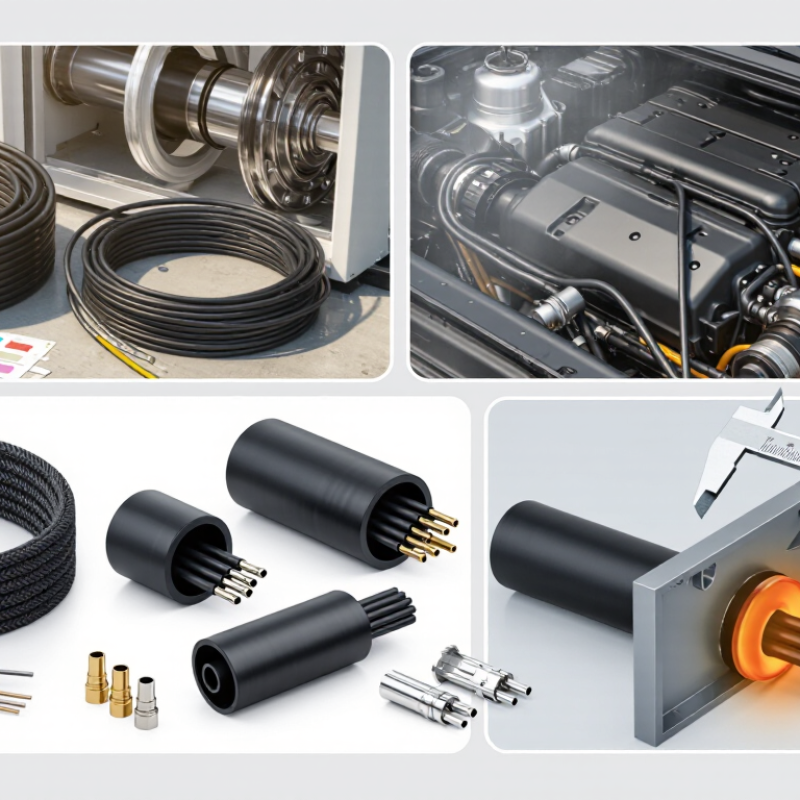
Real installations often reveal problems that product photos hide. A sleeve fitted inside a vibrating machine may rub against a sharp bracket. A vehicle harness may face oil mist, water, dust, and repeated bending near the engine. These details matter. Measure the cable bundle carefully, including connectors and bends. Leave enough expansion space without allowing the sleeve to sag. A poor fit can trap heat or create pressure points.
Reliable selection depends on verified specifications, not confident guesses. Check the manufacturer’s temperature range, abrasion rating, chemical resistance, flame behavior, and recommended cable diameter. Where safety is critical, review relevant test reports and installation guidance from qualified engineers. Try a small sample before purchasing in bulk. It can expose unexpected fraying, noise, stiffness, or difficult removal.
The best sleeve is not always the strongest one. It is the one that performs consistently in the actual application. I have seen durable sleeves fail because installers ignored bend radius and edge protection. That lesson is easy to miss. A careful choice balances protection, flexibility, cost, appearance, and future maintenance. Some applications still need deeper testing, especially when heat, chemicals, or constant motion are involved.
Define the Cable Protection Requirements
How to Choose the Right Cable Protection Sleeve?
Define the Cable Protection Requirements
Choosing a cable protection sleeve starts with the environment, not the product catalogue. Record voltage, operating temperature, bend radius, abrasion sources, moisture, chemicals, fire exposure, and expected service life. Identify movement too. A static cabinet cable needs different protection from a robotic arm. Uptime Institute’s 2023 Annual Outage Analysis reported that 55% of serious outages cost more than $100,000. That figure makes early risk definition practical, not administrative.
Measure rather than guess. Check the cable’s outside diameter, connector size, minimum bend radius, and installation route. Then rate each hazard as occasional, continuous, or emergency. For heat, compare the sleeve’s continuous rating with actual ambient temperature and nearby surfaces. For fluids, request compatibility evidence, not vague “chemical resistant” language. IEC 60502-1 and relevant local installation standards can guide cable construction and testing. They do not replace a site-specific assessment. A sleeve can fit perfectly and still fail.
Specify performance requirements in writing: abrasion resistance, flame behavior, ingress protection, tensile strength, flexibility, closure method, inspection access, and replacement time. Consider dust packed around a moving joint, oil under a clamp, or a sharp tray edge after vibration. NFPA’s Home Fires Involving Electrical Distribution and Lighting Equipment report estimated 32,620 U.S. home fires annually from 2015 to 2019. This supports controlling heat and physical damage pathways. Document assumptions, too. They are often wrong. Recheck them after installation, especially when temperature, motion, or cleaning chemicals change seasonally.
How to Choose the Right Cable Protection Sleeve? - Define the Cable Protection Requirements
Use the requirements below to match the cable environment, hazards, and installation conditions with a suitable generic sleeve construction. Temperature and performance values are typical ranges; always verify the sleeve datasheet and the complete cable assembly design.
| Protection Requirement | What to Define | Typical Operating Condition | Suitable Sleeve Construction | Typical Capability or Rating | Selection Guidance |
|---|---|---|---|---|---|
| Abrasion protection | Contact with brackets, edges, guides, moving parts, or repeated rubbing | Continuous motion or repeated mechanical contact | Expandable braided sleeve, heavy-duty braided sleeve, or corrugated conduit | High abrasion resistance; construction-dependent | Choose a tight, durable weave for continuous movement. Remove sharp edges or add an edge guard where concentrated cutting forces are present. |
| Cut and impact protection | Exposure to sharp metal edges, dropped objects, crushing, or tools | Industrial machinery, construction equipment, and routed cable trays | Heavy-wall corrugated conduit, metal-braided conduit, or protective conduit system | Higher mechanical protection than lightweight textile sleeves | Use a rigid or reinforced construction when cables may be crushed or struck. A textile sleeve alone is not a substitute for a guarded cable route. |
| Flexibility and dynamic motion | Minimum bend radius, travel distance, torsion, and cycle frequency | Robotic arms, drag chains, automated equipment, and moving assemblies | Expandable braided sleeve or purpose-designed continuous-flex conduit | Low bending resistance; cycle life depends on routing and cable construction | Check the complete assembly’s bend radius and torsion limits. Avoid excessive compression, tight ties, and unsupported loops. |
| Heat resistance | Maximum continuous temperature and short-duration peak temperature | Near engines, heaters, welding equipment, lighting, or hot fluid lines | Fiberglass-based sleeve with coating, high-temperature braided sleeve, or metal conduit | Common material ranges: approximately −60 to 150°C for PET; up to approximately 200–260°C for selected fiberglass constructions | Use the actual continuous and peak temperature ratings. Do not base the selection on ambient temperature alone; radiant heat and nearby hot surfaces also matter. |
| Flame and fire behavior | Required flame resistance, smoke limitation, and fire exposure duration | Control cabinets, transportation systems, buildings, and enclosed equipment | Flame-retardant braided sleeve, halogen-free sleeve, or rated conduit system | Performance must be confirmed by the applicable test standard and product construction | Specify the required standard, such as UL 224 or an applicable railway, marine, or building requirement. “Flame retardant” is not the same as fireproof. |
| Moisture and dust ingress | Water spray, rain, washdown, immersion, dust, and required ingress-protection level | Outdoor equipment, food-processing areas, vehicle compartments, and dusty plants | Sealed heat-shrink tubing, liquid-tight conduit, or sealed conduit fittings | IP ratings apply to the complete installed enclosure or cable system under IEC 60529 | A porous braided sleeve provides abrasion protection but normally does not provide a liquid-tight barrier. Select sealed ends and compatible glands when ingress protection is required. |
| Chemical and oil resistance | Type, concentration, temperature, and exposure time of oils, fuels, solvents, acids, or cleaning agents | Automotive, hydraulic, manufacturing, and washdown environments | Polyamide conduit, fluoropolymer sleeve, coated fiberglass sleeve, or chemically resistant heat-shrink tubing | Resistance varies significantly by polymer and chemical; no universal sleeve is chemically resistant to all fluids | Compare the exact chemical compatibility data at the expected temperature. Short splash exposure and continuous immersion require different evaluations. |
| UV and outdoor weathering | Sunlight intensity, outdoor exposure time, humidity, and temperature cycling | Solar equipment, outdoor machinery, transport systems, and exposed cable runs | UV-stabilized polyester or polyamide sleeve, UV-resistant conduit, or weather-resistant heat-shrink tubing | UV performance depends on material, pigmentation, wall thickness, and exposure conditions | Specify UV resistance for outdoor installations. Protect sleeve ends because water and contaminants can enter through open braid. |
| Electrical insulation | Required dielectric strength, voltage level, clearance, and creepage distance | Power cables, busbars, terminals, and exposed conductive parts | Heat-shrink tubing, insulating fiberglass sleeve, or an electrically rated insulating conduit | Dielectric strength is material- and thickness-dependent; test values are commonly expressed in kV/mm | Do not treat an ordinary braided sleeve as primary electrical insulation. Confirm voltage rating, wall thickness, and end termination requirements. |
| EMI and shielding | Required attenuation, grounding method, frequency range, and shield termination | Variable-frequency drives, data systems, sensors, and control equipment | Conductive braid, metallized sleeve, or shielded conduit with bonded terminations | Shielding effectiveness depends on coverage, material, frequency, and termination quality | A conductive sleeve must be properly grounded or bonded to perform as intended. Avoid gaps and high-impedance pigtail connections where EMC performance is critical. |
| Noise and vibration control | Rattle, cable movement, vibration frequency, and contact noise | Vehicles, machinery, panels, and assemblies with continuous vibration | Soft braided sleeve, textile wrap, or cushioned split conduit | Reduces cable-to-surface contact; does not replace mechanical strain relief | Use suitable clips, grommets, and support spacing. The sleeve should not be compressed so tightly that it restricts cable movement. |
| Installation and maintenance | Need for retrofitting, connector passage, branch exits, inspection, and repair | Existing harnesses, field service, and frequently modified equipment | Split braided sleeve, split conduit, spiral wrap, or hook-and-loop textile wrap | Easy access and rework; protection level is generally lower than sealed systems | Choose an opening method that fits the largest connector. Secure the sleeve at both ends and prevent fraying or migration during service. |
| Cable bundle size and expansion | Smallest and largest bundle diameter, connector size, and future cable additions | Harnesses with multiple cables or planned upgrades | Expandable braided sleeve or oversized corrugated conduit | Expandable braid can accommodate changing bundle diameters within its specified range | Measure the complete bundle, including connector backshells. Avoid selecting solely by nominal cable diameter; leave room for installation and movement. |
Note: Actual performance depends on the sleeve material, wall thickness, weave or profile, installation method, cable bundle diameter, termination hardware, and environmental exposure. Confirm all critical requirements through the manufacturer’s technical datasheet and relevant test standards.
Submit a quote request or book a design consultation
Plastimold Products is an end-to-end product development and manufacturing team. We provide product design, engineering, prototyping, tooling, plastic injection molding, assembly, packaging and fulfillment. We work with any size company from start-ups to enterprises from all around the world.
I have a product I want to manufacture
I have a product that is already designed and now needs to be manufactured.
I need a manufacturer to optimize my product for injection molding, help choose the correct material, and manage the product production.
I have tooling that I want to transfer or modify, or I need to produce new tooling.
I need design and engineering support
I have a product concept that I want to be designed and brought to market.
I have a product that needs to be reviewed, improved or DFM’ed.
I am looking for a manufacturer to provide an end-to-end solution, from design and development to inventory, marketing, and sales.

©2022 Plastimold Products - Privacy policy - Terms and Conditions