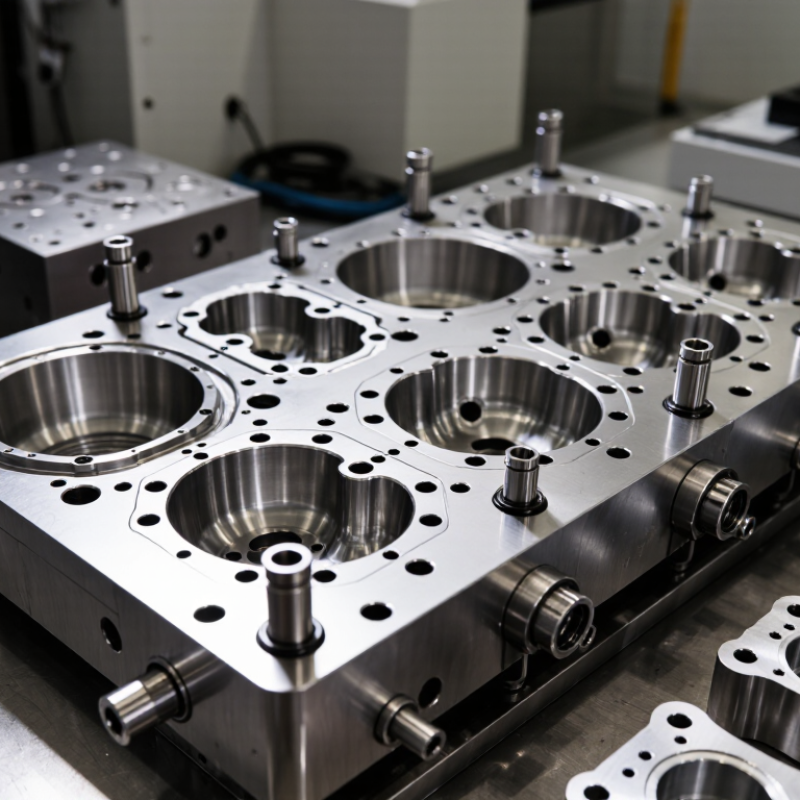
10 Tips for Choosing an Aluminum Die Cast Mold

Choosing the right Aluminum Die Cast Mold affects product quality, production speed, and long-term tooling costs. A mold may look precise on a drawing, yet fail under repeated thermal cycling. Small details matter, including gate location, cooling channels, ejector placement, and alloy compatibility. An experienced evaluation examines the complete production process, not only the initial quotation.

In practical die-casting work, mold selection begins with the part itself. Wall thickness, ribs, holes, surface finish, and expected production volume all influence the design. A mold for a thin automotive housing needs different cooling control than one for a compact electrical bracket. Tool steel quality also deserves close attention. Heat treatment records, machining accuracy, and maintenance support can reveal more than attractive photographs.

Look beyond the price.

The following ten tips focus on measurable decisions. They cover mold material, cavity design, cooling efficiency, venting, tolerances, supplier capability, testing, and service life. Reliable suppliers should explain their assumptions clearly and provide inspection evidence. Ask for sample reports, trial results, and realistic cycle-life estimates. Do not accept vague promises.

No checklist is perfect. Unexpected porosity, difficult ejection, or uneven filling may still appear during testing. That possibility requires honest review and design adjustments. A lower-cost mold can become expensive when downtime, scrap, and repeated repairs accumulate. Careful comparison creates a stronger foundation for consistent parts, safer production planning, and better investment control.

10 Tips for Choosing an Aluminum Die Cast Mold

Define Part Requirements and Production Objectives

Before selecting an aluminum die cast mold, define the part’s job in practical terms.

Identify its load, operating temperature, surface exposure, and connection points. A housing near a motor may need tighter flatness than a decorative cover. Small differences matter.

Record the alloy, target wall thickness, draft angles, critical dimensions, and acceptable porosity level. Include machining allowances and areas requiring threads or inserts. I have seen projects lose time because a “noncritical” hole became an assembly reference. That mistake was avoidable. Keep a clear drawing revision and inspection method. Coordinate measuring machines, gauges, or section tests may be appropriate for different features.

Production objectives shape the mold more than many teams expect. State the annual volume, required cycle time, launch date, and expected mold life. High output may justify multiple cavities, automated extraction, or stronger cooling channels. Lower volume may favor simpler tooling with easier maintenance. Be realistic about tolerance targets. My early estimates were too optimistic. Mold filling simulation can reveal air traps, shrinkage risks, and difficult gate locations before steel is cut. Still, simulation is not a substitute for experienced process review. Ask how the part will be trimmed, inspected, repaired, and changed later. Plan for reality.

Evaluate Mold Materials, Structure, and Thermal Performance

10 Tips for Choosing an Aluminum Die Cast Mold

Material selection controls mold life, heat transfer, and maintenance effort. ASM Handbook data places H13 tool steel near 28 W/m·K at room temperature, while aluminum alloys can exceed 150 W/m·K. That contrast matters. A die with stable hardness may still develop thermal fatigue when cooling is uneven. NADCA’s Product Specification Standards emphasize heat checking, dimensional control, and proper die maintenance. Inspect polished cavities, parting lines, and ejector-pin areas before approval.

Structure deserves equal attention. Thick corners often retain heat and create local cracking. Use generous fillets, balanced wall thickness, and short, direct metal paths where possible. Cooling channels should follow high-heat zones, not simply the outer shape. Place thermocouples near the gate, cavity corner, and overflow area. Real production measurements beat attractive simulation images. Sometimes.

Thermal performance should be tested under repeated cycles, not judged from one trial shot. The International Aluminium Institute reports that recycled aluminum requires about 95% less energy than primary production, increasing interest in efficient, durable tooling. A longer-lasting mold can reduce scrap, replacement steel, and machine downtime. However, cooling too aggressively can cause premature solidification and cold shuts. That trade-off is easy to underestimate. Review temperature logs, crack maps, cycle time, and lubricant consumption together. The best design is rarely the most complicated one; it is the one that keeps temperature variation predictable after thousands of shots.

10 Tips for Choosing an Aluminum Die Cast Mold: Thermal Performance by Material

Thermal conductivity influences cooling speed, cycle time, temperature uniformity, and resistance to thermal fatigue. The values shown are representative room-temperature ranges expressed as midpoint estimates; actual performance varies with alloy grade, heat treatment, porosity, and operating temperature. Material selection should also consider hardness, toughness, dimensional stability, machining, and maintenance requirements.

Verify Machine Compatibility and Manufacturing Precision

Choosing an aluminum die cast mold begins with the machine, not the mold drawing. Confirm the required clamping force, platen dimensions, tie-bar spacing, shot sleeve size, and ejection stroke. A mold that fits the cavity can still fail if its sprue location or ejector pattern conflicts with the press. Request current machine drawings, not memory or outdated spreadsheets. Small differences matter.

Manufacturing precision must match the part’s function. Define critical dimensions, draft angles, wall thickness, and allowable flash before cutting steel. Use a controlled CAD model and inspect finished inserts with a coordinate measuring machine. Check locating rings, guide pillars, cooling channels, vents, and overflow pockets. These details influence filling, cycle time, and tool life.

Thermal balance deserves special attention; uneven cooling can twist a thin housing after ejection.

A reliable supplier should document steel certificates, heat treatment, inspection results, and trial-shot changes. Ask for a machine trial using production settings, then compare dimensions at room temperature and after stabilization. I have seen accurate cavities produce inconsistent parts because the process window was too narrow. That mistake is easy to miss. Leave adjustment steel only where engineering allows it, and record every correction. Perfect drawings do not guarantee perfect casting performance; machine behavior, operator setup, and maintenance still require verification.

Assess Durability, Maintenance Needs, and Expected Mold Life

10 Tips for Choosing an Aluminum Die Cast Mold

Tip 1: Assess expected shot life before comparing prices. Industry guidance from the North American Die Casting Association notes that die life depends on alloy, thermal cycling, cooling design, and maintenance. In practice, aluminum molds may deliver 50,000 to 150,000 shots before major refurbishment. Some exceed this range. Others fail early.

Tip 2: Request documented steel grades, heat-treatment results, and hardness readings. A durable mold should resist soldering, erosion, cracking, and thermal fatigue. NADCA’s Product Specification Standards emphasize controlled process conditions and dimensional consistency. Ask for inspection records, not promises. Tip 3: Examine cooling channels closely. Blocked or poorly balanced channels create hot spots around thin cores and sharp corners. Those areas often show cracks first. A temperature difference of only a few degrees can affect cycle stability.

Tip 4: Calculate maintenance labor, not only purchase cost. The U.S. Department of Energy’s industrial efficiency guidance identifies preventive maintenance as a practical way to reduce unplanned downtime. Schedule cleaning, vent inspection, lubrication, and polishing at fixed shot intervals. Keep spare inserts ready. This feels expensive until production stops.

Tip 5: Confirm repairability. Replaceable inserts, accessible ejector components, and standard fasteners can extend useful mold life. Still, maintenance plans are often too optimistic. Record actual shot counts, crack locations, and repair time. That evidence may challenge your original supplier assumptions.

10 Tips for Choosing an Aluminum Die Cast Mold - Assess Durability, Maintenance Needs, and Expected Mold Life

Tip Selection Criterion What to Assess Practical Benchmark or Data Point Maintenance Consideration Expected Mold-Life Impact
1 Mold Steel Grade Check the hot-work tool steel grade, hardness, toughness, heat resistance, and documented heat-treatment process. A commonly used hot-work steel may be heat-treated to approximately 44–52 HRC, depending on the design and application. Verify hardness records and inspect for soft spots, chipping, and heat checking during scheduled inspections. Appropriate steel selection can reduce premature cracking, soldering, and erosion under repeated thermal cycling.
2 Thermal Fatigue Resistance Evaluate the mold’s resistance to heat checking caused by repeated heating and cooling at the cavity surface. High thermal gradients and rapid temperature changes are major contributors to surface cracking; preheating and controlled cooling are essential. Monitor heat-check depth, polish early cracks where appropriate, and review process temperatures if cracking accelerates. Better thermal-fatigue resistance generally extends cavity service intervals and delays major rework.
3 Cooling System Design Review cooling-channel location, diameter, flow balance, accessibility, and separation from the cavity surface. Cooling should be sufficiently uniform to limit hot spots; channel layouts must be validated for the part geometry rather than selected by a fixed universal spacing. Use filtered coolant, check flow regularly, and remove scale or blockage before cooling performance declines. Uniform cooling reduces thermal stress, distortion, soldering, and localized die wear.
4 Cavity and Core Surface Finish Inspect polishing quality, machining marks, sharp transitions, radii, and areas likely to trap aluminum. Surface finish should match the required part appearance and release performance; sharp internal corners should be avoided where the design permits. Clean and polish affected areas using controlled procedures; avoid removing excessive material from critical parting surfaces. Smooth, properly radiused surfaces reduce sticking, erosion, stress concentration, and repair frequency.
5 Ejector and Slide Design Check ejector-pin balance, guide support, return mechanisms, slides, lifters, and clearances at operating temperature. Ejection forces should be distributed across suitable areas of the casting; unsupported or overloaded pins are common wear and fracture risks. Lubricate approved moving components, inspect for galling, and measure abnormal clearance or uneven pin movement. Balanced ejection reduces pin breakage, cavity damage, casting distortion, and unplanned downtime.
6 Venting and Vacuum Capability Evaluate vent locations, vent depth, overflow design, vacuum compatibility, and the risk of trapped gas or flash. Vents must be effective without creating excessive flash; vent dimensions depend on alloy, fill speed, part geometry, and process conditions. Clean vents and overflows frequently because aluminum residue and oxides can reduce gas evacuation. Effective venting limits gas-related defects, burn marks, erosion, and cleaning-related damage to the parting line.
7 Parting Line and Flash Control Review parting-line alignment, shut-off strength, locating features, locking support, and the expected flash zone. Parting surfaces should remain flat and properly supported; excessive flash often indicates wear, misalignment, insufficient locking, or process overload. Measure parting-line mismatch, remove flash carefully, and correct alignment problems before they damage shut-offs. Strong shut-offs and accurate alignment preserve sealing surfaces and reduce repeated welding or re-machining.
8 Surface Treatment and Protection Determine whether nitriding, coating, or another surface treatment is suitable for high-wear, soldering, or erosion-prone areas. Treatment selection should be based on alloy chemistry, die temperature, lubrication, filling speed, and the specific failure mode—not on hardness alone. Follow the treatment supplier’s cleaning and repair limits; damaged treated surfaces may require controlled rework or re-treatment. A suitable treatment can improve resistance to soldering, erosion, and adhesive wear in targeted areas.
9 Repairability and Spare Components Confirm whether inserts, slides, pins, cores, wear plates, and cooling components can be replaced without rebuilding the entire mold. Modular inserts and standardized replaceable components usually shorten repair time and reduce the cost of restoring critical dimensions. Keep dimensional records, spare wear components, inspection gauges, and documented repair limits. Repairable construction can substantially extend usable service life even when selected components reach their wear limit.
10 Service-Life Validation Request a preventive-maintenance plan, inspection criteria, trial-run data, dimensional capability results, and a clearly defined life estimate. Mold life varies widely with alloy, casting size, cycle time, thermal control, lubrication, shot velocity, maintenance quality, and acceptance criteria; avoid unsupported fixed-shot guarantees. Track cycles, repairs, cooling flow, cavity dimensions, flash, soldering, and heat checking in a maintenance log. Data-based monitoring helps predict wear and replace components before quality or safety is affected.

Note: Actual mold durability and service life depend on the aluminum alloy, casting machine, thermal-cycle control, injection parameters, lubrication, part geometry, mold design, and maintenance discipline. The benchmarks above are general engineering guidance rather than guaranteed production specifications.

Compare Supplier Expertise, Total Cost, and Delivery Support

10 Tips for Choosing an Aluminum Die Cast Mold

Compare Supplier Expertise, Total Cost, and Delivery Support

A reliable mold supplier should understand aluminum flow, solidification, venting, and thermal stress. Ask how engineers select gate locations, cooling channels, ejector pins, and die materials for your part. Request drawings, inspection records, and examples of similar production challenges. Specific evidence matters more than confident promises.

Check machining accuracy, surface treatment, heat treatment, and dimensional inspection methods. Confirm whether the supplier can review draft angles and predict shrinkage before cutting steel. Ask about trial shots, sample approval, and correction procedures. Small defects become expensive after production begins. A technically strong supplier may still communicate poorly, so test response times early.

Compare the complete cost, not only the initial quotation. Include design changes, mold trials, spare inserts, maintenance, freight, and future repairs. Clarify payment stages and what happens when specifications change. Delivery support also deserves careful attention. Confirm the timeline for design approval, machining, testing, sample delivery, and final shipment. Ask for packaging details and replacement-part availability. Build a written schedule with measurable checkpoints. It is not perfect protection, but it reduces surprises. Some buyers focus too heavily on price and regret it later. Others overpay for features their parts never need. A practical decision balances proven expertise, transparent cost, and dependable support.

Submit a quote request or book a design consultation

Plastimold Products is an end-to-end product development and manufacturing team.  We provide product design, engineering, prototyping, tooling, plastic injection molding, assembly, packaging and fulfillment.  We work with any size company from start-ups to enterprises from all around the world.

I have a product I want to manufacture

I have a product that is already designed and now needs to be manufactured. 

I need a manufacturer to optimize my product for injection molding, help choose the correct material, and manage the product production.

I have tooling that I want to transfer or modify, or I need to produce new tooling.

I need design and engineering support

I have a product concept that I want to be designed and brought to market.

I have a product that needs to be reviewed, improved or DFM’ed.

I am looking for a manufacturer to provide an end-to-end solution, from design and development to inventory, marketing, and sales.