
How to Choose the Best Filter Nonwoven Fabric?

Choosing the best Filter Nonwoven Fabric is not a simple matter of selecting the finest fiber or highest basis weight. The correct choice depends on dust size, airflow, humidity, temperature, and service life. In a real filter room, a small rise in pressure drop can increase energy consumption and shorten replacement intervals. The fabric must work under actual conditions.

Industry data confirms the market’s technical importance. Grand View Research reports that the global nonwoven fabrics market was valued at approximately USD 53.5 billion in 2022, with continued growth expected through 2030. MarketsandMarkets also projects steady expansion in the nonwoven filtration market, driven by air purification, automotive systems, healthcare, and industrial processing. These figures show demand, not guaranteed performance. A larger market does not make every fabric suitable.

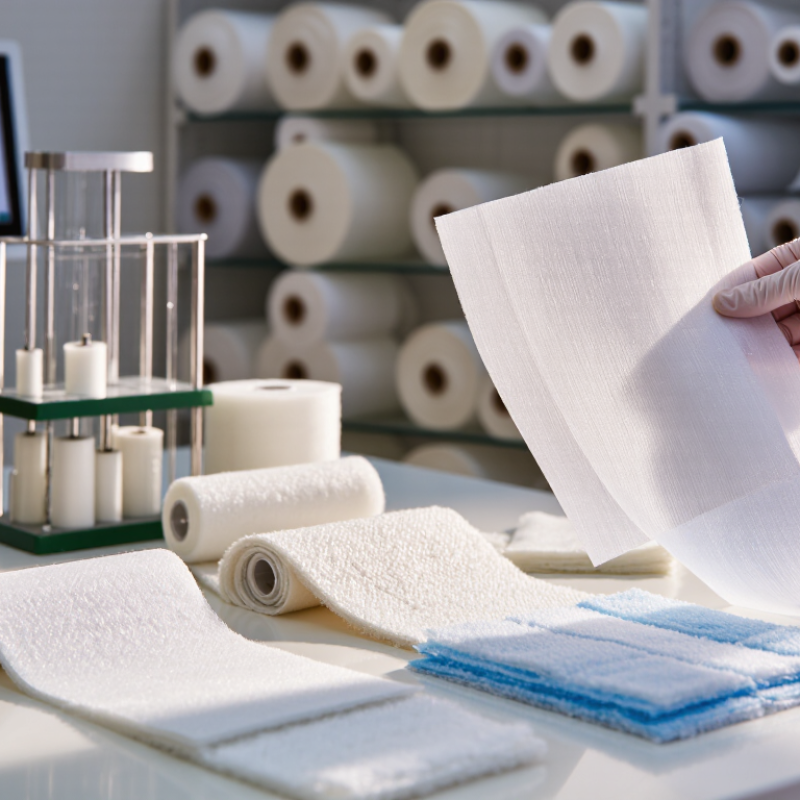
Testing matters more than attractive specifications. Compare filtration efficiency, air permeability, tensile strength, thermal resistance, and pressure drop under controlled conditions. Standards such as ISO 16890 can support meaningful air-filter comparisons, while manufacturer test reports should explain test methods and sample conditions. In practice, inspect the fiber surface, needle-punch uniformity, and pore structure. Hold the sample against light. Uneven areas may reveal weak filtration zones.

No single fabric wins every application. A low-pressure-drop material may load quickly in dusty air. A dense structure may capture particles better but consume more energy. This trade-off is easy to underestimate. Buyers should request traceable data, pilot-test samples, and review performance after dust loading. The best decision combines laboratory evidence, field experience, and honest reflection about operating conditions. That is where reliable Filter Nonwoven Fabric selection begins.
How to Choose the Best Filter Nonwoven Fabric?

What Is Filter Nonwoven Fabric and How Does It Work?

How to Choose the Best Filter Nonwoven Fabric?

What Is Filter Nonwoven Fabric and How Does It Work?

Filter nonwoven fabric is a web of fibers bonded without traditional weaving. The fibers may be arranged randomly or in controlled layers. This structure creates pathways that trap dust, droplets, and other particles as air or liquid moves through. Some particles are caught by direct interception. Smaller particles can also be captured through diffusion and electrostatic attraction.

The fabric’s performance depends on fiber diameter, thickness, density, and surface structure. A finer fiber web usually captures smaller particles, but it may increase airflow resistance.

No filter is perfect. A highly efficient layer can become difficult to breathe through when dust builds up. Humidity may also weaken electrostatic performance in certain materials.

Choosing the right fabric starts with its application. Air filtration needs careful testing of particle efficiency, pressure drop, and airflow. Liquid filtration requires attention to pore size, chemical compatibility, strength, and contamination risk. A practical evaluation should include samples tested under realistic temperature, humidity, and flow conditions. I would not choose by appearance alone. A fabric that looks dense may perform poorly under pressure.

Layered construction often improves results. A coarse outer layer can protect a finer inner layer from rapid clogging. Spunbond materials may provide support, while meltblown layers can deliver finer filtration. However, these terms do not guarantee performance by themselves. Independent laboratory data and consistent production checks remain essential. Small changes in fiber distribution can affect every roll.

Which Filtration Requirements Should You Define First?

Before comparing filter nonwoven fabrics, define what the filter must capture and how the system will operate. Identify the target particle size and required removal efficiency; “fine dust” is not a precise specification. Note whether particles are dry, oily, fibrous, or sticky. These details affect fiber selection, pore structure, and the risk of early clogging.

Then record operating conditions. Measure airflow, temperature, humidity, and expected pressure drop at a realistic flow rate. A fabric that captures particles well may restrict airflow too much. Check whether the filter faces brief temperature peaks or repeated moisture exposure, not just steady conditions.

Consider service life, too: will it be replaced, cleaned, or pulsed during operation? The answer changes what durability and cleanability mean.

Use actual process data where possible. For example, compare pressure readings before and after loading with representative dust, rather than relying only on a clean-fabric test. Confirm test methods and efficiency ratings with suppliers, since results can differ when conditions vary. Be honest about uncertainty. If particle size or dust loading is unknown, a small trial may reveal more than a confident guess. I have seen specifications focus on capture efficiency while overlooking pressure drop; that gap can make a technically impressive fabric impractical.

How Do You Compare Fiber Types, Structures, and Performance?

Choosing filter nonwoven fabric means matching fiber, web structure, and operating conditions—not simply selecting the densest sheet.

Polypropylene offers low moisture absorption and is common in dry air filtration. Polyester tolerates moisture and repeated handling better, while glass fibers can support fine-particle capture but need careful control against breakage.

The material matters. So does the way it is built.

Compare spunbond, meltblown, and layered webs by measuring efficiency, pressure drop, and dust-holding capacity under the same test conditions. Meltblown webs use fine fibers to capture small particles, but their tighter structure can increase airflow resistance. A layered composite may combine a strong support layer with a finer filtration layer.

EDANA’s 2023 European nonwovens statistics report production of roughly 2.8 million tonnes, showing the scale and diversity of the material sector; this figure does not indicate filtration quality. For air filters, compare results tested to ISO 16890, which classifies performance by particle-size ranges.

For liquid filtration, check pore size, flow rate, and compatibility with the actual fluid.

Ask suppliers for test conditions and repeatability data. A neat lab result can still mislead if humidity, dust loading, or face velocity differs from real use.

That part is easy to overlook.

How Can You Select the Right Fabric for Your Application?

Choosing filter nonwoven fabric starts with the material being filtered. Dry dust, oily mist, and water-based liquids place different demands on a fabric. Note the particle size you need to capture, but do not rely on micron rating alone. Two fabrics with similar ratings may perform differently because of fiber structure, thickness, and surface treatment.

Check the operating conditions. Temperature, humidity, airflow, and exposure to chemicals can affect strength and filtration performance. For air filters, compare capture efficiency with pressure drop: a very dense fabric may trap more particles but restrict airflow. For liquid filtration, consider whether the fabric resists wetting, sheds fibers, and handles the expected flow rate. Small details matter. Ask for test data relevant to your conditions, and, when possible, trial a sample in the actual equipment. A lab result is useful, but real systems can behave differently.

Also consider cleaning, service life, and disposal needs. A reusable fabric must tolerate repeated washing or pulse cleaning without losing its structure. A disposable option may suit a process where quick replacement matters more. Cost per roll is only one part of the decision; replacement frequency and energy use can change the total cost. I have seen selection discussions focus too heavily on one specification. That is easy to overlook. Document your priorities, compare samples consistently, and revisit the choice if operating conditions change.

What Quality, Testing, and Supply Factors Should You Verify?

How to Choose the Best Filter Nonwoven Fabric?

What Quality, Testing, and Supply Factors Should You Verify?

Selecting filter nonwoven fabric starts with its intended working conditions. Dust, liquid, heat, and humidity require different fiber structures. Check fiber type, basis weight, thickness, pore size, and air permeability. These values affect filtration efficiency and pressure drop. A heavier fabric is not always better.

Ask for test data, not only product claims. Verify filtration efficiency, pressure drop, tensile strength, burst resistance, and thermal stability. Testing should match your real application, including airflow speed, particle size, temperature, and moisture. Numbers matter. A clean laboratory result can mislead when field conditions differ. Request recent reports, test methods, sample preparation details, and acceptance limits. If possible, test production samples independently. I have seen promising samples perform differently after storage or cutting.

Supply reliability deserves equal attention. Review lot-to-lot consistency, certificate of analysis, batch traceability, minimum order quantity, lead time, packaging, and storage guidance. Confirm whether the supplier controls fiber blending and web formation internally. Ask how quality changes are reported. Keep approval samples for comparison. Do not ignore small variations; a slight thickness change may affect equipment pressure. Still, perfect consistency may be unrealistic, especially for customized structures. Define tolerances clearly, record every test result, and reassess the material after process changes.

Submit a quote request or book a design consultation

Plastimold Products is an end-to-end product development and manufacturing team.  We provide product design, engineering, prototyping, tooling, plastic injection molding, assembly, packaging and fulfillment.  We work with any size company from start-ups to enterprises from all around the world.

I have a product I want to manufacture

I have a product that is already designed and now needs to be manufactured. 

I need a manufacturer to optimize my product for injection molding, help choose the correct material, and manage the product production.

I have tooling that I want to transfer or modify, or I need to produce new tooling.

I need design and engineering support

I have a product concept that I want to be designed and brought to market.

I have a product that needs to be reviewed, improved or DFM’ed.

I am looking for a manufacturer to provide an end-to-end solution, from design and development to inventory, marketing, and sales.
