
How to Choose the Best Aluminium Takeaway Containers?

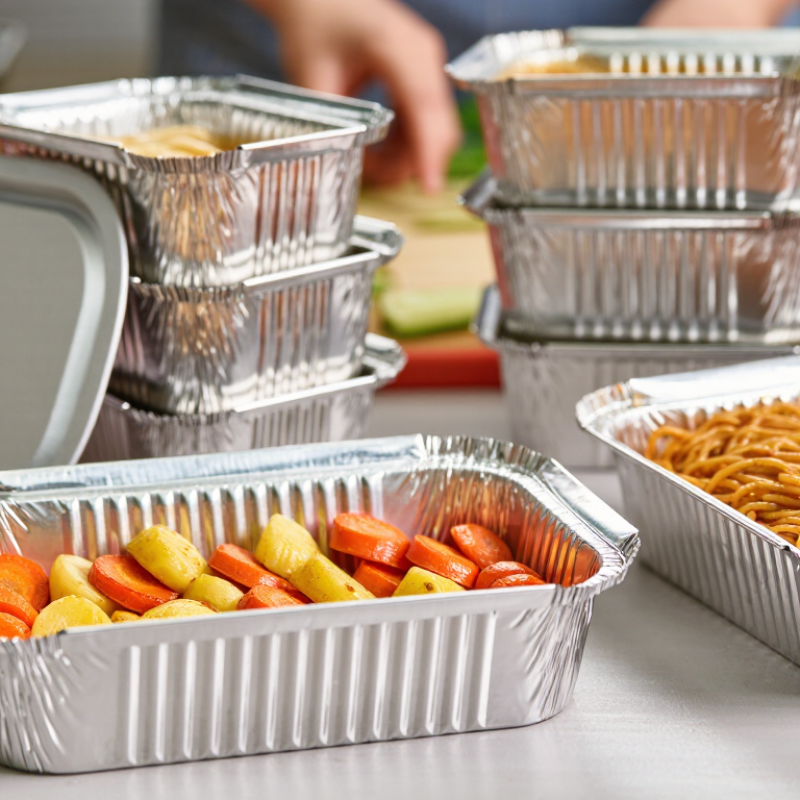
Choosing the right Aluminium Takeaway Containers starts with the food, not the price tag. A shallow tray may suit roasted vegetables, while a deeper one gives saucy noodles more room. Picture the meal packed for a short drive: will the portions shift, spill, or press against the lid? Small details matter.

Compare capacity, depth, rim shape, and lid fit before ordering in bulk. Ask the supplier for product specifications, including material thickness and any stated temperature limits. Do not assume every container is suitable for an oven or other heating method; follow the manufacturer’s directions. For delivery, test a filled sample with the actual food and lid. A container can look sturdy on a counter, then feel less secure when full. Not always.

Think about stacking, storage space, and how staff will close each package during a busy service. If the lid is difficult to seat, packing may slow down. If it fits loosely, a careful handoff may still be needed. I may be giving lids extra attention, but they can undermine an otherwise sensible choice. Also check whether the chosen size matches typical portions, rather than selecting the largest option by default. Cost matters, yet a low unit price may not account for damaged meals or awkward storage. The best option is the one that suits your menu, handling routine, and supplier guidance. A small trial order can reveal problems before a larger purchase.
How to Choose the Best Aluminium Takeaway Containers?

Identify Your Food, Portion, and Delivery Requirements

Start with the food, not the container shape. A 2024 National Restaurant Association report found that 47% of U.S. adults consider takeout or delivery essential to their lifestyle. Match container depth to portion size: a shallow tray suits roasted vegetables, while a deeper one helps keep sauce around pasta. Leave enough headroom to prevent lids touching food. That small detail is easy to overlook.

Plan for the whole journey. The FDA Food Code 2022 sets hot-holding guidance at 135°F or above and cold-holding guidance at 41°F or below. Aluminium conducts heat quickly, so insulated delivery bags and sensible packing matter. For fried food, a vented lid can help release steam. A perfectly tight seal is not always better; it may soften a crisp coating.

Consider the route and the menu. For a long ride, test lids for leaks by carrying a filled sample container on its side. Stack several filled units to check whether rims buckle or portions shift. Highly acidic or salty foods may react with bare aluminium, so check material compatibility or choose a suitable coated option. Test with the real meal, not an empty container. That assumption can be wrong.

Choose the Right Container Size and Shape

Choose size by the food’s portion, not by the lid’s appearance. The National Restaurant Association’s 2023 Off-Premises Restaurant Trends report found that 70% of adults considered takeout or delivery essential to their lifestyle. For operators, that makes reliable packing practical: a container should hold a full serving without crushing a crisp coating or leaving soup sloshing in excess space.

Match the shape to the meal. Shallow rectangular trays suit cutlets, rice plates, and items meant to stay spread out. Deeper round containers work well for soups, stews, and saucy sides. For mixed meals, compartments can keep dressing away from greens and hot foods apart from delicate toppings. Check the filled container, not just the empty one. A domed lid may protect a pastry, while a flat lid can stack more neatly. Small details matter.

A useful trial is to pack a typical order, close it, then tilt and stack it as it would travel. Leave enough headroom for food that shifts, but avoid oversized packaging that encourages excess portions or wastes storage space. This rule is not perfect; noodles and leafy salads settle differently. Test the busiest menu items, and note which shapes arrive intact.

How to Choose the Best Aluminium Takeaway Containers?

Compare representative nominal capacities to choose a container size that suits your portions. Rectangular containers are space-efficient for stacking, while round formats can suit soups and other liquid foods. Check the supplier’s stated capacity and dimensions before ordering.

Capacities shown are common example sizes; actual dimensions and usable capacity vary by product.

Compare Aluminium Gauge, Strength, and Heat Performance

Gauge is only a starting point. Compare actual thickness in microns, because gauge numbering can vary between suppliers. A thicker wall generally resists dents and holds its shape better when loaded with hot, moist food. Check the rim and corners, too: a stiff base with a flimsy edge can still buckle during carrying. Not by thickness alone.

Heat moves quickly through aluminium. ASM Handbook, Volume 2, gives pure aluminium a thermal conductivity of about 237 W/m·K near room temperature. Takeaway containers use commercial alloys, so that figure is a reference, not a product guarantee. In use, thin walls warm quickly and can create hot spots against food; thicker walls add stiffness but do not keep meals hot like insulation. Test a filled sample after heating: inspect the base for sagging, lift it by the rim, and check whether food heats evenly. A microwave-safe label alone does not establish suitability for every heating method; follow the supplier’s stated use instructions. One useful comparison, though imperfect, is to weigh equal-size samples and compare their measured thickness, rigidity, and heating results. I would not choose on weight alone.

Check Lid Fit, Leak Resistance, and Appliance Compatibility

A lid should sit evenly around the container’s rim, with no raised corners or visible gaps. Press gently along each edge and check that it stays in place when the container is lifted. A loose fit can let steam escape, while an overly tight lid may buckle the rim. Small details matter. Look for lids designed for the exact container shape, not just a similar size.

Leak resistance needs a practical check. Add a little water, close the lid, and tilt the container over a sink. Watch the corners and folded seams; these spots often reveal weak seals. This test is useful, but it does not guarantee safe transport with hot soup. Thin aluminium can flex, and a lid that holds water may still shift under pressure. It is easy to assume a snug lid means a leakproof package. That assumption can be wrong.

Check appliance guidance before heating food. Aluminium containers are commonly used in ovens, but lids may have different limits and should be checked separately. Metal containers generally should not go in microwave ovens, where arcing can occur. For chilled storage, confirm that the container and lid are suitable for the intended temperature. I would check the instructions each time, especially when packaging comes from a new supplier. It takes a minute.

How to Choose the Best Aluminium Takeaway Containers? - Check Lid Fit, Leak Resistance, and Appliance Compatibility

Selection Criteria What to Check Practical Guidance Why It Matters
Lid Fit Confirm that the lid is designed for the container’s exact shape and rim size. Check that it sits evenly around the full perimeter. Close the lid at each corner or edge and look for gaps, rocking, or sections that lift easily. A snug fit helps retain heat and reduce spills during upright carrying. A lid that does not match the rim can come loose in transit, even when the container itself is sturdy.
Leak Resistance Check the container’s seams, corners, rim, and the lid’s stated use. A fitted lid alone does not make a container leakproof. For sauces or other liquids, test a filled sample over a sink in the same upright position used for delivery. Avoid tilting or stacking liquid-filled containers unless they have been tested for that use. Leak performance depends on the complete container-and-lid combination, the food, and how the package is handled.
Lid Material Identify whether the lid is made from foil, paperboard, plastic, or another material, and check its temperature and food-contact instructions. Do not assume a lid is oven-safe or microwave-safe based only on the aluminium base. Remove the lid unless its instructions specifically allow the intended appliance use. Different lid materials tolerate heat and moisture differently; an unsuitable lid may soften, warp, or lose its fit.
Conventional Oven Use Check the supplier’s maximum temperature and instructions for the specific container. Determine whether the container is coated or has attached components. Many plain aluminium containers are used in conventional ovens, but follow the product instructions. Keep the container away from heating elements and remove any lid not explicitly rated for oven use. Temperature limits and construction can vary. Following the stated instructions helps prevent damage or unsafe handling.
Microwave Compatibility Look for explicit microwave instructions for the exact container and appliance. Aluminium is metal and can cause arcing in a microwave. Do not microwave an aluminium container unless the container and microwave instructions specifically permit it, and follow those directions exactly. Microwave suitability should never be assumed from general oven suitability.
Freezer Use Check that both the container and lid are suitable for the intended freezer conditions and storage duration. Aluminium containers are commonly used for freezing, but confirm the lid’s freezer suitability and leave room for food to expand where necessary. Protect the package from crushing. The lid and package shape can affect closure and protection even when the aluminium base is suitable for freezing.
Strength and Shape Compare the rim stiffness, base support, wall depth, and container shape with the portion size and food weight. Choose a container that stays stable when filled and can be carried without the base flexing excessively. Use dividers or separate containers when foods need to stay apart. A suitable size and rigid rim make filling, lidding, and handling easier and can reduce tipping or deformation.
Stacking and Transport Check whether the containers nest when empty and stack securely when filled and closed. Test the intended stack height with filled samples. Keep liquid-filled containers upright and avoid placing heavy items on top unless the package has been tested for that load. Secure stacking supports more stable storage and delivery; excessive weight can distort lids or container rims.

Evaluate Food Safety, Recyclability, and Overall Cost

How to Choose the Best Aluminium Takeaway Containers?

Choosing aluminium takeaway containers starts with food safety. Ask for food-contact documentation and confirm each container suits the foods and temperatures you serve. A tray that holds warm rice may not suit acidic tomato dishes unless its coating is designed for them. Check rims, seams, and lids for damage; leaks mean extra cleanup and unhappy customers. Do not assume every container is oven-safe. Follow the supplier’s usage instructions.

Tips: Match the depth to your portions. Test a filled sample. Small checks help.

Recyclability depends on local facilities and how containers are prepared. Ask your waste provider whether it accepts aluminium food trays, and whether customers should separate lids or remove food residue. A recyclable container may still end up as waste if it is heavily soiled or collected incorrectly. Cost needs a wider look, too: compare the unit price, lid fit, delivery fees, storage space, and staff time spent handling leaks or returns. The cheapest option can look sensible on paper, but a flimsy rim may cost more through spills. A short trial with real menu items can reveal trade-offs that a product sheet misses.

Submit a quote request or book a design consultation

Plastimold Products is an end-to-end product development and manufacturing team.  We provide product design, engineering, prototyping, tooling, plastic injection molding, assembly, packaging and fulfillment.  We work with any size company from start-ups to enterprises from all around the world.

I have a product I want to manufacture

I have a product that is already designed and now needs to be manufactured. 

I need a manufacturer to optimize my product for injection molding, help choose the correct material, and manage the product production.

I have tooling that I want to transfer or modify, or I need to produce new tooling.

I need design and engineering support

I have a product concept that I want to be designed and brought to market.

I have a product that needs to be reviewed, improved or DFM’ed.

I am looking for a manufacturer to provide an end-to-end solution, from design and development to inventory, marketing, and sales.
