
7 Tips for Choosing Attenuating Exam Gloves
Choosing Attenuating Exam Gloves is not just a matter of picking a size and opening a box. The right option depends on the examination, the substances involved, and the level of touch sensitivity staff need. A glove that feels comfortable during a quick check may become tiring during a longer procedure. Small details matter. Think about fingertip control, cuff length, material, and how easily gloves can be changed between tasks.
The word “attenuating” can mean different things in different product contexts. Do not rely on a label alone. Check the manufacturer’s technical data and test methods, and confirm that stated performance matches the intended use. A clear product sheet is useful; vague claims are not. Also consider fit across the team, since a loose glove can make handling instruments less precise. Yet no glove is right for every setting. That is worth admitting. Compare options using practical trials, staff feedback, and your organization’s infection-control guidance. Review packaging and storage information, too, so gloves remain in suitable condition before use. These seven tips will help you assess the details, ask better questions of suppliers, and choose Attenuating Exam Gloves with care rather than guesswork.
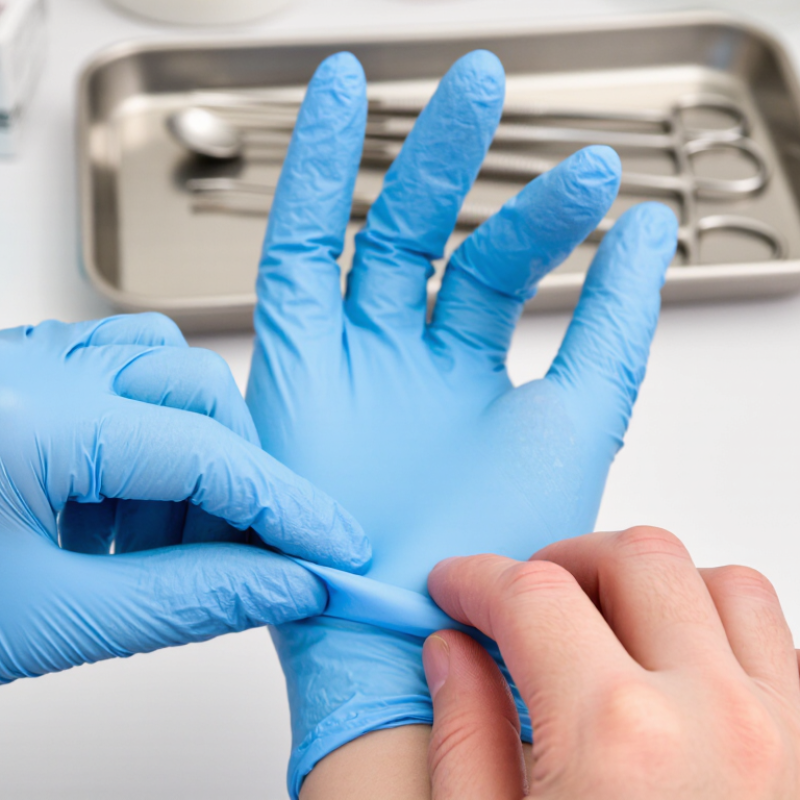
Understanding Radiation Attenuation in Exam Gloves
Radiation attenuation describes how much radiation a glove reduces as it passes through the material. It is not the same as complete protection. A glove’s performance can vary with its composition, thickness, and the X-ray energy used during testing. Check the technical data for the tested conditions, not just a single attenuation percentage. Numbers need context. A result measured at one energy may not represent performance in every imaging setting.
Consider the type of exposure involved. Gloves designed to attenuate scattered X-rays should not be treated as protection from a direct beam. They also do not replace distance, shielding, or workplace procedures. Fit matters, too. A loose cuff can leave skin exposed, while bulky material may make delicate tasks harder. That trade-off deserves an honest look. A high attenuation figure may sound reassuring, but it says little about dexterity or practical coverage. Review the test method and intended use, and ask a radiation-safety professional when the data is unclear. These details are easy to overlook when choosing by a label alone.
7 Tips for Choosing Attenuating Exam Gloves
Understand Radiation Attenuation in Exam Gloves
How to read this chart: The bars show calculated attenuation for idealized lead-equivalent layers at 60 keV—not measured performance of any exam glove. The estimates use the Beer–Lambert law and a lead mass attenuation coefficient of approximately 5.02 cm²/g at 60 keV, with lead density of 11.34 g/cm³.
When choosing gloves: Verify independently tested attenuation at relevant beam qualities and the stated lead equivalence; check fit, dexterity, durability, and applicable standards. Actual glove performance depends on material, thickness, and X-ray spectrum. Protective gloves are not a substitute for keeping hands out of the primary beam.
Reference for the attenuation coefficient: NIST XCOM Photon Cross Sections Database. Calculations are illustrative and do not represent a product rating.
Matching Glove Material to the Intended Exposure
Choosing an exam glove starts with what may reach the skin: droplets, body fluids, cleaning residue, or medication. Nitrile is often selected when latex sensitivity is a concern, but its resistance varies by chemical and contact time. Check technical data against the exact substance, concentration, and task; a generic “chemical resistant” label is not enough. Latex can provide a close, flexible fit for brief clinical tasks, yet it may trigger allergic reactions in some users. Vinyl may suit short, lower-risk procedures, though it can stretch or tear more readily during demanding work. Fit matters, too. Check fit.
Consider exposure duration and movement. A glove used for a quick examination faces different demands from one worn while handling wet instruments or wiping a contaminated surface. Inspect the fingertips and cuffs before use. Replace gloves if they tear, become visibly soiled, or exceed tested exposure limits. Thicker does not always mean safer; thickness can reduce dexterity, and material alone does not establish protection. Ordinary exam gloves may be unsuitable for hazardous drugs or concentrated cleaning agents. Consult facility procedures and permeation data; choose a glove tested for that task when needed. Real work is rarely tidy. Reassess your choice when products, procedures, or exposure patterns change.
Checking Attenuation Ratings and Test Standards
An attenuation number only means something when its test conditions are clear. Check whether the report cites IEC 61331-3:2014 or ASTM F2547, and confirms the tested glove construction. Compare lead-equivalence values at the same tube voltage and beam quality. A value measured at one kVp cannot predict performance across every imaging setup. Look for the laboratory, test date, sample size, and reported uncertainty—not just a number printed on packaging.
Details matter. A report should identify which glove areas were measured, since palm results may not represent fingertips or seams. Ask whether the tested size and material match the gloves you will wear.
NCRP Report No. 160 estimated that medical procedures contributed about 3.0 mSv of the 6.2 mSv average annual effective dose per person in the United States in 2006. That historical estimate is not a glove-performance figure, but it shows why careful radiation-protection choices deserve scrutiny.
Do not treat a high attenuation rating as permission to place hands in the primary beam. Gloves can reduce exposure under specified conditions, yet actual protection depends on fit, beam energy, and positioning. One awkward point: test reports are not always easy to compare. If a supplier cannot provide the test method and conditions, the rating alone tells you very little.
Balancing Protection, Dexterity, and Glove Fit
Choosing attenuating exam gloves means balancing barrier performance with the feel needed for careful work. A glove that is too loose can wrinkle at the fingertips and catch on instruments; one that is too tight may fatigue the hand during a long shift. Try sizes while making a fist, pinching a small object, and handling a pen. Fit matters. Fingertips should reach the glove ends without excess material, while the cuff should cover the wrist without pulling back during movement.
Check the glove’s intended use and published specifications, not thickness alone. The U.S. Food and Drug Administration’s Medical Glove Guidance Manual describes an acceptable quality level (AQL) of 2.5 for examination gloves’ freedom from holes. AQL is a sampling measure for a production lot, not a promise that any individual glove is defect-free. Not a guarantee. Inspect gloves before use, and follow workplace procedures for replacement if a tear or failure occurs.
Dexterity depends on more than fit: material, surface texture, and task length can all change how a glove feels. Compare options using the same small tasks, such as turning a syringe cap or picking up a gauze pad. Record where pressure builds or grip slips. One caveat: a quick trial may not reveal discomfort after several hours, so reassess during routine work. Check compatibility with the chemicals or products encountered, using the manufacturer’s technical information rather than appearance alone.
Inspecting, Using, and Replacing Attenuating Gloves
Inspect attenuating exam gloves under bright light before each patient contact. Check fingertips, seams, cuffs, and the package for tears, punctures, moisture, or damage. Small tears matter. Confirm the glove type suits the task; no exam glove attenuates every chemical, biological, or mechanical hazard. FDA’s Medical Glove Guidance Manual lists an AQL of 2.5 for examination gloves. This is a sampling benchmark for manufacturing batches, not a guarantee that every glove is defect-free.
Use clean, dry hands, and choose the correct size. Pull cuffs over gown sleeves when needed, without stretching the material excessively. Avoid touching clean supplies with contaminated gloves. CDC’s 2015 hospital survey estimated that about 1 in 31 inpatients had at least one healthcare-associated infection on a given day. Gloves help form a barrier, but they do not replace hand hygiene. Remove them carefully, then clean hands.
Replace gloves between patients and whenever they become torn, heavily soiled, or contaminated during care. Change them before moving from a contaminated body site to a clean one. Do not wash or reuse disposable exam gloves; cleaning can damage their barrier. A glove may look intact and still have a defect. That uncertainty is worth remembering.
Article Source:
Submit a quote request or book a design consultation
Plastimold Products is an end-to-end product development and manufacturing team. We provide product design, engineering, prototyping, tooling, plastic injection molding, assembly, packaging and fulfillment. We work with any size company from start-ups to enterprises from all around the world.
I have a product I want to manufacture
I have a product that is already designed and now needs to be manufactured.
I need a manufacturer to optimize my product for injection molding, help choose the correct material, and manage the product production.
I have tooling that I want to transfer or modify, or I need to produce new tooling.
I need design and engineering support
I have a product concept that I want to be designed and brought to market.
I have a product that needs to be reviewed, improved or DFM’ed.
I am looking for a manufacturer to provide an end-to-end solution, from design and development to inventory, marketing, and sales.

©2022 Plastimold Products - Privacy policy - Terms and Conditions

