
Why Choose a Valve Water Meter for Your Project?
Why Choose a Valve Water Meter for Your Project?
A water system is only as manageable as its measurements. The WHO/UNICEF Joint Monitoring Programme reported that 2.2 billion people lacked safely managed drinking water in 2022, underscoring the value of reliable infrastructure and careful water management. A Valve Water Meter can combine flow measurement with shutoff control, depending on its design. For project teams, that may mean fewer separate components, clearer readings, and a practical way to isolate a line during maintenance.
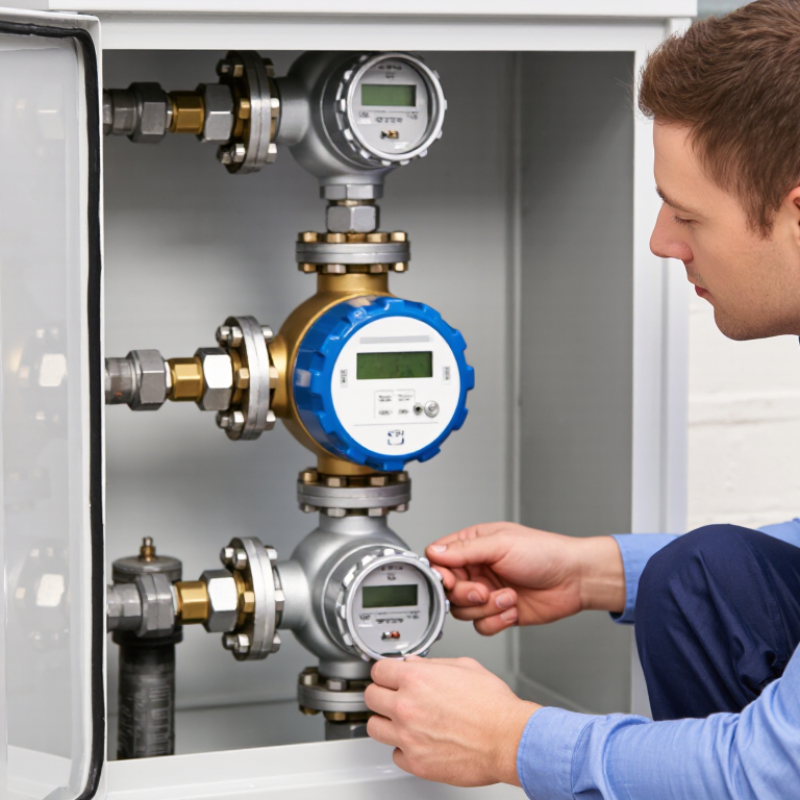
Details matter. Check the meter’s flow range, connection size, pressure rating, material compatibility, and reading method against the project specification. Picture a technician opening a cabinet, checking the display, then closing the integrated valve before servicing a branch line. That convenience is useful, but it does not replace correct sizing, installation, or periodic verification. Meters are not magic.
Measurement scientist Lord Kelvin wrote, “When you can measure what you are speaking about, and express it in numbers, you know something about it.” His principle fits water projects: dependable readings support better operational decisions. AWWA’s M36 manual, Water Audits and Loss Control Programs, also treats measurement and water auditing as core tools for understanding system performance. Still, a meter’s actual value depends on the application. A compact valve-meter assembly may suit a constrained installation, while a larger network may need different equipment and monitoring. The choice deserves a careful review, not an automatic yes.
What Is a Valve Water Meter?
A valve water meter is a water-measuring device paired with a shutoff valve in one assembly. The meter records the volume of water passing through a pipe, while the valve can stop that flow for maintenance or isolation. The exact arrangement varies: some designs place the valve upstream of the measuring chamber, while others use a different internal layout. Check the product drawing rather than relying on the name alone. It can be a little misleading.
In a building service line, this combined unit may reduce the number of separate fittings and make the shutoff easier to locate. A technician can read the meter, inspect for leaks, and operate the valve at the same point. Simple, but useful. Selection still depends on pipe size, expected flow, connection type, pressure range, and required measurement accuracy. A unit that fits the pipe may not suit the flow conditions. Installation direction matters, too; follow the markings and instructions, and leave enough room to read the register and turn the handle. Even a well-specified meter needs periodic checks, since sediment, wear, or a partly closed valve can affect performance.
Why Choose a Valve Water Meter for Your Project? — What Is a Valve Water Meter?
| Project Dimension | What It Means | Why It Matters | Selection Consideration |
|---|---|---|---|
| Definition | A valve water meter is a water meter supplied with an integrated shutoff valve or a meter-and-valve assembly. The meter measures water volume; the valve controls or isolates the flow. | Combines flow measurement and a local isolation point in one installation area. | Confirm whether the valve is built into the meter body or supplied as a separate component in the assembly. |
| Metering function | The meter records the volume of water passing through it. Depending on the design, it may use a mechanical measuring element or electronic sensing. | Provides consumption data for billing, monitoring, or resource management. | Choose a meter type and accuracy class suitable for the intended use and applicable local requirements. |
| Shutoff and maintenance | The valve can be closed to stop flow through the meter assembly, subject to the product design and installation. | Can simplify local isolation during meter replacement or downstream maintenance. | Check valve accessibility, operating method, pressure rating, and whether additional upstream or downstream isolation is required. |
| Common applications | May be used in building service connections, apartment or unit submetering, and other water distribution installations where a meter and shutoff point are needed. | Supports measurement at a defined service or branch location. | Verify that the meter is approved for the intended water service and installation environment. |
| Installation layout | Like other water meters, the assembly must be installed in the orientation and configuration specified by its manufacturer. | Correct installation helps maintain reliable operation and access for reading and servicing. | Allow for pipe connections, meter reading, valve operation, and any required straight pipe lengths or installation clearances. |
| Water conditions | Meter performance and service life can be affected by flow conditions, debris, pressure, temperature, and water quality. | Matching the meter to operating conditions helps reduce measurement problems and premature wear. | Compare the operating range and materials with the project’s expected flow, pressure, temperature, and water characteristics. |
| Smart-reading options | Some meter assemblies can be paired with remote-reading or communication features; availability depends on the meter design. | Can reduce manual reading effort and support centralized consumption monitoring. | Check compatibility with the project’s data collection system, communication method, and power requirements. |
| Best fit | A valve water meter is useful when a project needs both water measurement and a nearby means of flow isolation. | It can make the installation more compact than arranging separate components, depending on the assembly. | Compare total installed space, service access, connection type, compliance needs, and lifecycle maintenance—not just purchase cost. |
Submit a quote request or book a design consultation
Plastimold Products is an end-to-end product development and manufacturing team. We provide product design, engineering, prototyping, tooling, plastic injection molding, assembly, packaging and fulfillment. We work with any size company from start-ups to enterprises from all around the world.
I have a product I want to manufacture
I have a product that is already designed and now needs to be manufactured.
I need a manufacturer to optimize my product for injection molding, help choose the correct material, and manage the product production.
I have tooling that I want to transfer or modify, or I need to produce new tooling.
I need design and engineering support
I have a product concept that I want to be designed and brought to market.
I have a product that needs to be reviewed, improved or DFM’ed.
I am looking for a manufacturer to provide an end-to-end solution, from design and development to inventory, marketing, and sales.

©2022 Plastimold Products - Privacy policy - Terms and Conditions