
China Top 10 WPC Decking Panel Suppliers for Global Buyers
Choosing a reliable supplier matters when outdoor projects face heat, rain, heavy foot traffic, and changing construction standards. China remains a major manufacturing base for Wpc Decking Panel products, serving residential, commercial, and landscaping markets worldwide. However, a polished catalog does not always prove stable quality.
This guide introduces ten China-based WPC decking panel suppliers for global buyers. It focuses on practical evidence, including material composition, surface treatment, profile design, production capacity, export experience, and quality-control procedures. Buyers should review technical data before comparing prices. Important details include wood-plastic ratios, water absorption, slip resistance, color stability, load performance, and installation tolerances. A sample may look excellent under showroom lighting, yet perform differently after months of sunlight and moisture.
Supplier evaluation also requires careful communication. Ask for recent test reports, factory photographs, production videos, packaging specifications, and customer references where available. Confirm whether certificates apply to the exact product, not merely to the company. Check lead times, minimum order quantities, replacement policies, and destination-port experience. Small details can affect the final project budget.
No supplier fits every market. Some may offer advanced co-extrusion surfaces, while others provide better customization or lower-volume support. Information can also change as factories update equipment, formulas, and export services. Treat this list as a practical starting point, not a final purchasing decision. Independent verification remains necessary. That extra step may feel slow, but it can prevent warped boards, inconsistent colors, and costly installation delays.
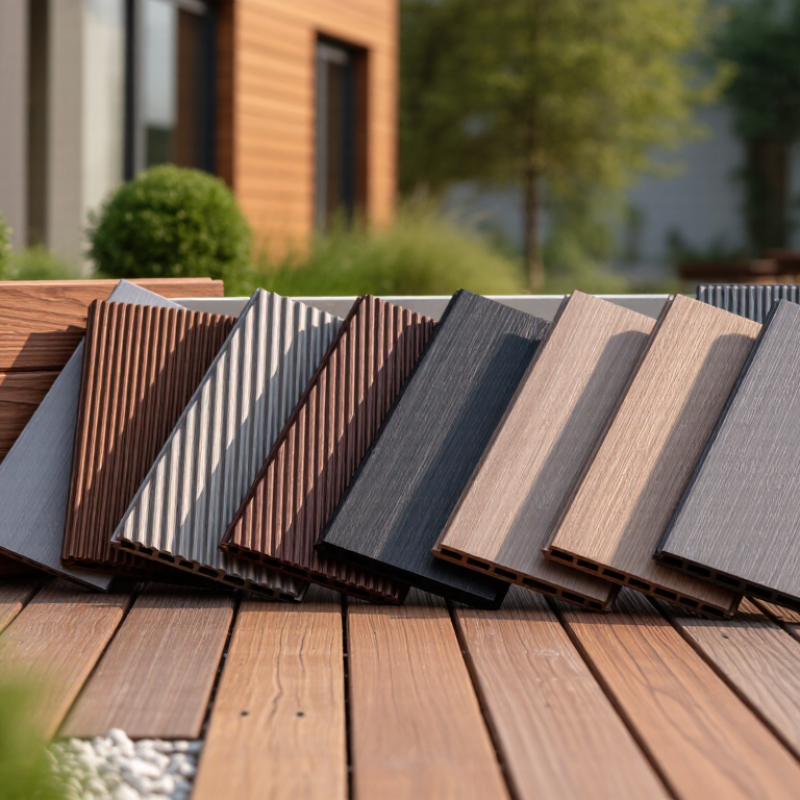
WPC Decking Panels: Materials, Features, and Main Applications
WPC decking panels combine wood fibers with thermoplastic polymers, often polyethylene or polypropylene, plus stabilizers and pigments. This blend creates a surface that feels warmer than stone and needs less repainting than traditional timber. Experienced installers still check moisture, expansion gaps, joist spacing, and drainage before fixing panels. A dense core can improve impact resistance, but density alone does not guarantee long service life. Profile design, cap protection, fasteners, and manufacturing control matter too.
These panels suit balconies, garden paths, pool surrounds, terraces, and commercial outdoor walkways. Their textured faces may improve slip resistance, although water, algae, and poor cleaning still create risks. UV-resistant formulations help limit fading, yet color changes can appear after long sun exposure. Panels also resist insects and rot better than untreated wood. They are not maintenance-free. A soft brush, mild cleaner, and regular inspection can prevent small problems from becoming expensive repairs. Some projects fail because buyers focus only on appearance. That deserves reflection.
Tips: Request technical data, installation drawings, fire information, and test reports before purchasing. Compare water absorption, slip resistance, load performance, and warranty terms. Check samples outdoors, not only under showroom lighting. Leave the specified expansion space. Small gaps protect the whole deck. Also confirm whether replacement panels will remain available; this practical detail is often overlooked.
WPC Decking Panels: Typical Material Composition
Wood–plastic composite decking is commonly produced from wood fiber or flour, a thermoplastic polymer, and a smaller proportion of additives. The values below represent a typical commercial formulation midpoint; exact ratios vary by manufacturer and product grade.
Typical applications: residential decks, balconies, garden walkways, pool surrounds, outdoor platforms, and commercial landscaping. Wood content contributes a natural appearance, while the polymer matrix improves moisture resistance and dimensional stability.
How to Evaluate China’s WPC Decking Panel Suppliers
China Top 10 WPC Decking Panel Suppliers for Global Buyers
When evaluating China’s WPC decking panel suppliers, begin with verified production evidence, not polished catalogues. Grand View Research estimates the global wood-plastic composite market reached about USD 7.1 billion in 2023, with continued growth expected through 2030. This expansion attracts capable factories and inexperienced traders. A catalogue is not evidence.
Request recent test reports for water absorption, slip resistance, flexural strength, UV ageing, and fire performance. Check whether samples match the quoted batch. Ask for the wood-plastic ratio, recycled content, additives, surface treatment, and dimensional tolerances. For outdoor projects, I would inspect boards after repeated wet-dry and freeze-thaw cycles. Small cracks often appear at clips and hollow edges first. This detail matters.
Supplier reliability also depends on process control. Review extrusion records, calibration procedures, packaging protection, and corrective-action reports. Confirm independent testing against relevant ASTM or EN requirements, rather than accepting internal claims. A low quotation can become expensive through color variation, warped panels, or missing installation parts. Grand View Research’s market data indicates strong demand, but market growth does not prove every supplier’s quality. I would still order a controlled trial shipment, measure each pallet, and record installation time. No test replaces site experience.
China’s Top 10 WPC Decking Panel Suppliers
China’s Top 10 WPC Decking Panel Suppliers represent a broad manufacturing base for global buyers. These suppliers typically produce wood-plastic composite boards for gardens, balconies, resorts, and commercial walkways. Their product ranges may include hollow and solid profiles, co-extruded surfaces, grooved finishes, and matching edge trims.
A reliable supplier should provide technical data, production samples, and clear material specifications. Buyers should check the wood fiber ratio, plastic type, board density, surface texture, and water absorption rate. Outdoor samples deserve close attention. Examine color consistency after sunlight exposure, screw holding strength, and expansion gaps after temperature changes. Factory audits can reveal extrusion capacity, quality-control procedures, packaging methods, and export experience. Certifications help, but they should match the actual product and current production line.
The top ten should not be judged by catalog size alone. Some suppliers offer strong customization but slower delivery. Others provide stable lead times but fewer surface options. That trade-off matters. A careful buyer should request recent test reports, installation guidance, warranty terms, and references from comparable projects. I would also compare sample performance over several weeks, not just one afternoon. Moisture, heat, and careless installation can change the result. No ranking is permanent; supplier performance may shift with materials, staff, and production pressure.
Supplier Comparison: Products, Capacity, Quality, and Export Markets
China Top 10 WPC Decking Panel Suppliers for Global Buyers
A practical comparison should examine products, capacity, quality, and export markets together. Grand View Research valued the global wood-plastic composites market at about USD 7.1 billion in 2023. Its forecast also indicates strong growth through 2030. This demand encourages Chinese suppliers to offer hollow, solid, capped, co-extruded, and embossed decking panels. Product density, surface texture, colour stability, and clip compatibility differ widely.
Capacity needs careful verification. Large factories may operate several extrusion lines, automated embossing units, and annual output above 10,000 tonnes. Smaller exporters can provide flexible batches and faster customisation. Yet, published capacity is not always equal to usable capacity. Buyers should request recent production records, line photographs, and loading schedules. The International Trade Centre reports substantial global trade in plastic construction products, but WPC classification remains inconsistent across customs systems. This makes export comparisons less precise.
Quality checks should include water absorption, slip resistance, flexural strength, colour change, and freeze-thaw performance. ASTM and EN test references improve comparability, but a certificate alone proves little. Independent laboratory results are more reliable than internal claims. Export markets also reveal practical experience. Suppliers serving North America often stress code documentation, while European shipments usually require stronger environmental and chemical declarations. Southeast Asian projects may prioritise heat resistance and rapid delivery. The comparison is imperfect. Some suppliers disclose excellent testing but limited after-sales data. Others offer clear export records but weak technical documentation. Global buyers should judge the evidence, not the catalogue.
China Top 10 WPC Decking Panel Suppliers for Global Buyers - Supplier Comparison: Products, Capacity, Quality, and Export Markets
| Supplier Profile | Primary WPC Decking Products | Core Material System | Common Product Dimensions | Surface Options | Public Capacity Disclosure | Quality and Compliance Evidence | Typical Commercial Terms | Export Market Coverage | Buyer-Side Verification Priorities |
|---|---|---|---|---|---|---|---|---|---|
| Supplier Profile 01 | Hollow decking boards Co-extruded decking Matching clips | Wood fiber combined with polyethylene-based polymer; capped options available for improved stain and weather resistance. | Typical widths: 140–160 mm Typical thickness: 20–25 mm Standard lengths: 2.9–5.8 m | Wood grain, brushed, embossed, and two-tone capped finishes. | Not consistently disclosed in public materials; request verified annual output and line count. | Product testing commonly offered for slip resistance, water absorption, flexural strength, and weathering. | OEM/ODM available; quotation normally based on profile, color, packaging, and order volume. | North America, Western Europe, Australia, New Zealand, and selected Middle Eastern markets. | Confirm resin type, cap-layer thickness, batch consistency, and independent test reports. |
| Supplier Profile 02 | Solid decking boards Balustrade components Stair boards | Wood-plastic composite using wood flour or fiber with PE or HDPE; solid profiles support higher load requirements. | Typical widths: 135–150 mm Typical thickness: 20–25 mm Custom lengths subject to tooling and logistics. | Grooved, brushed, matte, and wood-textured surfaces. | Capacity figures should be treated as undisclosed unless supported by factory records or an audit. | Factory quality-control procedures may include incoming-material inspection, dimensional checks, and final sampling. | Private-label packaging and color matching generally available for qualifying volumes. | Europe, North America, Southeast Asia, South America, and the Gulf region. | Check structural loading data, fastener compatibility, color-fade limits, and installation manuals. |
| Supplier Profile 03 | Co-extruded decking Outdoor wall cladding Fascia boards | Composite core with a protective polymer cap; capped boards are designed to reduce moisture and staining penetration. | Typical widths: 145–180 mm Typical thickness: 21–25 mm Length options vary by export container plan. | Deep embossing, brushed grain, anti-slip grooves, and multi-color patterns. | Production scale is often presented by line capability rather than audited annual tonnage. | Relevant documentation may include UV-aging, water absorption, slip-resistance, and mechanical-performance reports. | Container-based orders; mixed colors and profiles may require a minimum production quantity. | United Kingdom, Germany, France, the United States, Canada, Australia, and Asia-Pacific. | Verify cap integrity after cutting, end-sealing requirements, thermal expansion data, and warranty terms. |
| Supplier Profile 04 | Hollow decking DIY decking kits Installation accessories | Lightweight hollow WPC profiles made with wood fiber and PE-based resin; intended for residential applications. | Typical widths: 135–150 mm Typical thickness: 22–25 mm Lengths commonly optimized for container loading. | Grooved, ribbed, brushed, and low-maintenance matte finishes. | Publicly comparable capacity data is limited; confirm equipment, shifts, and monthly output directly. | Quality records should cover profile dimensions, density, moisture behavior, and color uniformity. | Suitable for distributor, project, and private-label purchasing; packaging can be customized. | Europe, North America, Chile, South Africa, the Middle East, and Southeast Asia. | Assess hollow-profile wall thickness, joist spacing guidance, clip quality, and packaging protection. |
| Supplier Profile 05 | Premium capped decking Outdoor furniture boards Pergola components | Multi-layer PE-based composite with a weather-resistant outer layer and wood-polymer core. | Typical widths: 140–170 mm Typical thickness: 22–25 mm Custom profile development may be available. | Natural grain, co-extruded wood effect, brushed texture, and low-gloss finishes. | Factory scale should be confirmed through a current audit, production records, and equipment list. | Potential test scope includes accelerated weathering, slip resistance, dimensional stability, and wear resistance. | Higher minimum order quantities are common for custom colors and newly developed profiles. | Australia, New Zealand, Europe, North America, and premium landscaping channels in Asia. | Review cap adhesion, scratch resistance, thermal movement, fire classification, and color warranty. |
| Supplier Profile 06 | Commercial decking Solid structural profiles Steps and ramps | Higher-density wood-polymer profiles designed for commercial walkways, terraces, and public landscaping. | Typical widths: 140–200 mm Typical thickness: 25–30 mm Project-specific profiles may require dedicated tooling. | Deep anti-slip grooves, brushed surfaces, and heavy-duty textured finishes. | Capacity must be validated by third-party factory inspection rather than marketing estimates. | Request load testing, slip classification, fire-performance documentation, and installation calculations. | Project quotations commonly include drawings, packing plans, accessory schedules, and technical support. | Europe, North America, the Middle East, Southeast Asia, and large infrastructure projects. | Confirm engineering responsibility, load tables, tolerances, batch traceability, and replacement policy. |
| Supplier Profile 07 | Budget decking Hollow profiles Basic accessory sets | Standard wood-plastic composite with PE or HDPE binder and wood flour reinforcement. | Typical widths: 140–150 mm Typical thickness: 20–25 mm Standard export lengths commonly used. | Basic wood grain, brushed, grooved, and single-color finishes. | Annual capacity generally requires direct confirmation and should not be inferred from website claims. | Request current inspection records for dimensions, density, water absorption, and mechanical strength. | Competitive pricing for volume orders; sample approval is recommended before mass production. | Eastern Europe, Africa, Southeast Asia, South America, and regional building-material markets. | Pay particular attention to resin percentage, board weight, color variation, and container packing. |
| Supplier Profile 08 | Bamboo-polymer decking Capped boards Landscape edging | Bamboo fiber or bamboo flour combined with a polymer matrix; capped variants provide additional surface protection. | Typical widths: 140–160 mm Typical thickness: 20–25 mm Length range depends on raw-material and container planning. | Bamboo grain, natural wood effect, brushed, embossed, and capped two-tone finishes. | Published capacity may vary by product family; request line-specific production data. | Check moisture resistance, fungal-resistance claims, UV exposure results, and material traceability. | Private labeling, color development, and accessory bundling may be available. | Europe, Japan, South Korea, Australia, North America, and selected coastal markets. | Verify bamboo-fiber content, adhesive or polymer formulation, sustainability claims, and weathering performance. |
| Supplier Profile 09 | Architectural decking Wall and ceiling systems Custom extrusions | Engineered WPC profiles with customized geometry, surface texture, color, and fastening arrangements. | Typical widths: 100–200 mm Typical thickness: 18–30 mm Non-standard profiles require technical drawings and tooling. | Architectural wood grain, linear grooves, embossed textures, and project-specific colors. | Capacity should be evaluated by extrusion equipment, tooling capability, shift pattern, and quality staffing. | Project documentation may include drawings, samples, tolerance sheets, and performance test results. | Best suited to project purchasing, architectural specifications, and long-term distributor programs. | Europe, North America, Australia, the Middle East, and high-end hospitality projects. | Confirm tooling ownership, design tolerance, color approval process, spare-part availability, and lead time. |
| Supplier Profile 10 | Recycled-content decking Co-extruded boards Recycled accessory systems | Wood fiber combined with recycled or partially recycled polymer; formulation and recycled content require documentation. | Typical widths: 140–160 mm Typical thickness: 21–25 mm Export lengths selected according to project and container efficiency. | Natural grain, brushed, capped, anti-slip, and low-maintenance surfaces. | Recycled-material capacity claims require mass-balance records or supplier-specific production evidence. | Request recycled-content verification, batch testing, UV-aging data, slip testing, and quality-management records. | May support environmental declarations, private label, and project-specific documentation packages. | European Union, United Kingdom, North America, Australia, New Zealand, and sustainability-focused markets. | Validate recycled-content percentage, chain of custody, chemical compliance, end-of-life claims, and warranty scope. |
How Global Buyers Can Select and Purchase from Chinese Suppliers
Global buyers comparing China’s top 10 WPC decking panel suppliers should begin with evidence, not attractive catalogs. Start with samples. Request matching specifications: board dimensions, cap structure, surface texture, color tolerance, and weight per square meter. A sample should be tested for water absorption, slip resistance, flexural strength, and color stability. Ask for recent laboratory reports, production photos, and the factory’s quality-control procedure. Certificates deserve verification; a logo alone proves little.
During supplier screening, compare factory experience, export records, monthly capacity, and response quality. Confirm whether the quoted price includes packaging, inland transport, inspection, and the agreed delivery term. A clear purchase contract should define tolerances, batch consistency, replacement rules, and payment milestones. Use a pre-shipment inspection for large orders. Check cartons, corner protection, labels, and pallet moisture. Keep records. They protect both sides when defects appear.
Experienced buyers also inspect the installation system, not only the panel. Ask for clip dimensions, joist spacing, expansion gaps, maintenance instructions, and local climate recommendations. A supplier that answers precisely is easier to manage after payment. Still, do not confuse fast replies with technical competence. A spreadsheet can create false confidence. Recheck color batches and lead times before booking production, because small changes can affect an entire project. Expect some friction. Good sourcing requires documented decisions and independent checks at critical stages.
Article Source:
Submit a quote request or book a design consultation
Plastimold Products is an end-to-end product development and manufacturing team. We provide product design, engineering, prototyping, tooling, plastic injection molding, assembly, packaging and fulfillment. We work with any size company from start-ups to enterprises from all around the world.
I have a product I want to manufacture
I have a product that is already designed and now needs to be manufactured.
I need a manufacturer to optimize my product for injection molding, help choose the correct material, and manage the product production.
I have tooling that I want to transfer or modify, or I need to produce new tooling.
I need design and engineering support
I have a product concept that I want to be designed and brought to market.
I have a product that needs to be reviewed, improved or DFM’ed.
I am looking for a manufacturer to provide an end-to-end solution, from design and development to inventory, marketing, and sales.

©2022 Plastimold Products - Privacy policy - Terms and Conditions

