
2026 Best Plastic Wheel Types for Buyers?

Choosing the right Plastic Wheel is less about finding a single “best” option and more about matching its material and design to the job. A light-duty caster used on a storage cart has different needs from a wheel carrying equipment across a busy workshop. Small details matter: load per wheel, floor texture, wheel diameter, hub width, and axle fit can all affect handling. A wheel that rolls smoothly on sealed concrete may struggle on rough paving. No mystery there.

This guide compares common plastic wheel types, including polypropylene and nylon options, and explains where each may be useful. It also considers noise, rolling resistance, wear, and exposure to moisture or cleaning chemicals. Buyers should check the manufacturer’s load ratings and operating limits, rather than relying on appearance or a broad material label. Ratings can vary between designs. That part is easy to miss.

There is no perfect wheel for every setting. A harder wheel may roll efficiently, yet feel noisy on uneven floors; a softer tread may improve grip but add rolling resistance. I would not choose from a chart alone. Measure the mounting space, inspect the surface, and consider how often the cart will move. When details are uncertain, ask the supplier for specifications tied to the exact model. A practical choice may still need testing in the real setting. That is worth admitting.
2026 Best Plastic Wheel Types for Buyers?

What Plastic Wheels Are and How Their Main Components Work

A plastic wheel is a rotating component made partly or entirely from polymers. Common materials include nylon, polypropylene, and polyurethane, each with different strengths. Nylon can handle substantial loads, while polyurethane often rolls more quietly and grips smooth floors. The right choice depends on the job. “Plastic” alone says little about performance.

Most wheels have a tread, a body or core, and a hub. The tread touches the floor and spreads the load. The core supports the tread and helps the wheel keep its shape. Inside the hub, a bearing or plain bushing allows rotation around an axle. Bearings can reduce rolling resistance, but they may need protection from dust. Not every wheel uses the same construction. A small hand-pushed cart, for example, may work well with a simple bushing, while frequent use can make smoother bearings worthwhile.

Check load ratings, floor conditions, and operating temperatures; even a durable wheel can flatten or wear unevenly when mismatched.

Tips

Look for flat spots, cracks, and loose hubs during routine checks. Compare wheel width and diameter with the available space. A softer tread may protect floors, but it can require more effort to roll. Test the wheel under a realistic load when possible. That detail is easy to miss.

Which Plastics Are Used in Wheel Construction

Plastic wheels often combine materials rather than relying on one polymer throughout. The wheel body, or core, needs stiffness and support; the tread may need grip and quieter rolling. Polypropylene is lightweight and resists moisture and many common chemicals. It can suit light-duty carts, though heat and heavy loads may deform it.

Nylon, also called polyamide, handles abrasion and heavier loads well. It is a common choice for hard wheels used on warehouse floors. One detail is easy to miss: nylon can absorb moisture, which may affect its dimensions and performance.

Acetal, or POM, is used when a smooth, low-friction wheel is useful, such as in small mechanisms. For softer contact, polyurethane or thermoplastic rubber may form the tread over a rigid plastic core. These materials can reduce noise and improve traction, but softness may increase rolling resistance or wear.

That sounds simple. It isn’t. Floor grit, temperature, load, and cleaning chemicals can change how a wheel performs. It is tempting to choose by polymer name alone; that is often too neat. Check the wheel’s rated load and operating conditions, and confirm whether the tread and core use different materials. A plastic that works well on a clean indoor floor may disappoint on rough concrete.

How Plastic Wheel Types Differ by Design and Application

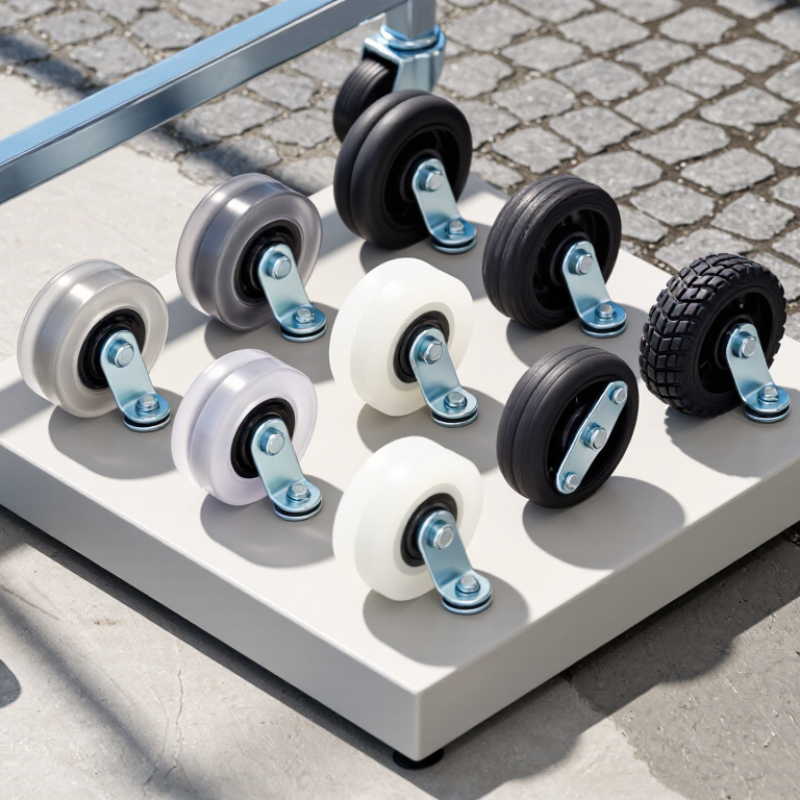
Plastic wheels differ in material, tread shape, and hub construction. Nylon wheels are rigid and often suit heavier loads on smooth floors. They roll easily, but can be noisy and may mark delicate surfaces. Polyurethane-tread wheels offer more grip and quieter movement. They are useful on carts that cross tile seams or workshop floors. Polypropylene wheels are lightweight and resist moisture, though their load capacity depends on the wheel’s design. No material is best for every job.

Wheel shape also affects handling. A narrow, hard tread turns easily in tight aisles, while a wider tread spreads weight and feels steadier on softer flooring. Solid wheels need little maintenance, but transmit bumps directly to the frame. Swivel casters help with steering; fixed wheels track straight over longer distances. Small details matter. Bearing quality, wheel diameter, and mounting style can change rolling effort as much as the plastic itself. Actual results vary with load and floor condition.

Tips: Match the wheel’s rated capacity to the real load, including the cart. Check whether floors are smooth, rough, or sensitive to marks. If possible, test a loaded wheel over a doorway threshold before ordering many. A spec sheet cannot reveal every vibration or turning issue.

2026 Best Plastic Wheel Types for Buyers? - How Plastic Wheel Types Differ by Design and Application

Wheel Type Typical Design Key Characteristics Common Applications Buyer Considerations
Polypropylene (PP) Solid, molded wheel; commonly supplied with a plain bore or a separate bearing. Lightweight and resistant to moisture and many common chemicals. Usually rolls more firmly and quietly than a soft-tread wheel, but can transmit vibration and may be less suitable for delicate floors. Light-duty carts, bins, general-purpose equipment, and environments where moisture resistance is useful. Check the rated load, wheel diameter, floor condition, and chemical compatibility. Capacity can vary with wheel size and operating conditions.
Nylon (polyamide) Rigid, solid wheel, often with a molded hub and a plain bore, roller bearing, or ball bearing. Hard-wearing and capable of carrying substantial loads for its size. Rolls efficiently on smooth, hard floors, but can be noisy and may mark or stress sensitive flooring. Material-handling equipment, industrial carts, and applications on smooth concrete or other firm floors. Consider floor protection, noise, temperature, moisture exposure, and the specified load rating. Nylon can absorb moisture, which may affect dimensions and performance.
Polyurethane tread on a plastic core A polyurethane outer tread bonded or molded onto a rigid plastic wheel core. The tread provides more grip and cushioning than a hard plastic running surface, while the core supports the wheel. It is often quieter and more floor-friendly than an all-hard plastic wheel. Indoor carts, institutional equipment, and applications requiring a balance of maneuverability, reduced noise, and floor protection. Compare tread hardness, bond quality, load rating, and resistance to oils or cleaning agents. Performance depends on the specific polyurethane formulation.
Thermoplastic rubber (TPR) tread on a plastic core Resilient TPR tread fitted to or molded around a plastic hub. Generally offers quiet rolling and good floor protection on indoor surfaces. The softer tread can increase rolling resistance compared with a hard nylon or polypropylene wheel. Office, retail, healthcare, and light-duty carts used on finished floors. Check the load rating and tread durability for continuous use. A soft tread may wear or deform more quickly under heavy loads or rough-floor conditions.
Polyvinyl chloride (PVC) Solid molded wheel or a plastic wheel with a relatively resilient PVC running surface. Can provide a softer, quieter contact surface than rigid plastic. Properties vary by formulation; some grades are more suited to light-duty indoor use than demanding industrial service. Light-duty furniture, small carts, and general indoor equipment. Verify the compound’s temperature range, chemical resistance, load rating, and flooring compatibility rather than relying on the material name alone.
Acetal (POM) Precision-molded rigid wheel, often used with a plain bore or bearing. Low-friction and dimensionally stable for many precision applications. Typically selected for consistent movement and wear properties rather than cushioning or quiet operation. Small mechanisms, guides, rollers, and equipment requiring smooth movement or close dimensional control. Confirm the load, impact, temperature, and chemical requirements. Acetal wheels are not usually the first choice where soft, quiet contact with floors is essential.

Selection note: Wheel capacity and service life depend on wheel diameter, tread width, bearing type, speed, temperature, floor condition, and how the load is distributed. Check the manufacturer’s published rating for the complete wheel assembly before specifying it.

How to Match a Wheel Type to Its Load and Environment

2026 Best Plastic Wheel Types for Buyers?

How to Match a Wheel Type to Its Load and Environment

A wheel that works on smooth warehouse concrete may struggle on cracked pavement. Match its material and size to the floor, load, and daily travel distance. Nylon wheels are hard and roll easily under heavy loads, but can be noisy and unforgiving on uneven floors. Polypropylene wheels resist moisture and many common chemicals, making them useful in damp work areas. Check the product’s chemical compatibility before relying on that feature.

Estimate the loaded cart’s total weight, then divide it across the wheels. Do not treat that number as a guaranteed safe rating: bumps, thresholds, and uneven floors can shift weight onto fewer wheels. A practical choice includes a margin above the estimated load. Larger diameters usually cross small floor gaps more smoothly. They also need more clearance.

Listen to the floor. Hard wheels may leave marks or transmit vibration, while softer tread can improve grip and reduce noise. In areas with water, oil, or fine dust, check traction and cleaning needs alongside load capacity. That detail is easy to miss. If the cart runs for long shifts, consider rolling resistance and heat buildup, too. Specifications help narrow the options, but a short trial with the actual cart and floor can reveal problems a chart will not. The trial may feel inconvenient. It is often cheaper than choosing twice.

What Buyers Should Compare Before Choosing Plastic Wheels

What Buyers Should Compare Before Choosing Plastic Wheels

Plastic wheels can look alike on a product page and behave very differently on a warehouse floor. Compare the wheel material, diameter, tread width, bearing type, and stated load rating. Nylon often suits hard floors and heavier loads, while polyurethane can offer quieter rolling and better grip. Polypropylene may suit lighter-duty, moisture-prone settings. These are starting points, not guarantees. Check the maker’s rating for the complete wheel assembly, not just the wheel itself, and allow for uneven loads and thresholds.

Match the wheel to its real route. A small wheel can catch on floor joints; a softer tread may roll more quietly but resist movement more. Measure the cart’s loaded weight, then consider how often it starts, stops, and turns. Plastics Europe’s Plastics—the Fast Facts 2024 reports global plastics production of 413.8 million tonnes in 2023. That scale says little about a particular wheel’s durability, so ask for resin details and operating-temperature limits. Catalog comparisons can look oddly tidy. Real floors are not.

Consider repair and end-of-life options, too. The OECD’s Global Plastics Outlook reports that only 9% of plastic waste was recycled globally in 2019. That figure is not a wheel-specific recycling rate, but it makes material identification worth asking about. Request documented load and temperature ratings, and test a sample on the actual floor. A short trial may reveal noise, wobble, or flat spots that a specification sheet misses.

Article Source:

Submit a quote request or book a design consultation

Plastimold Products is an end-to-end product development and manufacturing team.  We provide product design, engineering, prototyping, tooling, plastic injection molding, assembly, packaging and fulfillment.  We work with any size company from start-ups to enterprises from all around the world.

I have a product I want to manufacture

I have a product that is already designed and now needs to be manufactured. 

I need a manufacturer to optimize my product for injection molding, help choose the correct material, and manage the product production.

I have tooling that I want to transfer or modify, or I need to produce new tooling.

I need design and engineering support

I have a product concept that I want to be designed and brought to market.

I have a product that needs to be reviewed, improved or DFM’ed.

I am looking for a manufacturer to provide an end-to-end solution, from design and development to inventory, marketing, and sales.
