
What Is the Best Laser Thermometer in 2026?

Choosing the best Laser Thermometer in 2026 requires more than comparing screen size, price, and advertised accuracy. A reliable choice must match the measurement target, surface condition, distance, and working environment. A shiny metal pipe can mislead an infrared sensor. A dusty motor housing can behave differently from a clean painted panel.

Industry demand continues to support this category. Allied Market Research valued the global infrared thermometer market at approximately $1.1 billion in 2021. Its report projected growth to about $1.7 billion by 2030, with a compound annual growth rate near 5.1%. Market estimates vary, however. That difference deserves attention, because report definitions often include different product types and applications.

Dr. John Snell, an experienced temperature-measurement specialist, states, “A measurement is only as good as the assumptions behind it.” His point remains practical. Emissivity settings, measurement distance, response time, and calibration can change the result by several degrees. Small details matter.

Real-world testing should follow recognized guidance, including ASTM E1965 and NIST temperature-measurement principles. These references cannot turn an unsuitable device into a precise instrument. They can improve how results are collected and interpreted.

The best model depends on the job.

A homeowner checking an oven, a technician inspecting electrical panels, and a laboratory operator need different capabilities. Some buyers also overlook ambient temperature limits and weak performance on reflective surfaces. That is an easy mistake.

This guide compares leading Laser Thermometer models through accuracy, repeatability, usability, durability, and documented specifications. The goal is not to crown the most expensive device. It is to identify the model that produces dependable readings where you actually work.
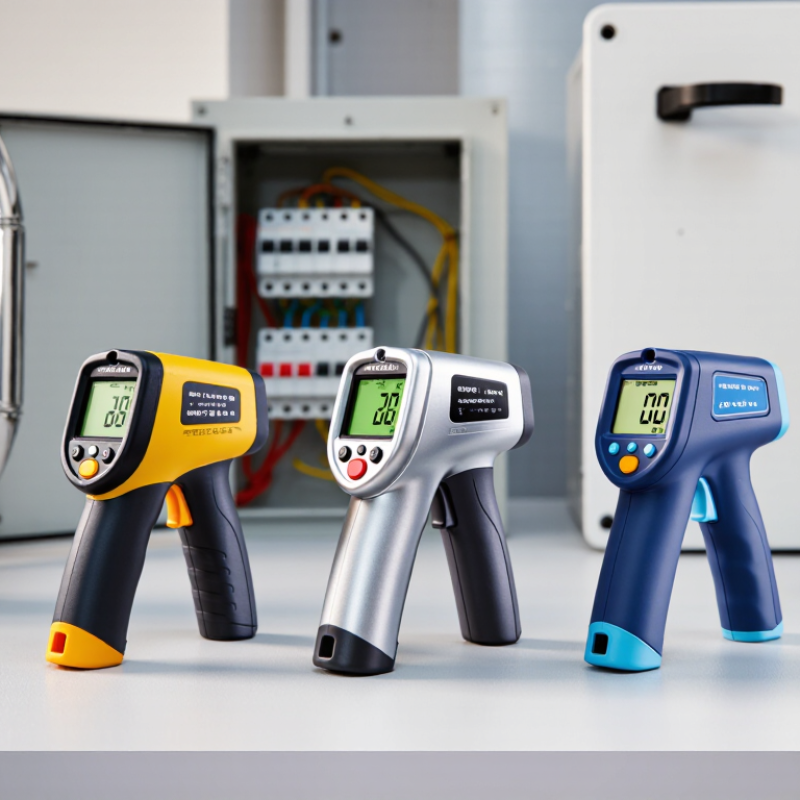
What Is the Best Laser Thermometer in 2026?

What Is a Laser Thermometer and How Does It Work?

A laser thermometer is an infrared thermometer with a visible aiming beam. The beam does not measure temperature. Instead, an infrared detector receives thermal radiation from the target surface. Internal optics focus that energy, while electronics convert it into a temperature reading.

The result depends heavily on emissivity, distance, and spot size. Emissivity describes how efficiently a surface releases infrared energy. Dark, matte materials usually measure more reliably than shiny metal. A bright pipe can reflect nearby heat and produce a misleading number. The distance-to-spot ratio also matters: a 12:1 instrument viewing from 120 centimeters measures an area about 10 centimeters wide. The laser may look precise, but the sensing area is larger.

ASTM E1965 specifies performance requirements for infrared thermometers, including accuracy testing and environmental conditions. NIST guidance also warns that reflected radiation and unknown emissivity can create significant measurement errors. A 2024 MarketsandMarkets report estimated continued growth in the global infrared thermometer market, driven by industrial maintenance, healthcare, and building inspections. Market growth does not guarantee measurement quality.

I check the target surface first. Then I compare the reading with a contact probe when accuracy matters. Small mistakes happen. A dirty lens, a moving target, or steam can change the result. Calibration records and suitable emissivity settings are more valuable than a bright laser dot.

Which Features Matter When Choosing a Laser Thermometer?

Choosing the best laser thermometer in 2026 depends less on appearance and more on measurement control. During practical checks, I look for adjustable emissivity, because matte rubber and polished metal emit infrared energy differently. A fixed setting can produce misleading readings. Accuracy matters, but so does the distance-to-spot ratio. A 12:1 ratio may suit home repairs, while a longer ratio helps inspect distant machinery. The laser only shows aiming direction. It does not measure the temperature itself.

A fast response time is useful when checking a moving surface, such as a heating pipe. A clear backlit display helps in dark workshops. Memory storage can reveal temperature changes that a single reading misses. Choose a model with a stated operating range that exceeds your expected conditions. For reliability, compare its readings with a trusted contact thermometer during testing. My own measurements are not perfect. Hand movement, steam, dust, and reflective surfaces can shift results. That is why repeated readings are more convincing than one impressive number.

Tips: Check emissivity before measuring. Keep the sensor perpendicular to the target. Stay within the recommended distance. Avoid measuring through glass. Test the thermometer on a known reference surface, then record three readings. Also inspect battery life and physical durability. A compact case, simple controls, and a secure grip often matter more than extra modes. Fancy features can distract from weak measurement habits.

How Do Accuracy, Temperature Range, and Emissivity Affect Results?

What Is the Best Laser Thermometer in 2026?

Accuracy depends on more than the number shown on the screen. A laser marks the target, but it does not measure the laser dot itself. The sensor reads infrared energy from the surface. Distance matters because the measurement spot grows farther away. A narrow metal pipe may look precise from a distance, yet the sensor can include the wall behind it. For reliable checks, keep the thermometer close and centered. Let the device and target reach similar room conditions before testing. Small details matter.

Temperature range should match the job, not just appear impressive. A model rated from -50°C to 550°C may suit cold storage, engines, and heating systems. However, readings near either limit can become less dependable. Check the stated accuracy at your intended temperature. A kitchen surface, an electrical panel, and a furnace casing need different expectations. Never assume a wider range means better results.

Emissivity is often the hidden problem. Matte paint, rubber, wood, and food usually measure more easily. Shiny stainless steel can reflect nearby heat and produce a misleading result. Try placing matte tape on the surface, then measure the tape after it reaches the same temperature. Compare readings from several points. I still find inconsistent surfaces difficult, especially around steam or moving air. That uncertainty should be recorded, not quietly ignored. A useful thermometer supports careful judgment; it does not replace it.

What Is the Best Laser Thermometer in 2026?

How do accuracy, temperature range, and emissivity affect results?

What the chart shows: A surface at 100°C with an actual emissivity of 0.95 can produce different readings when the thermometer uses the wrong emissivity setting. Under these conditions, an incorrect setting of 0.80 may indicate approximately 110°C, while a setting of 1.00 may indicate approximately 97.5°C.

Buying guidance: Choose a thermometer with an accuracy specification suitable for your target range, a temperature range that covers the application, and adjustable emissivity. The built-in laser is only an aiming aid; emissivity, distance-to-spot ratio, surface condition, and reflected infrared radiation determine measurement quality.

Values are calculated from the Stefan–Boltzmann radiation relationship for a 100°C surface, 25°C ambient temperature, and negligible atmospheric absorption. Real-world readings may vary with distance, surface finish, and reflected heat.

Which Laser Thermometer Types Suit Different Applications?

The best laser thermometer in 2026 depends on the surface, distance, and response time required. A laser only helps aim the measurement. It does not measure temperature itself.

For household checks, a single-laser infrared thermometer is usually practical. It can read a radiator, freezer shelf, or cooking surface quickly. Choose a model with adjustable emissivity for painted metal or glossy materials. Shiny stainless steel can reflect nearby heat and produce misleading readings. I often compare its result with a contact probe when accuracy matters. It takes longer, but it exposes mistakes.

For electrical cabinets, engines, and HVAC equipment, a dual-laser model can outline the measurement area more clearly. This helps when targets are small or several centimeters away. Check the distance-to-spot ratio before buying. A narrow target needs a better ratio. Otherwise, the thermometer may average the hot wire with the cooler panel around it.

For inspections across a building, a thermal imaging thermometer offers more context than a single temperature point. It can reveal uneven insulation, overloaded connections, or damp-looking temperature patterns. However, its screen may encourage overconfidence. Reflections, airflow, and surface coatings still affect results. Fixed infrared sensors suit warehouses and process lines, where continuous monitoring matters. They require careful placement and periodic verification.

Keep the lens clean. Let the instrument reach room temperature. Record the surface condition and measuring distance. My own readings are not always perfect, especially on reflective metal. That is why reliable work includes repeat checks, calibration records, and sensible interpretation.

What Is the Best Laser Thermometer in 2026? – Which Laser Thermometer Types Suit Different Applications?
Laser Thermometer Type Typical Temperature Range Typical Accuracy Distance-to-Spot Ratio Best-Suited Applications Key Advantages Important Limitations Recommended Selection Criteria
Basic Single-Laser Infrared Thermometer Approximately −50°C to 380°C
(−58°F to 716°F)
Typically ±1.5°C or ±1.5% of the reading, whichever is greater Commonly 8:1 to 12:1 Simple operation, quick readings, compact size and generally low cost Less suitable for small targets at a distance; the laser indicates the aiming point, not the actual measurement area Choose an adjustable emissivity setting, backlit display, automatic hold and a temperature alarm
High-Distance-Ratio Industrial Infrared Thermometer Approximately −50°C to 550°C
(−58°F to 1,022°F)
Typically ±1.0°C to ±1.5°C or ±1.0% to ±1.5% of the reading Commonly 20:1 to 50:1 Measures smaller areas from a greater distance and reduces the need to enter hazardous zones Accuracy decreases if the target is smaller than the measurement spot or if dust, steam or smoke obstructs the path Prioritize a high distance-to-spot ratio, clear optics, a response time below one second and a rugged enclosure
Dual-Laser Infrared Thermometer Approximately −50°C to 1,000°C
(−58°F to 1,832°F), depending on configuration
Typically ±1.5°C or ±1.5% of the reading Often 12:1 to 50:1 Two laser points can outline the approximate measurement spot at a specified distance The laser spacing is only accurate at the stated reference distance; it does not replace the instrument's distance-to-spot specification Check the reference distance, laser safety classification, emissivity adjustment and maximum operating temperature
High-Temperature Infrared Thermometer Approximately 0°C to 1,500°C
(32°F to 2,732°F)
Typically ±1% to ±2% of the reading Commonly 20:1 to 50:1 Designed for very hot surfaces and often includes high and low alarms or maximum-temperature capture Very hot, shiny and reflective surfaces can produce substantial emissivity errors; extreme heat may damage the instrument if its housing is exposed Look for a suitable upper temperature limit, adjustable emissivity, heat-resistant accessories and a clear warning system
Contact-and-Infrared Combination Thermometer Infrared: approximately −50°C to 550°C
Contact probe: commonly −50°C to 1,000°C, depending on probe type
Infrared: typically ±1.5°C or ±1.5%
Contact: commonly ±0.5°C to ±1.0°C with a suitable probe
Infrared channel commonly 8:1 to 30:1 Allows non-contact scanning and confirmation with a probe when surface reflectivity or emissivity is difficult to control Contact measurements require time for the probe to reach thermal equilibrium and may involve contamination or surface access Select a calibrated probe input, suitable probe material, washable accessories and independent infrared emissivity adjustment
Infrared Thermometer with Data Logging Approximately −50°C to 1,000°C
(−58°F to 1,832°F), depending on the sensor configuration
Typically ±1.0°C to ±2.0°C or ±1.0% to ±2.0% of the reading Commonly 12:1 to 50:1 Stores readings, timestamps and sometimes location or notes for traceability and reporting Data storage does not improve measurement accuracy; batteries, software compatibility and calibration status require regular attention Check memory capacity, export format, calibration documentation, connectivity and the ability to record emissivity settings
Infrared Thermometer with Thermal Imaging Commonly approximately −20°C to 550°C
(−4°F to 1,022°F)
Typically ±2°C or ±2% of the reading Varies by optical design; commonly 20:1 or higher for spot measurements Shows a thermal image, making it easier to identify hot spots and temperature differences across an area Usually larger and more expensive than a single-point thermometer; image resolution and reflected temperature settings affect results Consider infrared resolution, minimum focus distance, field of view, temperature range, image storage and emissivity controls
Selection note: For most general inspections, a single-laser model with adjustable emissivity and at least a 12:1 distance-to-spot ratio is a practical choice. For small or distant targets, choose a higher ratio; for reflective or uncertain surfaces, verify the result with a contact probe or thermal imaging device. Infrared readings are most reliable when the target fills the measurement spot, the surface emissivity is appropriate, and the optical path is clear.

How Can You Compare the Best Laser Thermometers in 2026?

What Is the Best Laser Thermometer in 2026?

Comparing the best laser thermometers requires more than reading the accuracy number. A laser only marks the target. The infrared sensor performs the measurement. Check the distance-to-spot ratio first. A 12:1 ratio can measure a 10-centimeter area from 1.2 meters away. That matters when checking hot pipes, motors, or crowded electrical panels. Also compare repeatability, response time, temperature range, and operating temperature. Small details often decide practical performance.

According to Grand View Research’s 2024 market analysis, the global infrared thermometer market is expanding steadily, supported by industrial inspection and healthcare demand. That growth does not make every model reliable. Look for adjustable emissivity, because polished metal may reflect nearby heat instead of showing its own temperature. ASTM E1933 provides guidance for measuring and compensating for emissivity. Calibration records should also show traceability to recognized national standards. Otherwise, “high accuracy” remains an attractive claim.

Test before trusting. Measure a dull surface, then repeat from several distances. Compare readings with a calibrated reference when possible. ISO 18434-1 emphasizes consistent thermal measurement practices and documented conditions. I still distrust a perfect-looking reading. Batteries, airflow, dust, and a shaky hand can change results. That habit is imperfect, but useful. A strong comparison considers field behavior, not only a specification sheet.

Submit a quote request or book a design consultation

Plastimold Products is an end-to-end product development and manufacturing team.  We provide product design, engineering, prototyping, tooling, plastic injection molding, assembly, packaging and fulfillment.  We work with any size company from start-ups to enterprises from all around the world.

I have a product I want to manufacture

I have a product that is already designed and now needs to be manufactured. 

I need a manufacturer to optimize my product for injection molding, help choose the correct material, and manage the product production.

I have tooling that I want to transfer or modify, or I need to produce new tooling.

I need design and engineering support

I have a product concept that I want to be designed and brought to market.

I have a product that needs to be reviewed, improved or DFM’ed.

I am looking for a manufacturer to provide an end-to-end solution, from design and development to inventory, marketing, and sales.
