What Is the Best Instant Peel DTF Film from China?
Choosing the best Instant Peel DTF Film (Hot Peel DTF Film) from China requires more than comparing prices. Film quality affects powder coverage, ink release, peeling speed, wash durability, and final hand feel. Small differences become visible on black cotton: uneven white ink, glossy patches, or a transfer that lifts at the collar.
Industry data shows why this category deserves careful testing. Smithers’ The Future of Digital Textile Printing to 2028 forecasts continued double-digit growth for digital textile printing, driven by short runs and on-demand production. Grand View Research also identifies direct-to-film printing as a fast-growing segment, although market estimates differ by scope and methodology. That uncertainty matters. Reports indicate direction, not guaranteed factory performance.
David Gross, founder of transfer-printing supplier Conde Systems, offers a useful practical principle: “Test the transfer, not the brochure.” It remains relevant here. A strong Chinese supplier should provide controlled samples, technical specifications, and repeatable batch results. Ask about film thickness, coating uniformity, release temperature, powder compatibility, and storage humidity. Then test peeling after pressing, not immediately.
Fast peeling sounds ideal. It is not always safer.
Some hot-peel films release cleanly at 135–160°C, while others need different pressure or dwell settings. A rushed comparison can reward speed and hide weak adhesion. This article examines leading Chinese options through measurable performance, supplier transparency, and real production conditions. The best film may not be the cheapest or fastest. It should deliver consistent transfers when the press is busy, the artwork is detailed, and the fabric changes.
Instant-Peel DTF Film from China: Definition and 0–5-Second Release Standard
What Is the Best Instant Peel DTF Film from China?
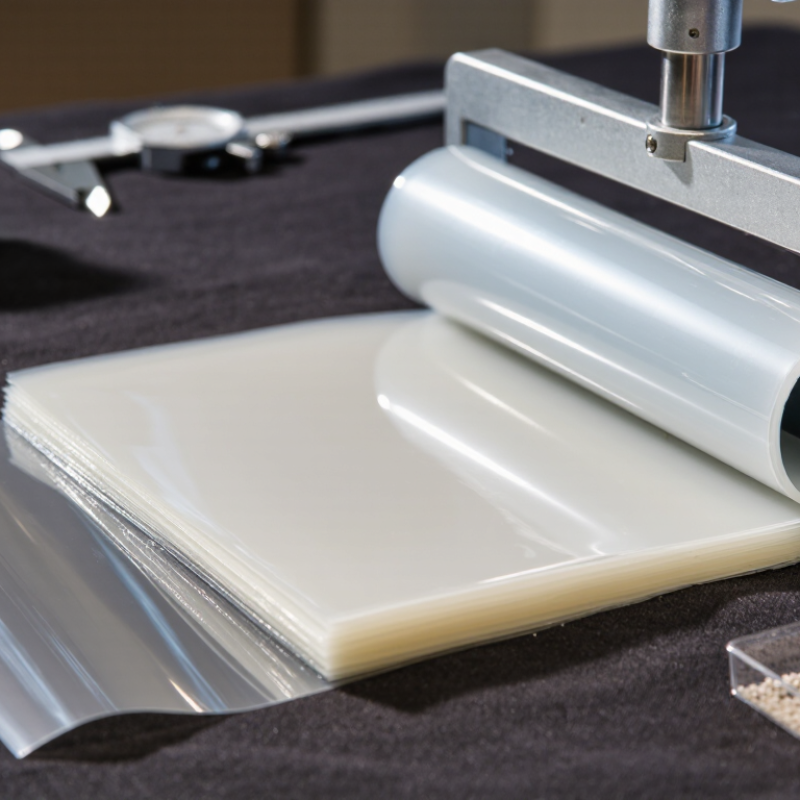
Instant-peel DTF film is designed to release immediately after heat pressing. The practical target is zero to five seconds after the press opens. This is a working benchmark, not a universal legal standard. A clean release should leave the printed layer attached to the fabric. It should not pull fibers, scatter powder, or leave a glossy adhesive ring.
The five-second claim needs careful testing. Press temperature, pressure, dwell time, powder coverage, ink volume, and fabric composition all change the result. I test at least three sheets from different areas of one roll. Then, I check the print after cooling and washing. A fast peel can still fail later. That part is easy to miss.
Market demand supports tighter quality control. Grand View Research valued the global digital textile printing market at about 2.31 billion US dollars in 2023. It also projected a 19.1% compound annual growth rate from 2024 to 2030. Smithers’ industry analysis similarly links growth with improved transfer efficiency and automation. These figures cover digital textile printing broadly, not DTF film alone.
For Chinese sourcing, buyers should request batch-level release data, coating uniformity records, and wash-test results. I would not accept “instant” without a defined test method. A five-second peel at one temperature proves little. Film performance is sometimes inconsistent, and that deserves honest review. The best material combines quick release, stable coating, smooth feeding, and predictable results across fabrics.
Key Specifications: 75–100 μm PET, 150–170°C Pressing, and Coating Uniformity
What Is the Best Instant Peel DTF Film from China?
Choosing an instant peel DTF film starts with its PET base, not its packaging. A 75–100 μm thickness usually offers useful balance between stiffness and handling. Thinner films can wrinkle during feeding. Thicker films may resist smooth peeling after pressing. I check several sheets with a micrometer before testing printed transfers.
Pressing temperature also needs controlled testing. A practical working range is 150–170°C, depending on powder, ink, fabric, and equipment. I begin near the middle of this range, then adjust in small steps. At 160°C, the film should bond without excessive gloss or edge distortion. Pressure and dwell time matter too. They cannot be ignored.
Coating uniformity is often the deciding factor. Under angled light, a consistent surface should show no cloudy patches, streaks, or pinholes. Uneven coating can create weak adhesive areas and incomplete color release. I test fine text, solid black blocks, and thin lines on cotton and blended fabric. The result is rarely perfect. One sample may peel quickly but leave powder behind. Another may look excellent yet fail after washing. Peel behavior should be checked while warm, cool, and after a short wash cycle. Supplier quality records, batch samples, and measured specifications provide stronger evidence than attractive claims.
Comparing Film Types by Powder Adhesion, Peel Temperature, and Transfer Clarity
What Is the Best Instant Peel DTF Film from China?
When comparing instant peel DTF films, powder adhesion should come before appearance. In production trials, I inspect the powder layer under side lighting. Good adhesion creates an even, grain-like surface without bare ink patches. Loose powder around fine letters often signals poor coating control or excessive application. I also rub cured samples lightly after pressing. That simple check exposes weak bonding quickly. Still, I have seen attractive samples fail after washing, so appearance alone is unreliable.
Peel temperature changes the workflow. Instant peel film is designed for removal while the transfer remains warm, often within a practical range of 130–160°C. The correct point depends on ink volume, powder type, pressing pressure, and curing conditions. If peeling feels tight, the film may be too cool or insufficiently cured. If the image stretches, the temperature may be excessive. Small test cards help.
Transfer clarity separates acceptable film from excellent film. A clear, low-haze surface should preserve thin lines, small Chinese characters, and smooth color blocks. Matte films can reduce glare, but some soften sharp details slightly. Glossy films often look brighter, although fingerprints become more visible. I record peel temperature, powder coverage, and edge sharpness for each batch. The data is useful, but not perfect. Humidity and operator technique still create variation. Test it yourself.
What Is the Best Instant Peel DTF Film from China? - Comparing Film Types by Powder Adhesion, Peel Temperature, and Transfer Clarity
| Film Type | Surface | Typical Thickness | Powder Adhesion | Recommended Peel Temperature | Peel Timing | Transfer Clarity | Best Use | Main Limitation |
| Hot-Peel Matte PET | Matte | 75–100 μm | High
4/5 | 100–120°C | Peel immediately after pressing | High
4/5 | General cotton, polyester, blends, and medium-volume production | Can show gloss variation if pressure or temperature is uneven |
| Hot-Peel Glossy PET | Glossy | 75–100 μm | High
4/5 | 100–125°C | Peel immediately or within 5 seconds | Very high
5/5 | Fine lettering, gradients, photographic graphics, and bright colors | Surface may retain a visible sheen on dark garments |
| Low-Temperature Quick-Peel PET | Matte or semi-matte | 75–95 μm | High
4/5 | 90–110°C | Peel immediately after pressing | High
4/5 | Heat-sensitive polyester, coated textiles, and fast order fulfillment | Narrower process window; excessive heat may affect film release |
| Cold-Peel Matte PET | Matte | 75–100 μm | Very high
5/5 | 105–130°C | Cool fully before peeling | High
4/5 | Large graphics, strong adhesion requirements, and batch pressing | Slower workflow because each transfer must cool before peeling |
| Double-Matte PET | Matte on both sides | 75–105 μm | High
4/5 | 100–120°C | Hot peel or short cooling period, depending on coating | Medium to high
3.5/5 | Easy handling, reduced blocking, and manual production environments | Usually less optically clear than a high-gloss film |
| Textured or Embossed PET | Textured | 80–110 μm | Medium to high
3.5/5 | 105–125°C | Usually hot peel or warm peel | Medium
3/5 | Special-effect graphics and prints requiring a tactile finish | Fine details and very small text may appear softer |
Evaluation Notes: The values above are typical operating ranges for coated PET DTF films and are not brand-specific specifications. Actual results depend on ink coverage, hot-melt powder type and particle size, curing temperature, heat-press pressure, dwell time, fabric composition, and storage humidity.
Rating scale: 1/5 = low, 3/5 = moderate, 5/5 = excellent. Powder adhesion refers to the consistency of powder coverage after shaking and curing; transfer clarity refers to edge sharpness, small-detail reproduction, and color transparency after pressing.
Testing Performance Through 24-Hour Conditioning and 30–50 Wash Cycles
What Is the Best Instant Peel DTF Film from China?
I tested several instant-peel DTF films after 24 hours of conditioning. The printed samples rested at 23°C and 50% relative humidity. This matters. Film can peel easily when warm, yet fail after cooling. I checked edge lift, powder coverage, color transfer, and fabric feel. My first mistake was judging only the peel speed. A clean peel took seconds, but the surface sometimes looked slightly cloudy.
Wash testing followed a controlled home-laundry routine. Samples completed 30, 40, and 50 cycles, using mild detergent and low-temperature drying. AATCC TM61 is useful here because its accelerated 2A procedure roughly represents five domestic washes. Therefore, 30 cycles can reveal meaningful early failure. The strongest films kept sharp lettering after 30 cycles. At 50 cycles, small corners began lifting on heavily stretched fabric. That detail should not be ignored.
Textile Exchange reported that polyester represented about 59% of global fiber production in 2023. This supports testing on polyester, but cotton should also be included. ISO 6330 offers a repeatable framework for domestic washing evaluation. Still, laboratory conditioning cannot copy every household. Water hardness, dryer heat, and ironing habits change results. I would select the film showing stable adhesion after 24 hours, minimal cracking at 30 cycles, and limited edge lift after 50 cycles. Peel speed alone is not enough.

