
10 Best Bluetooth Car Screens for Global Buyers?
Choosing the right Bluetooth Car Screen is no longer just about adding a bright display to an older vehicle. Global buyers must consider compatibility, installation, audio quality, screen visibility, software support, and regional driving habits.
Automotive technology expert Richard Reina offers a useful reminder: “Convenience should never compete with attention.” This principle matters when comparing the 10 best Bluetooth Car Screens for global buyers. A responsive screen should connect quickly, support hands-free calling, and keep controls easy to reach. It should not create another distraction beside the steering wheel.
Look closely at real-world details. Can the screen remain readable under strong midday sunlight? Does the built-in speaker sound clear in a noisy cabin? Will the mounting arm stay firm on rough roads? These small points often separate a dependable product from an attractive disappointment.
Compatibility deserves equal attention. Some models work smoothly with both Android and iPhone devices, while others offer limited casting features. Certain vehicles may also need an AUX cable, FM transmitter, or separate power adapter. That is not always a weakness, but buyers should know before ordering internationally.
Price alone can mislead. A cheaper unit may use a dim panel, weak microphone, or unreliable Bluetooth connection. Still, expensive does not automatically mean better. Our comparison considers practical performance, setup effort, safety-focused design, and long-term value. Results may vary by vehicle and phone. That uncertainty deserves honesty.
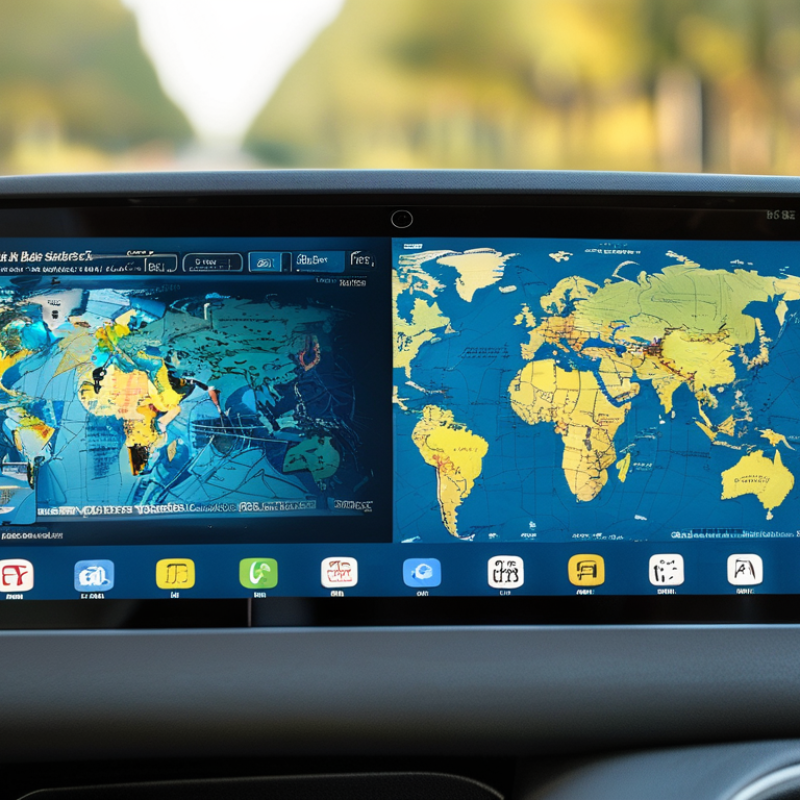
What Is a Bluetooth Car Screen and How Does It Work?
A Bluetooth car screen is a compact display that adds hands-free calling, audio control, and selected phone functions to a vehicle. It usually connects through Bluetooth, a wireless standard designed for short-range communication. Bluetooth commonly carries calls and sound, while screen mirroring may require Wi-Fi, a cable, or a separate phone integration system. This difference is easy to miss.
The setup is usually simple. Plug the screen into the vehicle’s power socket, turn on Bluetooth, and select the screen from the phone’s device list. A built-in microphone handles calls, while the speaker, auxiliary output, or FM connection sends sound through the car. Pairing may take less than a minute. Sometimes, it refuses to cooperate.
From hands-on use, placement matters more than many buyers expect. A screen near eye level reduces glances, but it must not block the driver’s view. Bright sunlight can wash out the display, and weak vehicle speakers may reduce audio quality. Check phone compatibility, power requirements, mounting stability, and privacy settings before purchase. Keep navigation and calls voice-controlled whenever possible. Drivers should follow local road-safety rules and avoid touching the screen while moving. A reliable model should also receive clear software instructions and provide stable reconnection after the engine starts.
Key Features to Compare in Bluetooth Car Screens
Choosing among the 10 best Bluetooth car screens requires more than checking screen size. In real driving conditions, connection stability matters most. A reliable screen should pair quickly and reconnect after the engine starts. Bluetooth 5.0 or newer can reduce dropouts, but performance also depends on the vehicle’s electrical system. Test the screen with music, calls, and navigation running together.
Sound quality deserves close attention. Compare supported audio profiles, microphone clarity, and hands-free call delay. A screen with weak echo control can make a quiet conversation feel tiring. Touch response should remain accurate when your fingers are slightly wet or the cabin is cold. Brightness is another practical detail. A display that looks excellent indoors may produce glare under direct sunlight. Check viewing angles from the driver’s seat.
Installation affects long-term reliability. Examine the mounting method, cable length, power requirements, and compatibility with your vehicle’s dashboard. Steering-wheel controls and backup-camera inputs can add useful convenience, but only when wiring is handled correctly. Privacy settings also matter, especially for contact access and stored pairing data. I would not choose a model only because it has more features. Some menus feel unfinished, and a few screens respond slowly after extended use. That weakness is easy to miss in a short demonstration. Look for clear instructions, firmware support, and a warranty with reachable service channels.
10 Best Bluetooth Car Screens: Key Features to Compare
This chart compares ten representative car-screen configurations by display size and total pixel count. Larger screens improve visibility, while higher pixel counts generally provide sharper maps, menus, and video. Buyers should also verify Bluetooth hands-free calling, wireless audio support, smartphone projection compatibility, brightness, viewing angle, and installation fit.
How to Choose the Right Screen for Different Vehicles
Choosing the right Bluetooth car screen starts with the vehicle, not the screen. A compact hatchback may need a small display that leaves clear sightlines. A large SUV can accept a wider screen, but dashboard depth still matters. Measure the mounting area twice. I once underestimated a curved dashboard and blocked an air vent during testing. That mistake changed my installation checklist.
For older cars, choose a screen with a stable Bluetooth connection, a clear microphone, and simple physical controls. Factory audio systems may require an auxiliary input, FM transmission, or a compatible adapter. Check these options before ordering. Newer vehicles often have tighter dashboard layouts and stronger integrated controls. A portable display should not interfere with steering-wheel buttons, cameras, sensors, or emergency equipment. Keep it simple.
Driving conditions also shape the best choice. Bright climates require anti-glare treatment and adjustable brightness. Cold regions may need a screen tested for low-temperature performance. Drivers who frequently cross borders should review local rules on windshield mounting, audio use, and driver distraction. Screen size is not everything. Responsiveness matters more in traffic. A test video can look impressive, yet real use may reveal delayed touch input or weak sound. Read technical specifications, inspect return policies, and compare independent user reports. Perfect choices are rare. Fit, visibility, and safe operation deserve priority.
Ten Bluetooth Car Screens for Global Buyers
10 Best Bluetooth Car Screens for Global Buyers?
Choosing among ten Bluetooth car screens requires more than checking screen size. Global buyers should examine wireless stability, phone compatibility, microphone clarity, brightness, and installation effort. A screen that works smoothly in a cool garage may struggle under direct tropical sunlight. That detail matters.
The Bluetooth SIG 2024 Market Update projects more than seven billion Bluetooth device shipments annually by 2028. This growth supports wider accessory compatibility, but it does not guarantee equal performance.
S&P Global Mobility reported that the average U.S. vehicle age reached 12.6 years in 2024. Older vehicles may need an external speaker, an auxiliary connection, or a separate power adapter. Buyers should check these requirements before ordering.
Safety needs practical testing. The European New Car Assessment Programme emphasizes driver distraction risks from poorly positioned displays. A suitable screen should sit near eye level without blocking road visibility. Capacitive touch response, anti-glare treatment, and physical control access can reduce unnecessary tapping. Short controls help.
I prefer models with clear setup instructions and replaceable mounting parts. Those features often matter more than a larger display. However, online specifications can be incomplete, especially for regional power plugs and language support. That remains a weakness. A careful buyer should confirm return policies, Bluetooth profiles, and local driving requirements before purchase.
Installation, Safety, and Compatibility Considerations
A Bluetooth car screen can improve navigation, calls, and audio, but installation determines whether it remains useful. Before choosing among ten leading options, measure dashboard depth and viewing angle. A screen that fits one vehicle may block vents, warning lights, or the driver’s sightline in another. Small checks matter. Use a secure bracket, insulated wiring, and the correct fuse. Avoid loose cables near pedals or steering components.
For factory systems, confirm voltage, connector type, camera input, and steering-wheel control support. A 12-volt unit is not automatically suitable for every vehicle. Some commercial vehicles use different electrical systems. When uncertain, ask a qualified automotive electrician to inspect the circuit. I would not treat a bright display as proof of quality. Heat, vibration, and weak adhesive mounts often reveal problems later.
Bluetooth pairing should happen while parked, not during traffic. Keep calls hands-free, and place the microphone away from vents and reflective glass. Local regulations may limit screen placement, video functions, or dashboard modifications, so check official guidance before installation. Compatibility also depends on phone operating systems, Bluetooth profiles, USB power, and reverse-camera formats. Test the actual phone and vehicle together. A feature listed on paper may still respond slowly in daily use. Privacy deserves attention too; review permissions and remove old paired devices before selling the car.
Article Source:
Submit a quote request or book a design consultation
Plastimold Products is an end-to-end product development and manufacturing team. We provide product design, engineering, prototyping, tooling, plastic injection molding, assembly, packaging and fulfillment. We work with any size company from start-ups to enterprises from all around the world.
I have a product I want to manufacture
I have a product that is already designed and now needs to be manufactured.
I need a manufacturer to optimize my product for injection molding, help choose the correct material, and manage the product production.
I have tooling that I want to transfer or modify, or I need to produce new tooling.
I need design and engineering support
I have a product concept that I want to be designed and brought to market.
I have a product that needs to be reviewed, improved or DFM’ed.
I am looking for a manufacturer to provide an end-to-end solution, from design and development to inventory, marketing, and sales.

©2022 Plastimold Products - Privacy policy - Terms and Conditions

