
What Is an Air Conditioner Contactor and How Does It Work?

An Air Conditioner Contactor is a compact electrical switch that controls high-voltage equipment. It usually sits inside the outdoor condensing unit, behind the service panel. When the thermostat calls for cooling, a low-voltage signal energizes the contactor coil. The contacts then close, sending power to the compressor and condenser fan motor.

HVACR educator and technician Bryan Orr explains the function clearly: “A contactor is an electrically controlled switch that lets a small control signal operate a larger load.” That simple description captures the basic principle. It does not explain everything. Contact pressure, coil voltage, wiring condition, and electrical wear also affect performance. A weak contactor may produce buzzing, chattering, pitted contacts, or delayed startup.

Listen closely.

During service work, technicians often inspect the contactor with the power disconnected and verified absent. Burn marks near the terminals can indicate overheating. A humming coil may suggest improper voltage or mechanical damage. However, visual inspection alone cannot prove safe operation. Meter testing and manufacturer specifications remain essential.

This article explores what an Air Conditioner Contactor does, how its coil and contacts interact, and why failures can damage expensive components. It also considers common symptoms, testing limitations, and replacement decisions. Some explanations make contactors sound almost effortless. Real systems are less tidy. A dirty cabinet, loose connection, or incorrect replacement can change the diagnosis completely. That is why careful measurements matter more than assumptions.
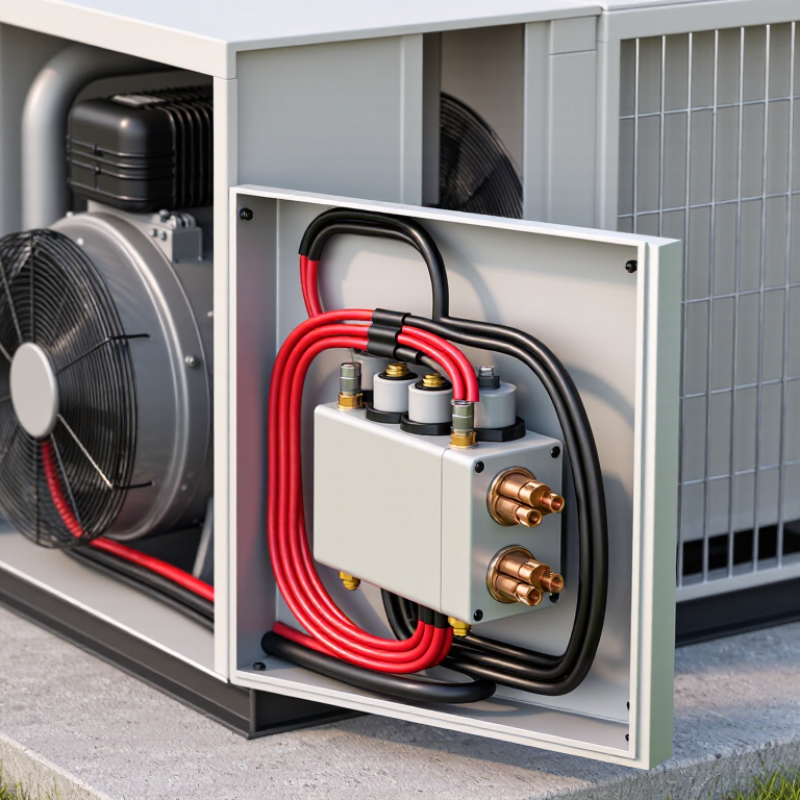
What Is an Air Conditioner Contactor and How Does It Work?

What Is an Air Conditioner Contactor?

An air conditioner contactor is an electrically controlled switch inside the outdoor condenser unit. It connects high-voltage power to the compressor and condenser fan when cooling begins. A low-voltage signal, commonly 24 volts from the thermostat circuit, energizes the contactor coil. The coil creates a magnetic field, pulling the contacts together. Electricity then reaches the motor loads.

The device has line terminals for incoming power and load terminals for outgoing power. In many systems, it also includes a visible contact bridge and a spring mechanism. During field inspections, worn contacts often appear dark, rough, or pitted. A buzzing sound, delayed startup, or a dead outdoor unit can point toward contactor trouble, although these symptoms may have other causes. The International Energy Agency’s Future of Cooling report warns that global space-cooling demand could triple by 2050. That trend increases the importance of reliable switching components, even though a contactor alone does not improve efficiency.

Tips: Turn off power at the disconnect and verify it with a properly rated meter. Never press the contactor manually while energized. Check coil voltage, contact condition, and terminal tightness. A common mistake is replacing the contactor without testing the compressor or control circuit. That can hide the real fault. Electrical work is easy to underestimate. Follow local codes and use qualified service personnel.

What Is an Air Conditioner Contactor and How Does It Work?

An air conditioner contactor is an electrically controlled switch. A low-voltage signal energizes its coil, causing the contacts to connect or disconnect higher-voltage power to components such as the compressor and condenser fan.

The chart shows common voltage levels found in air-conditioning contactor circuits. A 24 VAC control signal typically energizes the coil, while the main contacts may switch 120 VAC or 240 VAC power. Actual ratings vary by equipment, so the unit nameplate and wiring diagram should always be checked before service.

How an Air Conditioner Contactor Works

How an Air Conditioner Contactor Works

An air conditioner contactor acts like an electrically controlled switch. It connects the outdoor unit to the high-voltage power supply. A thermostat sends a low-voltage signal to the contactor coil when cooling is needed. The coil then creates a magnetic field. This field pulls down a movable armature, closing the power contacts.

The closed contacts allow electricity to reach the compressor and outdoor fan motor. When the thermostat stops calling for cooling, the coil loses power. A spring pushes the armature back, opening the contacts. The compressor and fan then stop receiving power. The process repeats during normal cooling cycles. It happens quickly, often with a sharp clicking sound.

A contactor must handle repeated electrical loads. Its contacts may develop dark marks, pitting, or welding from electrical arcing. Dust, loose wiring, and weak coil voltage can also cause unreliable operation. In field inspections, I check the control voltage and contact movement, but one test rarely tells the whole story. A contactor can look acceptable while failing under load. That is easy to miss. Power must be disconnected before physical inspection, because the line side can remain dangerous. Replacement should match the system’s voltage, current rating, and contact configuration. When symptoms seem inconsistent, measuring voltage during startup usually provides more useful evidence than guessing from noise alone.

Key Components and Electrical Connections

An air conditioner contactor is an electrically controlled switch. It connects high-voltage power to the outdoor unit. When the thermostat calls for cooling, the low-voltage circuit energizes the coil, creating a magnetic field. That field pulls the armature down. Normally open contacts close. Power then travels from the line terminals to the load terminals, feeding the compressor and condenser fan.

Inside, the contactor has a coil, iron core, moving armature, spring, and contact sets. Line terminals receive supply voltage. Load terminals deliver it onward. Control wires connect across the coil, often marked A1 and A2. Some systems use a 24-volt AC coil, while others use different control voltages. Measuring before replacing parts matters. Guessing can damage the coil or control board.

A practical inspection looks for burned contacts, loose wires, melted insulation, and unusual buzzing. The diagnosis is not always neat. A weak coil, low control voltage, or worn spring can create similar symptoms. Do not trust the thermostat alone. Turn off the outdoor disconnect and verify voltage with a properly rated meter. Even with power removed, some equipment may retain electrical energy. Contact surfaces can appear acceptable while failing under load, so voltage readings should be taken at both line and load terminals by a qualified technician.

Common Types and Applications of Contactors

What Is an Air Conditioner Contactor and How Does It Work?

Common Types and Applications of Contactors

An air conditioner contactor is an electrically controlled switch for high-current loads. A low-voltage signal energizes its coil, creating a magnetic field. The armature then closes the power contacts and starts the compressor, condenser fan, or blower motor. When the thermostat removes the signal, a spring opens the contacts. You may hear a sharp click. That sound is normal, but repeated clicking can indicate weak voltage or a failing coil.

Common types include single-pole, double-pole, and three-pole contactors. A single-pole model switches one power line, while a double-pole model disconnects two lines. Three-pole contactors serve three-phase compressors and commercial motor systems. Definite-purpose contactors are widely selected for HVAC applications because their ratings address frequent motor starting and stopping. Some units also include auxiliary contacts for alarms, controls, or fan sequencing.

Applications range from residential split systems to rooftop units, heat pumps, refrigeration equipment, and industrial air handlers. The International Energy Agency reported that global space-cooling demand could more than triple by 2050 from 2016 levels. Reliable switching will become more important as cooling loads rise. In field service, pitted contacts often leave dark marks and create a burning smell. However, replacing the contactor alone may miss the real fault. Low coil voltage, oversized wiring, or a locked compressor can cause repeat failure. Contact ratings should match voltage, load type, and motor current, not appearance.

What Is an Air Conditioner Contactor and How Does It Work? - Common Types and Applications of Contactors

Contactor Type or Feature How It Works Typical Electrical Characteristics Common Air-Conditioning Application Important Selection Considerations
Single-pole contactor Uses an energized coil to move the armature and close one main power circuit. The contact opens when the coil is de-energized. Usually switches one ungrounded line; current ratings vary by design and load category. Smaller single-phase equipment where only one supply conductor is switched. Verify local electrical requirements and whether simultaneous disconnection of all ungrounded conductors is required.
Two-pole contactor One coil mechanically operates two main contacts at the same time, connecting or disconnecting both switched conductors. Common in single-phase systems; available with coil voltages such as 24 V AC and with various motor-load current ratings. Outdoor condensing units, heat pumps, compressors, and condenser fan motors. Match the contact rating to the compressor's rated-load current, locked-rotor current, and the applicable utilization category.
Three-pole contactor A single control coil closes or opens three mechanically linked power contacts simultaneously. Designed for three-phase motor circuits; commonly selected using motor current and motor-duty ratings. Three-phase compressors, condenser motors, air handlers, and packaged HVAC equipment. Check phase compatibility, voltage rating, motor-duty rating, short-circuit protection, and required overload protection.
Normally open (N.O.) auxiliary contact Remains open while the contactor coil is idle and closes when the main contactor is energized. Used for low-power control, indication, interlocking, or feedback rather than directly switching compressor power. Run-status indication, control sequencing, fan interlocks, and alarm circuits. Confirm auxiliary-contact current, voltage, insulation, and whether the control circuit requires a maintained or momentary signal.
Normally closed (N.C.) auxiliary contact Remains closed while the main coil is idle and opens when the contactor is energized. Provides a control signal that changes state when the main contacts operate. Safety interlocks, status monitoring, anti-short-cycle logic, and control-system feedback. Use only within the auxiliary contact's approved electrical rating; it is not a substitute for a power contact.
AC-coil contactor An alternating-current control voltage creates a magnetic field in the coil, pulling the armature toward the core and closing the contacts. Common control voltages include 24 V AC in HVAC controls, while other system voltages are also available. Thermostat-controlled residential and light-commercial air-conditioning systems. Measure the actual control voltage and confirm coil frequency, inrush behavior, and compatibility with the transformer and thermostat circuit.
DC-coil contactor A direct-current coil produces the magnetic force needed to operate the contact mechanism when DC control power is applied. Requires the correct DC coil voltage and polarity where specified; coil power varies by design. Battery-backed controls, electronic HVAC equipment, and systems using a DC control supply. Do not replace an AC coil with a DC coil, or vice versa, unless the control circuit and contactor specifications explicitly allow it.
Definite-purpose contactor Uses an electromagnetic mechanism and contact set designed for repeated switching of HVAC and refrigeration loads. Often includes ratings for compressor, motor, resistive, or general-purpose loads; ratings depend on the specific design. Compressors, condenser fans, evaporator fans, electric heaters, and packaged HVAC units. Select by load type, voltage, number of poles, continuous current, motor starting current, and expected switching frequency.
How an air-conditioner contactor operates A thermostat or control board sends low-voltage power to the coil. The magnetic field pulls in the armature, closing the main contacts and supplying line voltage to the compressor or fan. When the signal stops, a spring returns the contacts to the open position. The control circuit is electrically separate from the high-voltage load circuit, although the contactor provides mechanical switching between them. Starting and stopping compressors, condenser fans, indoor blowers, and electric heating elements. Use suitable overcurrent protection, inspect for pitted contacts or coil noise, and disconnect all power before servicing.

Note: Actual ratings and terminal arrangements vary by equipment design. Always use the HVAC equipment documentation and applicable electrical codes when selecting or replacing a contactor.

Signs of Failure and Basic Maintenance Considerations

An air conditioner contactor is an electrically controlled switch inside the outdoor unit. It sends power to the compressor and condenser fan when the thermostat requests cooling. A low-voltage signal pulls the contactor closed, while a spring releases it when cooling stops. You may hear a soft click. That sound is normal.

Failure often appears as a silent outdoor unit, repeated clicking, or a contactor that hums loudly. Burned marks, darkened terminals, and rough contact surfaces are important warning signs. The air conditioner may start slowly or fail during hot afternoons. However, one symptom does not prove the contactor is defective. A weak capacitor, loose wire, or control problem can create similar behavior. Careful testing matters.

Tips: Turn off the breaker and outdoor disconnect before inspection. Verify that power is absent with an appropriate meter. Never press the contactor by hand, because dangerous voltage may remain present. Keep leaves, dust, and grass away from the cabinet vents. A qualified technician should test voltage, inspect terminal tightness, and replace badly pitted contacts. Do not sand contact surfaces casually; this can damage their protective finish. Take a clear photo before service. It helps, sometimes. Regular professional inspection before the cooling season can reveal worn parts, although maintenance cannot prevent every failure.

Submit a quote request or book a design consultation

Plastimold Products is an end-to-end product development and manufacturing team.  We provide product design, engineering, prototyping, tooling, plastic injection molding, assembly, packaging and fulfillment.  We work with any size company from start-ups to enterprises from all around the world.

I have a product I want to manufacture

I have a product that is already designed and now needs to be manufactured. 

I need a manufacturer to optimize my product for injection molding, help choose the correct material, and manage the product production.

I have tooling that I want to transfer or modify, or I need to produce new tooling.

I need design and engineering support

I have a product concept that I want to be designed and brought to market.

I have a product that needs to be reviewed, improved or DFM’ed.

I am looking for a manufacturer to provide an end-to-end solution, from design and development to inventory, marketing, and sales.
