
2026 Top Aluminum Profiles for Sliding Doors Buying Guide

Choosing Aluminum Profiles For Sliding Doors in 2026 requires more than comparing prices or surface finishes. A reliable profile must support smooth movement, stable glazing, weather resistance, and long service life. This guide examines the practical details that influence those results, including alloy selection, wall thickness, thermal breaks, drainage channels, and hardware compatibility.

In real projects, 6063-T5 aluminum remains a common choice because it offers good formability, strength, and anodizing performance. However, the best specification depends on door size, glass weight, wind exposure, installation conditions, and opening frequency. A slim profile may look elegant, but it can flex under heavy glazing if its reinforcement is inadequate. Small rollers can also create noise, uneven movement, and premature wear.

Look beyond appearance.

Experienced fabricators check profile tolerances, corner connections, gasket quality, and drainage paths before approving a system. They also request test reports, coating records, dimensional drawings, and clear load ratings from suppliers. These documents help separate dependable products from attractive samples with weak technical support. Still, no profile performs perfectly in every building. Poor installation, incorrect leveling, or unsuitable rollers can reduce performance significantly.

This 2026 buying guide compares essential profile features, finish options, thermal performance, maintenance needs, and supplier reliability. It also highlights common purchasing mistakes, including choosing by unit price alone. Some recommendations may need adjustment after site testing, because real conditions often reveal details that catalog pages overlook. The goal is a practical, evidence-based path toward safer, quieter, and more durable sliding door systems.
2026 Top Aluminum Profiles for Sliding Doors Buying Guide

What Are Aluminum Profiles for Sliding Doors?

2026 Top Aluminum Profiles for Sliding Doors Buying Guide

What Are Aluminum Profiles for Sliding Doors?

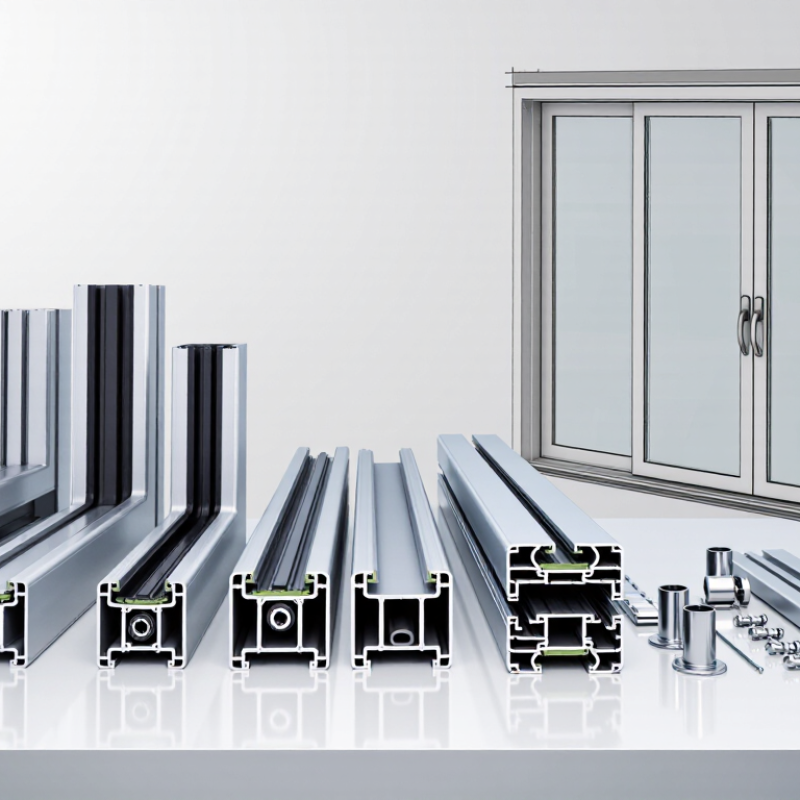
Aluminum profiles are precision-extruded sections forming a sliding door’s frame, sash, track, and glazing edge. They guide glass panels while carrying wind, handling, and hardware loads. Unlike flat metal strips, profiles use internal chambers for strength and drainage.

The extrusion process shapes aluminum through a heated die. Designers can create narrow sightlines, deep tracks, or reinforced corners without adding unnecessary weight. A thermal-break profile includes a low-conductivity polyamide connector between the outer and inner aluminum sections. This reduces heat transfer and limits interior condensation. It is a small detail. It matters.

The International Aluminium Institute reports that recycled aluminum needs about 5% of the energy required for primary aluminum production. That supports responsible material selection, but recycled content alone does not guarantee a durable door. Alloy, wall thickness, corner connections, drainage, and surface treatment also deserve inspection. The U.S. Department of Energy identifies well-designed window and door systems as important parts of energy-efficient building envelopes.

A practical test is simple:

check whether the profile feels rigid, whether rollers sit fully inside the track, and whether drainage paths remain open. Slimmer is not always better. A very narrow section may reduce visual obstruction, yet weaken hardware support or weather performance. Specifications can look convincing and still need real-site verification.

Which Aluminum Profile Types and Alloys Are Available?

Sliding-door systems use several aluminum profile types, each serving a different load and sealing task. Frame profiles form the outer perimeter. Sash profiles hold the glass, while interlock sections meet at the closing edge. Track profiles guide rollers, and threshold profiles manage drainage near the floor. Slim profiles increase daylight, but larger sections usually improve stiffness and glass support. Thermal-break profiles include a polyamide barrier between exterior and interior aluminum. Non-thermal profiles cost less, yet they transfer heat quickly.

Architectural extrusions commonly use 6000-series alloys. EN AW-6060 and EN AW-6063 offer smooth extrusion surfaces and reliable anodizing, making them practical for residential doors. 6063 is often selected for visible frames. 6061 provides higher strength, but its surface finish may require closer process control. 6005A can suit stronger structural sections. Alloy choice alone is not enough. Wall thickness, corner joints, roller loads, and glass weight can change actual performance. I have seen a narrow profile look elegant in a sample, then flex under a large insulated panel.

The International Aluminium Institute reports that recycled aluminum requires about 5% of the energy used for primary aluminum production. This supports recycled-content specifications, provided quality and traceability remain documented. The Aluminum Association identifies 6063 among widely used extrusion alloys for architectural applications. Buyers should request alloy certificates, temper information, dimensional tolerances, and test results for air, water, and wind resistance. Powder coating offers broad colors, while anodizing preserves a metallic appearance. Neither finish can correct poor drainage or weak assembly. That detail is easy to overlook.

2026 Top Aluminum Profiles for Sliding Doors Buying Guide - Which Aluminum Profile Types and Alloys Are Available?

Profile Type Primary Function Common Aluminum Alloys Typical Temper Typical Mechanical Strength Recommended Applications Key Buying Considerations
Outer Frame Profile Forms the fixed perimeter of the sliding-door system and transfers loads to the wall opening. 6063, 6060, 6005A, 6061 T5, T6, T66 6063-T5 commonly provides a minimum yield strength of about 110 MPa; stronger tempers and alloys are available. Residential doors, balcony doors, patio doors, commercial storefronts and interior partitions. Check wall thickness, frame depth, drainage paths, corner-joint design and compatibility with the glazing system.
Sliding Sash Profile Supports the glass panel and moves along the rollers or track. 6063, 6060, 6005A T5, T6, T66 Generally selected for adequate stiffness, accurate extrusion and moderate structural loading. Single, double and multi-panel sliding doors. Confirm sash weight limits, roller position, glass thickness range and weather-seal locations.
Meeting Stile / Interlock Profile Connects the two moving panels and improves weather resistance, security and alignment when the panels close. 6063, 6060, 6005A T5, T6 Strength depends on the profile geometry, wall thickness and reinforcement rather than alloy alone. Two-panel and four-panel sliding-door systems exposed to wind and rain. Look for sufficient overlap, gasket channels, anti-lift provisions and compatibility with the lock hardware.
Head and Sill / Threshold Profile Provides the upper and lower frame structure; the sill or threshold also manages drainage and rolling loads. 6063, 6060, 6005A, 6061 T5, T6, T66 Higher-strength alloys or reinforced sections may be preferred for large panels and heavy glazing. Large patio doors, lift-and-slide doors, low-threshold systems and high-traffic entrances. Evaluate water drainage, sill height, accessibility requirements, thermal breaks and floor-loading conditions.
Glazing Bead / Pressure Plate Retains the glass or insulated glass unit and secures the glazing gasket. 6063, 6060 T5, T6 Usually does not require the same structural capacity as the main frame members. Fixed and sliding glazed panels using single glass or insulated glass units. Verify gasket fit, glass bite, bead retention and the permitted glass thickness range.
Track and Roller Rail Profile Creates the running surface for rollers and helps guide the sliding panel. 6063, 6060, 6005A, stainless-steel-insert designs where specified T5, T6 Requires adequate wear resistance, dimensional stability and local stiffness. Standard sliding doors, heavy sliding panels and lift-and-slide systems. Check roller material, replaceability, rail hardness, drainage and resistance to dirt accumulation.
Reinforcement Profile Increases stiffness in long stiles, tall panels, wide sashes and high-wind applications. 6061, 6005A, 6063 T6, T651, T66 6061-T6 has a typical minimum yield strength of approximately 240 MPa, subject to product standard and section size. Oversized doors, coastal buildings, high-wind zones and heavy insulated-glass panels. Use structural calculations to confirm deflection, fastener placement, thermal movement and galvanic compatibility.
Fly-Screen / Insect-Screen Profile Forms a lightweight removable frame for insect mesh installed outside or inside the sliding door. 6063, 6060 T5, T6 Moderate strength is normally sufficient because the screen frame carries limited glass or panel load. Residential doors, balconies, patios and naturally ventilated rooms. Confirm mesh retention, corner connectors, screen clearance and resistance to repeated removal.
Thermal-Break Profile Uses a low-conductivity polyamide strip between interior and exterior aluminum sections to reduce heat transfer. 6063, 6060, 6005A T5, T6, T66 Performance is determined by the complete system, including polyamide width, seals, glass and frame geometry. Energy-efficient residential and commercial sliding doors. Review thermal transmittance, polyamide strip dimensions, crimping quality, condensation resistance and certification.
Corner or Coupling Profile Joins frame sections or connects multiple door modules while maintaining alignment and sealing. 6063, 6060, 6061 T5, T6 Strength is based on joint design, fasteners, wall thickness and the applied load path. Corner sliding doors, modular façades and multi-track assemblies. Check dimensional tolerances, connector compatibility, screw retention and movement allowance.
Aluminum Alloy: 6063 Architectural extrusion alloy with excellent surface finish and good corrosion resistance. Al-Mg-Si series; widely used for architectural profiles. T5, T6, T66 6063-T5 is commonly used where moderate strength and high extrudability are required. Frames, sashes, glazing beads, tracks, handles and decorative sections. Best general-purpose choice for visually exposed profiles and complex cross-sections.
Aluminum Alloy: 6060 Highly extrudable architectural alloy suited to detailed and thin-walled profiles. Al-Mg-Si series. T5, T6, T66 Usually selected for moderate-strength applications where surface quality and extrusion complexity are important. Lightweight frames, trim, glazing beads and standard residential sliding doors. Confirm the required strength because its properties can be lower than stronger structural alloys in comparable tempers.
Aluminum Alloy: 6005A Higher-strength extrusion alloy for sections requiring more load capacity than common architectural alloys. Al-Mg-Si series with increased structural capability. T5, T6, T66 Often used when improved strength and stiffness are needed while retaining good extrudability. Large sashes, heavy-duty frames, thresholds and reinforcement sections. Confirm availability, welding requirements, temper designation and applicable regional standards.
Aluminum Alloy: 6061 Structural extrusion alloy offering higher strength than typical 6063 architectural sections. Al-Mg-Si-Cu series. T6, T651 6061-T6 typically has a minimum yield strength of approximately 240 MPa, depending on product form and standard. Reinforcement members, heavy-duty tracks, large openings and structural connectors. Surface finish and extrusion complexity may be less favorable than 6063; use where strength justifies the selection.
Surface Finish: Anodizing Electrochemically thickens the natural oxide layer to improve appearance and surface durability. Suitable for most architectural 6000-series alloys, especially 6063 and 6060. Alloy temper remains specified separately. Does not replace structural design; coating performance depends on thickness, sealing and pretreatment. Exterior frames, coastal applications and modern architectural finishes. Specify anodic film class or thickness, color consistency, sealing quality and maintenance requirements.
Surface Finish: Powder Coating Applies a cured organic coating for color selection and additional environmental protection. Commonly applied to 6063, 6060, 6005A and 6061 profiles. Alloy temper remains specified separately. Coating durability depends on pretreatment, film thickness, curing and exposure conditions. Residential, commercial and high-color-variety sliding-door projects. Request coating class, pretreatment specification, color tolerance, warranty terms and repair procedure.
Technical note: Actual strength, dimensional tolerance, thermal performance and allowable panel size depend on the exact alloy, temper, profile geometry, extrusion standard, glazing weight, hardware and structural calculations. Common reference standards include ASTM B221 for aluminum and aluminum-alloy extruded products and EN 755/EN 12020 for aluminum extrusion requirements.

How to Evaluate Profile Size, Strength, and Surface Finish

For 2026 sliding doors, profile size should match the opening, glass weight, and local wind exposure. A wider frame is not automatically stronger. Oversized sections can reduce daylight and increase cost. Measure the visible face width, wall thickness, and internal chambers. Then request tested air, water, and structural performance, not only alloy descriptions. The 2023 International Energy Agency Buildings report states that buildings consume about 30% of global final energy. Thermal breaks therefore deserve serious attention.

Strength depends on more than aluminum thickness. Ask for the alloy and temper, reinforcement details, roller capacity, and test pressure. A useful profile should resist deflection while keeping the sash easy to operate. The U.S. Department of Energy reports that windows can cause 25–30% of residential heating and cooling energy use. Poorly aligned sliding panels may worsen leakage. Small gaps matter. Check corner joints and drainage paths carefully.

Surface finish affects appearance, corrosion resistance, and maintenance. Anodizing should be evaluated by coating class and measured thickness. Powder coating needs documented preparation, adhesion, and weathering results. Compare samples under direct sunlight, not only showroom lighting. I once underestimated how quickly a dark finish reveals dust and scratches. That judgment was incomplete. Request test records aligned with applicable AAMA, ASTM, or ISO methods, and confirm whether results apply to the complete door assembly.

2026 Top Aluminum Profiles for Sliding Doors Buying Guide

How to evaluate profile size, strength, and surface finish

Profile Size

For residential sliding doors, 40–60 mm face widths and wall thicknesses of approximately 1.5–2.5 mm are common starting points. Final sizing should be based on span, panel weight, hardware, and wind load.

Strength

The chart compares minimum tensile and yield strength values commonly specified for extruded aluminum alloys and tempers. The actual profile design still requires deflection and connection checks.

Surface Finish

Typical anodized architectural finishes use approximately 10 μm for Class II or 18 μm for Class I. Powder-coated finishes are commonly specified around 60–80 μm, subject to the applicable coating standard.

Strength values are representative minimum values referenced in common ASTM B221 and EN 755 material tables. Confirm the exact alloy, temper, profile geometry, finish class, and local building-code requirements before purchasing.

How to Choose Profiles for Different Sliding Door Applications

Choosing the right aluminum profiles for sliding doors in 2026 starts with the application, not the catalog photograph. A quiet interior divider needs different engineering from a wide patio opening. Measure panel weight, opening width, traffic frequency, and exposure to wind or moisture. For large exterior doors, choose deeper frames, reinforced sections, and rollers rated above the actual sash weight. This reserve reduces binding when temperatures change. It also improves daily operation.

Thermal performance matters in bedrooms and conditioned offices. A thermally broken profile limits heat transfer through the frame. For bathrooms or coastal locations, prioritize drainage paths, corrosion-resistant hardware, and durable powder coating. Narrow profiles suit compact interiors, but they may flex under heavy glass. That trade-off is easy to miss. Check section drawings, wall thickness, gasket compatibility, and tested load data before ordering. Ask how replacement rollers can be accessed after installation. A beautiful system becomes troublesome when maintenance requires removing fixed glass.

Tips: Sketch the door in its real setting. Mark furniture, floor transitions, handles, and cleaning access. Request a cut sample, not only a digital image. Test the track with the intended glass and roller set. Leave practical tolerance for installation; perfect measurements rarely survive uneven walls. Review drainage after heavy rain, because a small overlooked outlet can create a large service problem. If unsure, have a qualified fabricator verify the profile, glazing, and hardware as one working assembly.

What Are the Key Steps in Installation and Maintenance?

Accurate installation begins with measuring the opening at several points. Walls are rarely perfectly square. Record the smallest width and height before ordering aluminum profiles. Check the floor with a level, then correct uneven areas with suitable shims. Do not force the frame into place. It can twist.

Assemble the outer frame on a clean, flat surface. Use corrosion-resistant fasteners and keep screw spacing consistent with the engineering instructions. Confirm that drainage channels face outward and remain unobstructed. Install the frame plumb, level, and square before tightening every screw. Fit the rollers and panels carefully, then adjust their height until the gaps look even. A thin, continuous seal around the frame helps prevent water and air leakage. Leave room for normal thermal movement.

Maintenance is simple, but often neglected. Remove dust from the tracks with a soft brush or vacuum every few months. Wipe aluminum surfaces with mild soap and clean water. Avoid abrasive pads, strong acids, and harsh solvents. Apply a small amount of silicone-based lubricant to moving rollers when operation becomes rough. Inspect seals for cracks, shrinkage, or loose corners. Clear drainage holes with a soft plastic tool. Never use wire that could damage the channel. I have found that early adjustment prevents expensive repairs, although even careful work can miss a hidden alignment problem. Recheck the door after seasonal temperature changes.

Submit a quote request or book a design consultation

Plastimold Products is an end-to-end product development and manufacturing team.  We provide product design, engineering, prototyping, tooling, plastic injection molding, assembly, packaging and fulfillment.  We work with any size company from start-ups to enterprises from all around the world.

I have a product I want to manufacture

I have a product that is already designed and now needs to be manufactured. 

I need a manufacturer to optimize my product for injection molding, help choose the correct material, and manage the product production.

I have tooling that I want to transfer or modify, or I need to produce new tooling.

I need design and engineering support

I have a product concept that I want to be designed and brought to market.

I have a product that needs to be reviewed, improved or DFM’ed.

I am looking for a manufacturer to provide an end-to-end solution, from design and development to inventory, marketing, and sales.
