
2026 Best Blind Flanges Manufacturers for Global Buyers?
Buying Blind Flanges in 2026 requires more than comparing prices on a supplier website. Global buyers need dependable dimensions, verified materials, stable production, and clear documentation. A flange that appears identical in a photograph may differ in thickness, drilling accuracy, pressure rating, or surface finish. Those differences can affect installation time and long-term sealing performance.
This guide examines manufacturers serving international markets, with attention to engineering experience, manufacturing capacity, inspection systems, and export reliability. It considers commonly requested materials, including carbon steel, stainless steel, alloy steel, and duplex grades. Relevant standards may include ASME, EN, DIN, JIS, and API requirements, depending on the project. Material test reports, heat numbers, dimensional records, and hydrostatic or ultrasonic testing can provide useful evidence. Small details matter.
Supplier communication also deserves practical attention. Can the manufacturer confirm tolerances before production? Are drawings reviewed by qualified engineers? Does packaging protect raised faces during a long sea journey? Answers should be supported by records, not confident promises. Certifications help, but they do not replace independent verification or a carefully written purchase specification.
No ranking can suit every buyer. A large factory may offer excellent capacity but slower technical responses. A smaller manufacturer may provide closer support but limited stock. Even established suppliers can make occasional mistakes. That is why this 2026 overview combines measurable factors with cautious judgment. Buyers should validate current certifications, production claims, lead times, and regional compliance before placing an order. The best choice is rarely the cheapest quote. It is the supplier that can repeatedly deliver the specified Blind Flanges, with evidence.
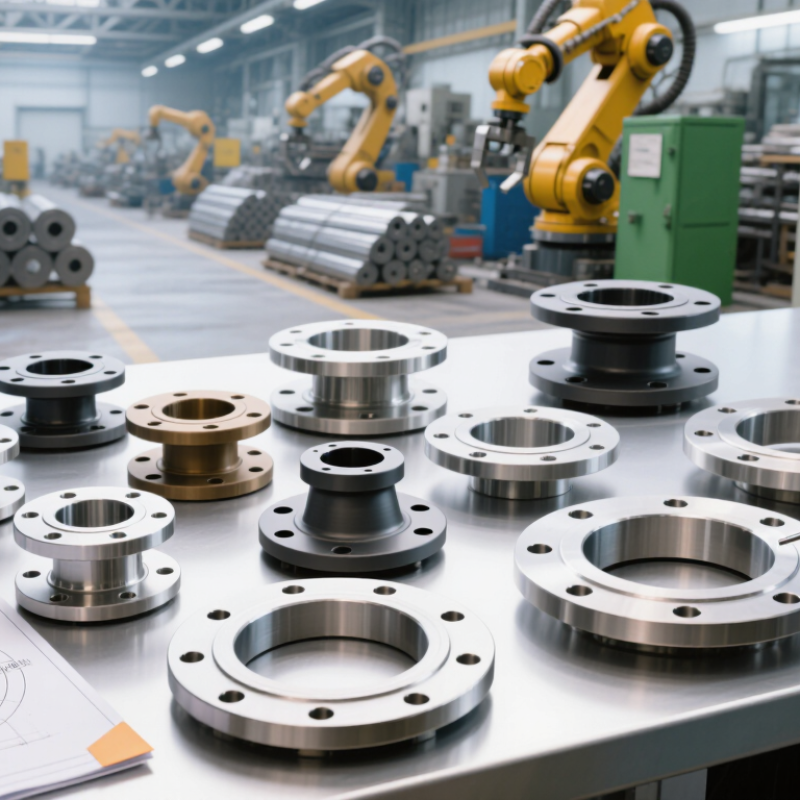
What Are Blind Flanges and Where Are They Used?
Blind flanges are solid, drilled plates used to close the end of a pipeline, nozzle, or pressure vessel. Unlike weld-neck or slip-on flanges, they have no center bore. Their main purpose is isolation, pressure testing, and future expansion.
A blind flange often looks simple. It is not. Its bolt-hole pattern, gasket face, thickness, and pressure class must match the connected flange. ASME B16.5 covers many common sizes and pressure ratings, while larger systems may follow ASME B16.47. In oil terminals, blind flanges seal unused branches. In chemical plants, they help isolate pumps, reactors, and maintenance zones. Workers may install a blind flange during shutdowns, but incorrect tightening can cause leakage or distortion.
Demand follows wider industrial infrastructure growth. Grand View Research reported the global industrial valves market at about USD 78 billion in 2023, with continued growth expected through 2030. MarketsandMarkets also projects strong expansion in process equipment and pipeline applications. These figures suggest steady demand for dependable flange components, not unlimited demand for every design. That distinction matters.
Material selection depends on temperature, fluid chemistry, and corrosion exposure. Carbon steel suits many standard services, while stainless steel supports more aggressive environments. I have seen buyers focus on unit price and overlook gasket compatibility. That decision can become expensive. Suppliers should provide heat-treatment records, dimensional inspection, pressure-rating documentation, and traceability. A polished surface is not proof of reliability. Testing still matters.
2026 Best Blind Flanges Manufacturers for Global Buyers? - What Are Blind Flanges and Where Are They Used?
| Evaluation Dimension | Recommended Technical Reference | What Global Buyers Should Check | Typical Application or Benefit |
|---|---|---|---|
| Product definition | A blind flange is a solid flange without a center bore. | Confirm that the flange is designed to close and isolate the end of a pipe, valve, vessel nozzle, or other pressure-containing opening. | Temporary or permanent pipeline isolation, pressure testing, maintenance, and future expansion points. |
| Common governing standards | ASME B16.5 for many pipe flanges up to NPS 24; ASME B16.47 for larger nominal pipe sizes; EN 1092-1 for commonly used European flange designs. | Check the exact standard, nominal size, pressure class or PN rating, facing dimensions, bolt pattern, and tolerances. | Ensures dimensional compatibility with the connected piping system and mating flange. |
| Pressure classification | ASME pressure classes commonly include 150, 300, 600, 900, 1500, and 2500. EN systems commonly use PN designations such as PN10, PN16, PN25, PN40, and higher ratings. | Do not compare Class and PN values as direct equivalents. Verify pressure-temperature ratings for the selected material. | Suitable selection for low-pressure utilities, process piping, high-pressure systems, and demanding thermal conditions. |
| Available materials | Carbon steel, stainless steel, duplex stainless steel, nickel alloys, alloy steel, and selected non-ferrous alloys. | Request the material standard, chemical composition, heat number, mechanical properties, and corrosion-resistance requirements. | Carbon steel is widely used for general service; stainless, duplex, and nickel alloys are selected for corrosive or high-temperature environments. |
| Manufacturing route | Forged construction is commonly preferred for pressure-containing flange service; plate-cut or fabricated designs may be used where permitted by the project specification. | Review forging or plate origin, heat treatment, grain-flow requirements, weld procedures, and applicable design limitations. | A documented manufacturing route supports consistent strength, traceability, and dimensional stability. |
| Facing options | Raised face, flat face, ring-type joint, and other project-specific facing designs. | Match the face type, gasket seating surface, surface finish, and mating flange design. | Correct facing improves gasket seating and reduces the risk of leakage during operation. |
| Size range | Standard sizes are generally specified by NPS or DN; larger sizes may require ASME B16.47 or project-specific engineering. | Verify outside diameter, thickness, bolt-hole quantity, bolt-hole diameter, bolt-circle diameter, and bore-free blind-face dimensions. | Prevents installation problems caused by mismatched dimensions or incompatible bolt patterns. |
| Testing and inspection | Common documentation may include dimensional inspection, visual inspection, material certificates, hardness testing, ultrasonic testing, magnetic-particle testing, or liquid-penetrant testing when specified. | Define inspection level, sampling plan, third-party inspection requirements, test reports, and certificate format before production. | Provides evidence that the delivered flanges meet the purchase specification and safety requirements. |
| Surface protection | Options may include oiling, rust preventive treatment, protective coating, end protection, and seaworthy export packing. | Confirm whether the gasket face, bolt holes, markings, and machined surfaces receive suitable protection during transportation and storage. | Reduces corrosion, impact damage, and contamination during international shipment and warehouse storage. |
| Traceability and marking | Typical markings identify nominal size, pressure class or PN rating, material grade, standard, heat number, and manufacturer or batch reference. | Ensure permanent markings correspond with the material certificate and inspection records. | Supports quality audits, maintenance records, replacement ordering, and regulatory compliance. |
| Main industries served | Oil and gas, petrochemical, chemical processing, power generation, water treatment, shipbuilding, mining, and general industrial piping. | Evaluate whether the manufacturer has documented experience with the required material, pressure rating, standard, and service environment. | Application experience helps reduce specification errors and improve delivery reliability for specialized projects. |
| How to compare manufacturers | Compare technical compliance, production capacity, inspection capability, documentation quality, lead time, export packaging, and after-sales communication. | Use the same technical inquiry sheet and request drawings, certificates, quality plans, sample inspection reports, and delivery terms. | A specification-based comparison is more reliable than judging suppliers only by price or claimed production volume. |
| Critical purchasing reminder | Blind flanges are pressure-retaining components and must be selected for the complete design condition. | Check design pressure, design temperature, fluid characteristics, corrosion allowance, gasket, bolts, mating flange, and applicable local regulations. | Correct engineering selection helps prevent leakage, deformation, equipment damage, and unsafe isolation. |
Submit a quote request or book a design consultation
Plastimold Products is an end-to-end product development and manufacturing team. We provide product design, engineering, prototyping, tooling, plastic injection molding, assembly, packaging and fulfillment. We work with any size company from start-ups to enterprises from all around the world.
I have a product I want to manufacture
I have a product that is already designed and now needs to be manufactured.
I need a manufacturer to optimize my product for injection molding, help choose the correct material, and manage the product production.
I have tooling that I want to transfer or modify, or I need to produce new tooling.
I need design and engineering support
I have a product concept that I want to be designed and brought to market.
I have a product that needs to be reviewed, improved or DFM’ed.
I am looking for a manufacturer to provide an end-to-end solution, from design and development to inventory, marketing, and sales.

©2022 Plastimold Products - Privacy policy - Terms and Conditions